

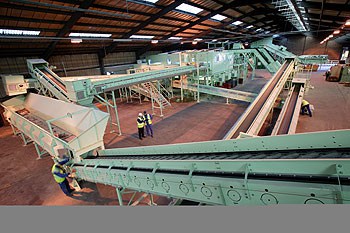
The plant will have a capacity to recycle around 75,000 tonnes per annum and will take electronic waste – excluding cathode ray tubes and lighting equipment – from local authorities and businesses across the UK.
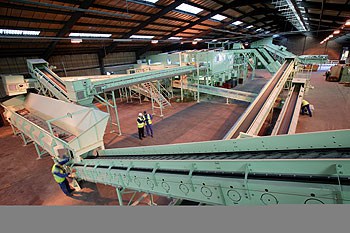 Wincanton's new electronics recycling plant in Billingham can process 75,000 tonnes of material each year |
German company MeWa provided the technology for the plant. Goods fed into the machine go through a cross-cut grinder which will separate individual internal components such as circuit boards and batteries. Wincanton then sells the components, as well as individual materials on for recycling.
Graeme McFaull, Wincanton chief executive, said: “This is a significant investment in an innovative capability that, for the first time, will facilitate the full spectrum of recycling and reprocessing services in the UK.
“Our reverse logistics service services offered to retailers, manufacturers, businesses and local authorities now include an all-encompassing solution for all aspects of the WEEE Directive. This includes refurbishment, sorting materials, recycling and waste management,” he added.
Also at the site in Billingham is a separate fridge recycling plant, as well as providing a national collection network for waste. The new plant has been set up in advance of the Waste Electrical and Electronic Equipment Directive, which will create a collection and recycling network for electronic waste in the UK – funded by producers of electronic goods.

Register for free to comment