




The Quality Protocol would be a ‘short guidance document’ that details the application of the law in relation to the disposal of trommel fines following changes to legislation in April 2015.
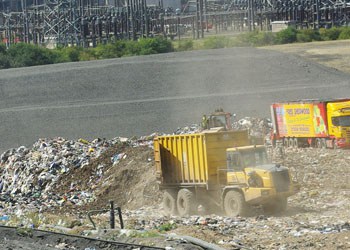
Under the new regime, operators must be able to prove that their waste loads have a loss on ignition of 15% or less in order to qualify for disposal at the lower rate of landfill tax – which stands at £2.60 per tonne (see letsrecycle.com story).
UROC, which helped to establish the LOI system with Her Majesty’s & Customs (HMRC) and the Environmental Services Association (ESA), has explained to its members that waste operators would be expected to undertake a four hour on-site training programme in order to adopt the Quality Protocol.
Once accredited, UROC claims the waste processor would ‘maintain a position’ that any trommel fines produced are likely to be “qualifying” for disposal at the £2.60 rate of tax in the eyes of a regulator.
WAMITAB
The ‘best practice’ protocol is expected to be accredited by the recognised Waste Management Industry Training & Advisory Board (WAMITAB) and will assist waste companies to secure compliance with legislation. However, landfill operators would still be obligated to submit the material for LOI testing.
The association suggests ‘around 50%’ of its members have so far expressed interest in the protocol, including Countrystyle and Wastecycle. Veolia is also understood to have expressed interest in adopting the protocol; the company previously sat on the cross-industry working group.
A spokesperson for UROC said: “If an operator undertakes a training programme (estimated to be four hours delivered on-site) and adopts the QP then the regulator will maintain a position that the Trommel Fines produced by an Operator that has implemented the QP are likely to be “Qualifying” for disposal at the lower rate tax.”
However commenting on the proposal, ESA’s head of regulation Sam Corp said he was not aware that HMRC intended to undertake a quality protocol in its regulation of the LOI regime.
He added it would remain the responsibility of the landfill operator to correctly classify material, “irrespective” of whether a protocol exists or not.
Mr Corp said: “ESA will watch the development of the ‘quality protocol’ with interest. However, it is important to remember that the responsibility and liability for correct landfill tax classification falls squarely on the shoulders of the landfill operator.”
Industry standard
Mr Corp was also cautious of calls from a loss on ignition testing firm for an ‘industry standard’ that would ensure LOI tests are carried out consistently across all laboratories in the UK.
Environmental Scientifics Group, which provides testing and inspection of waste fines for landfill operators, argues that current sampling procedures may not be enough to ensure precise measurements of fines – and has called on HMRC to produce a reliable standard (see letsrecycle.com story).
Mr Corp said: “The scheme has only been live since April so it is perhaps too early to say whether consistency of testing is an issue or not. HMRC’s guidance does already prescribe specific criteria for the sampling and testing of the material, however, if problems of consistency are experienced, ESA would support further consideration of an industry standard.”
HMRC has confirmed it will ‘consider the merits’ of introducing a recognised standard but believe initial tests indicate its current guidance is reliable.




Subscribe for free