

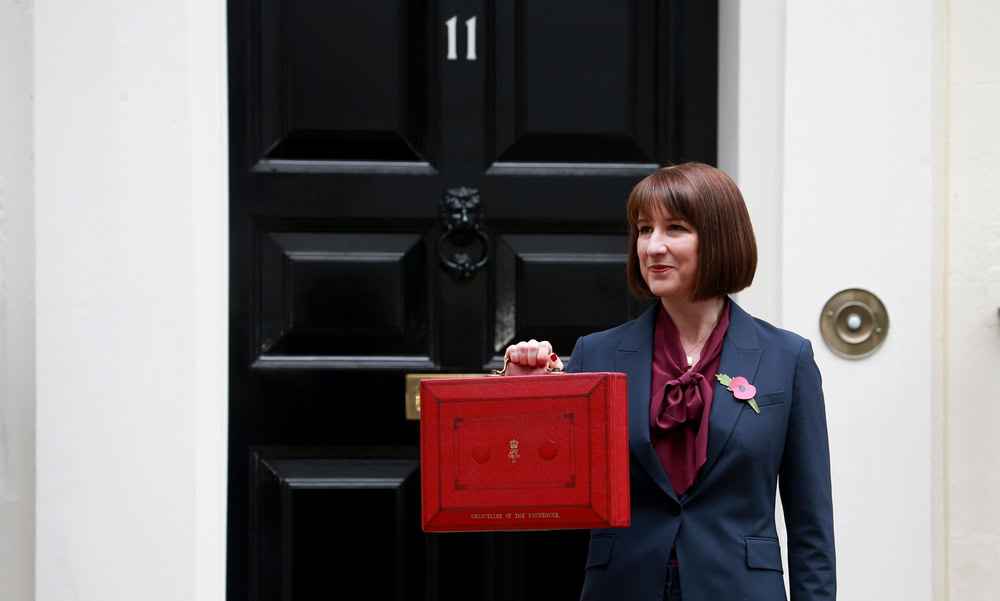
The budget included updates on landfill tax reform, Plastic Packaging Tax (PPT), vape ban enforcement and additional funding for Defra.
The government confirmed that it will not proceed with plans to converge the standard and lower rates of landfill tax.
Reeves also confirmed that PPT rates will rise in line with CPI inflation in 2026-27, maintaining pressure on businesses to incorporate recycled plastic.
Read the full story on the Autumn Budget here and see how the industry has responded below.
Institute of Materials, Minerals & Mining (IOM3)

Colin Church, Chief Executive of IOM3, said: “We are at a pivotal moment in UK policy development, and the vital role of materials, minerals and mining is unmistakably clear – from the government’s Industrial Strategy and recently published Critical Minerals Strategy, to the forthcoming Circular Economy Growth Plan for England. It is essential that the government’s economic priorities enable effective delivery across these areas and support the step change required to transition the UK to a low-carbon, resilient and resource-efficient society.
“It is, therefore, disappointing not to see greater recognition of our key industries and the value they bring in today’s budget speech. However, the emphasis on supporting businesses to develop in the UK and ongoing investment in clean energy and advanced materials is welcome.”
XXX
United Resource Operators Consortium (UROC)
Jennifer Watts, CEO at United Resource Operators Consortium (UROC), said: “UROC was exceptionally pleased with the decision of Government not to proceed with proposals to introduce a single rate tax and to retain the quarry exemption which is critical for the Growth Agenda particularly around construction.

“We have worked extensively with Government officials at HM Treasury and HMRC in relation to the consultation and are grateful for their proactive and positive engagement in understanding the issues faced by the waste sector and the supply chain it services.
“UROC has tabled PAS:402 as the solution to stamp out misdescription and misclassification as this British Standard for ‘Waste Resource Management Performance Reporting’ with independent UKAS inspection would serve to address concerns around landfill tax evasion and assist legitimate industry by cutting out those who do not play by the rules.”
Encyclis
Mark Burrows-Smith, CEO of Encyclis, said: “The publication of the Landfill Tax consultation response with the Budget announcements yesterday recognised the primary purpose of the tax to encourage recycling.

“The uplifting of the rates in line with RPI is a positive signal from Government that the tax will continue to protect the waste hierarchy. This consultation response also acknowledges that increasing landfill tax will support the fight against waste crime.
“We welcome the response to the Landfill Tax consultation, which helps to prevent waste crime and supports the Government’s efforts to maintain the integrity of the waste hierarchy.”
Washed Aggregates Trade Association (WATA)

Andy Hill, CEO of WATA, said: “It is great that HMRC has listened to us. Today’s announcement is exactly what WATA called for in responding to the consultation and we are looking forward to working with the Government around the qualifying fines issue going forward.
“WATA also welcomed today’s announcement not to merge the landfill tax rates and to continue to allow quarries with disposal permits to have exemptions.
“Not having the ability to continue to restore quarries with materials would have been catastrophic for the industry.
“Today’s budget decisions have given our industry some breathing space to work with Government and to continue to push for washed recycled aggregates to play a bigger role in their policies going forward.”
European Recycling Platform (ERP) UK

John Redmayne, Managing Director at ERP UK, said: “While the government has signalled ongoing commitments to strengthen recycling incentives in recent months, in today’s Budget, there were missed opportunities to support the UK’s recycling infrastructure and the circular economy.
“Despite widespread suggestions from the waste management sector that a significant increase in the Plastic Packaging Tax (PPT) could help plastic recyclers by countering low prices achieved for virgin material, it has been confirmed that only an inflationary increase will apply for 2026. As a progressive tariff that has proven its effectiveness, a failure to give it the attention it deserves could have a significant impact on the investment needed to support recycling infrastructure, ensure sector growth, and promote job creation.”
“However, additional measures around this tax are welcome – allowing chemical recycling using a mass balance approach to determine recycled content comes in from April 2027. This is alongside the removal of pre-consumer waste from the definition of recycled plastic for PPT purposes which will address a tax loophole which undermines the environmental objectives of the tax.”
Ecosurety

Robbie Staniforth, Director of Policy and Innovation at Ecosurety, said: “Sadly, there wasn’t enough in today’s budget to support the recycling and reuse of packaging in the UK. Extended Producer Responsibility (EPR) alone will not drive the systems change required. We need more fiscal instruments from the Government over the next decade if we are to support the brilliant reprocessors and reuse systems of this country.
“The fact the Government still thinks in terms of a Consumer Price Index indicates just how far we have to go on the transition to a circular economy. Consumption is an outdated term from a linear world created by marketeers to sell more products. We are citizens of the planet that simply use resources, and hopefully return them to nature. When will we see a budget that encourages us to ‘consume’ less? The wait continues.”
Biffa
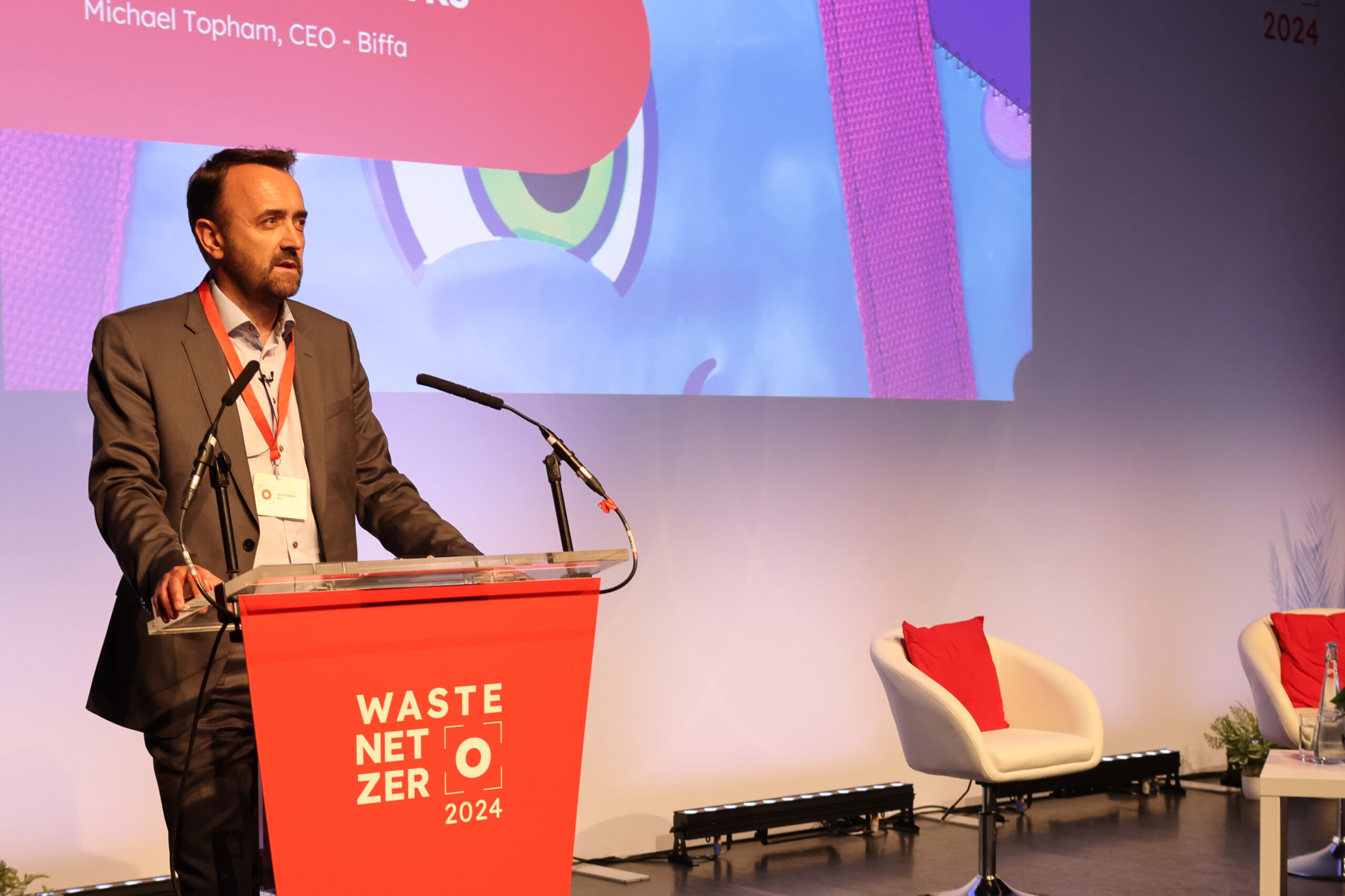
Michael Topham, Biffa’s Chief Executive Officer, said: “The government’s decision not to converge the two rates of Landfill Tax before 2030 is a good outcome for the industry.
“Ministers have listened to stakeholders and made the best choice for the industry, avoiding potential worsening of waste crime and tax evasion. Retaining the exemption for backfilling quarries will help housebuilders and the construction sector deliver much-needed homes while avoiding unnecessary costs.
“It is also encouraging to see consultations on the Packaging Waste Recycling Note system, and the mandatory certification for mechanically recycled plastic as part of the Plastic Packaging Tax (PPT) reforms. Tackling tax evasion and fraud first is necessary and opens the conversation for future improvements including banning unprocessed plastic waste exports.
“However, the Government’s decision to increase the PPT rate for 2026-27 in line with CPI inflation does not go far enough. We have long called for a progressive tax that establishes increasingly ambitious recycled content targets and ensures that virgin plastic is more expensive than recycled material, an inflationary increase will not achieve this.
“Overall, there are no major surprises for our sector, but the commitment to consult on key issues is encouraging. It is essential that future reforms incentivise investment in recycling infrastructure and support the transition to a low-carbon economy.
“We look forward to working closely with government to ensure these measures deliver environmental and economic benefits. Our own economic modelling research released this week, shows that progressive plastic reforms will create more than 9,000 jobs and deliver almost £900 million in economic output each year, all without relying on public funding.”
North London Waste Authority (NLWA)

Councillor Clyde Loakes, Chair of the NLWA, said: “The UK desperately needs more investment in recycling infrastructure along with policy mechanisms to ensure that shipping recycling overseas is never cheaper than keeping those resources here. Support from the Government would create opportunities for UK business including those wanting to manufacture with this recycled content to make the sustainable goods consumers want.
On the announcement of a consultation on the introduction of a certification for mechanically recycled plastic packaging for businesses to claim an exemption from Plastic Packaging Tax, Loakes added: “This will strengthen the verification of recycled plastics. But it is unclear how the scheme would be enforced and by whom.”
Regarding the Government plans to make improvements to the packaging Extended Producer Responsibility scheme, Loakes said: “Producers should not be given undue control over the scheme and local authorities must retain control over our budgets and services.
“Local authorities are already required to be transparent about our spending. It is vital that the scheme does not shift away from cost recovery to producers making demands on how it is spent.”
Veolia

Gavin Graveson, CEO Veolia UK and Ireland, said: “This was a missed opportunity for the Government to unlock investment in the UK’s circular economy and deliver green growth, jobs and infrastructure.
“It is extremely disappointing that the Government has neglected to make any meaningful increase to the Plastic Packaging Tax (PPT), something the industry has made repeated requests for. By not increasing the PPT to £500p/t with a 50% mandatory recycled content threshold, the Government is seriously risking the investment needed for crucial domestic recycling infrastructure, providing green growth and green jobs.
“We welcome the clarity that the Landfill Tax will remain as two separate rates, and that the Government has listened to industry concerns, but this alone will not solve the billion pound scourge of waste crime in this country. While sense over the rates has prevailed, we need a realistic plan to urgently tackle organised gangs undermining the legitimate operators.
“It’s clear for all to see that the circular economy has a key role to play in driving growth in this country and there are further steps the Government could now take to accelerate this crucial industry.”
Mineral Products Association (MPA)

Mark Russell, Executive Director at the MPA, said: “The Chancellor’s welcome decision to retain the Quarry Exemption and not proceed with reform to the Landfill Tax is a real relief and follows a significant campaign by MPA.
“The proposed changes would have had a severe impact on the mineral products industry, with a knock-on effect for the UK economy, construction and nature conservation.
“Beyond this sensible decision, we have concerns over the new higher rate of business rates for large quarries, cement plants and asphalt plants. The tax burden on business is holding Britain back, placing British industry and British jobs at risk.”
CIRQLR

David Palmer-Jones OBE, CEO of business recycling group CIRQLR, said: “The Budget rightly focused on laying down a positive fiscal framework to stimulate house building and get the economy growing, but it sadly missed an opportunity to tackle a landfill tax system which waste criminals are exploiting all too easily.
“Landfill tax evasion costs The Treasury a “tax gap” of 22% of missing tax receipts fuelling annually a £1 billion criminal waste business in the U.K. If the Government doesn’t see landfill tax equalisation as a way of curbing this criminal activity, then it needs to bring forward a raft of alternative measures such as digital waste tracking, better waste carrier licensing and an enforcement regime which uses fully the extensive legal powers the Environment Agency and HMRC have at their disposal to protect legitimate operators who are blighted by this criminal activity.
“The recycling industry is ready to invest and deliver the Government’s clearly stated aim to get Britain building and deliver much needed growth.
“The budget provides clarity at last that business has been demanding. CIRQLR looks forward to the action plan in the new year from the Government’s circular economy task force which must link the industrial strategy with an economy based on more circular principles.”
Reconomy

David Gudgeon, Head of External Affairs at Reconomy Connect, said: “It’s encouraging to see the Government respond to industry concerns by stepping back from converging the two rates of Landfill Tax and instead committing to prevent the gap between them widening in the years ahead.
“However, the planned uplifts to the lower rate – forecast to raise an additional £420 million in revenue over the period to 2030/31 – underline the need for a balanced approach. Policy must continue to drive circularity and reduce incentives for waste crime, while also supporting essential sectors like construction as they transition toward more sustainable models in a challenging economic climate.
“Ultimately, the most robust way for businesses to shield themselves from future tax rises is to accelerate circularity. Keeping materials in use for longer, maximising reuse and recycling, and designing out waste not only strengthens environmental performance but also reduces operating costs and mitigates tax and compliance risks over the long term.”
The Food and Drink Federation (FDF)

Karen Betts, Chief Executive of the FDF, said: “It’s good news the government has committed to legislating for mass balance accounting in this Finance Bill. This means that companies using mechanically or chemically recycled plastic will no longer have to pay as much in the plastic packaging tax.
“It’s also welcome that government will formally consult on the future of the costly, volatile and outdated Packaging Waste Recovery Notes (PRNs) system, and on ensuring councils run efficient, cost-controlled recycling services. To drive real change and value, it’s good to see government again acknowledging the key role of producers in leading the EPR scheme, through a Producer Responsibility Organisation.”
Local Government Association (LGA)

Councillor Kevin Bentley, Senior Vice Chairman of the LGA, which represents councils across England and Wales, said: “Scrutiny of today’s Budget will focus on decisions around national taxation. However, while people rightly care about tax levels and the cost of living, they also care deeply about the local services they rely on every day.
“Councils work tirelessly to deliver on the ambitions of residents and are key to solving many of the challenges the Government is looking to address. However, local government finances remain under severe pressure with councils facing huge cost pressures in areas including adult social care, temporary accommodation, SEND, and home to school transport.
“The Government has acted on LGA calls to provide greater financial certainty and a simpler funding system, which are hugely important for councils. While funding levels have increased in recent years, councils will be rightly anxious that today’s Budget does not provide the increase in funding they desperately need to ensure their financial sustainability, protect services, support local communities, and address national priorities.”
Possible

James Sutton, Co-Director of climate charity Possible, said: “This Budget is a missed opportunity to invest in the green economy, which is already growing far faster than the economy at large, and yet the Government is still tinkering at the edges instead of getting real about the scale of the opportunity.
“We should be ditching high-carbon, low-growth infrastructure and backing the popular, future-proof industries that will actually deliver prosperity. The 21st-century economy is clean, resilient, and people-focused – and the sooner the Government embraces that, the better.”
A Plastic Planet

Sian Sutherland, Co-Founder of A Plastic Planet and Plastic Health Council, said: “Tinkering with thresholds might raise a few more million for the Treasury but it won’t do what a tax like this should: turn off the plastic tap for good. When plastic’s impact on global health costs $1.5 trillion every year, a few extra million is meaningless – we need systemic change, not superficial tweaks.
“Recycled content is still fossil content, the last refuge of big oil. And perversely the tax penalises new biobased natural polymers rather than helping them replace plastic.
“Moving from an addiction to virgin plastic to an addiction to recycled plastic is neither here nor there. It’s just fiddling while the environment burns.
“And the cost of this blinkered approach will be felt not on balance sheets but in medical records, as plastic continues to harm human health, contributing to cancers and the development of disease.”
BusinessWaste.co.uk
Mark Hall, Construction Waste Expert at BusinessWaste.co.uk, said: “While we support any means of encourage waste from being diverted away from landfill, it was hard to ignore the knock-on effects of scrapping the lower rate. Many in the construction and building industry had sounded the alarm about the enormous costs this could add to projects, with our own estimates showing an increase of £24,100 to new build houses.
“Waste can be a complex issue, and while the current landfill tax system does leave the model open to abuse, any changes must consider the impacts on industry and how costs may ultimately be passed onto the consumer. The UK is already facing a major housing shortage, and the proposed changes to landfill tax risked exacerbating the problem.
“Until a more suitable solution is found, we’d recommend that businesses focus on reducing waste at the source, reusing any materials where possible, and recycling construction waste. This will help to keep costs low for projects like building new homes, and ensure added charges aren’t passed on to the consumer.”
Federation of Independent Retailers (FED)
Hetal Patel, National President of the FED, said: “We have campaigned long and hard for the government to get tough on those who trade in illicit goods and provide more resources for Trading Standards to carry out enforcement.
“I wrote to the Chancellor personally regarding this issue immediately before the Budget, so it is pleasing to see action being promised.
“However, the introduction of licenses to sell tobacco products and vapes will place a further burden on honest shopkeepers. We want to see any scheme implemented flexibly so it doesn’t just cause more red tape for responsible retailers like our members.”

Register for free to comment