


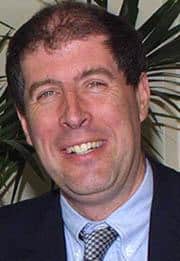
Taking up the post last year after a challenging spell as chief operating officer for Railtrack, Mr Cox had the advantage of bringing with him knowledge and experience gained in the waste sector from his earlier life as managing director of Kelda Group and Yorkshire Environmental.
The most obvious signs of change at Valpak were the departures of several senior members of staff and the relocation of the organisation from London's Piccadilly to Stratford-upon-Avon. This took a big chunk out of the scheme's operating costs and staff numbers also fell – it now employs 50 people in Stratford, 20 in a smaller central London office and 10 more who work from home.
The new strategy implemented by Mr Cox concentrates on how Valpak will deliver the lowest cost for its members for the next three to four years, up to the next set of Directive targets: “To be commercial and innovative in enabling our members to comply, reliable and at the lowest sustainable costs with requirements of producer responsibility over the medium term,” he says.
Commercial approach
The organisation, he explains will “take a commercial approach which equals the efficient procurement of PRNs. We just want members to take us for granted, to take it as given that Valpak will deliver for them.”
This lowest cost to members will be pushed hard but Mr Cox offers a measure of reassurance for reprocessors: “We are not going to drive things to a level where we reduce capacity but we have to get pricing right to a level where we are competitive for members.”
The structure of Valpak has been modified but the grand idea of flotation is now on the back burner. Mr Cox confirms that part of his brief on appointment was floating Valpak. “I have very clearly decided not to do so. We are going to remain a mutual. We are going to create a model driven for member value and the shareholder doesn't have a place here. It's all about how we link medium term strategy, being competitive and bringing value for our members.
This will drive a different sort of behaviour – my business is to give a best service to members.”
Mr Cox considers Valpak has an advantage in being member-owned. “In a way, utilities are driven in the same way – service has to come first along with efficiency and compliance with the law and regulations.”
Market share
Does Valpak's large market share mean it is a monopoly like traditional utilities? He replies: “We are in a competitive environment, and have 50% of the market if you allow for de minimis. And, every business can choose to comply direct with the Environment Agency or join one of our 17 direct competitors. We are nowhere near a monopoly, you can test what we do with our pricing, we are following the market – that's the acid test.”
Mr Cox lays great store on working with members – who pay anything from £1,000 to over a £1 million each year – and with reprocessors to make sure both have a sustainable business. “The reprocessors that we deal with are very good and of high quality – we have a set of about 50. We make sure they reinvest the money and also make sure that happens.”
He also points to deals with the waste management sector, including companies such as SITA and Waste Recycling Group and possible agreements with one or two other companies who run their own compliance schemes, have not been ruled out.

Valient Holdings
In line with the new strategy, Valpak has reorganised with Mr Cox saying the closest parallel is that of a mutual organisation. At the top of the tree is Valpak Limited and beneath it are various divisions including Valient Holdings Ltd. This is the operating arm which divides into two, procurement and materials. Both are run by Steve Gough. Valpak's Recycle-More-Glass scheme comes within the materials operation.
Under the new structure, financial management will see any surplus used as a risk buffer for the business and to reduce overheads which, explains Mr Cox will reduce the call on members for funds.
John Gummer MP remains as chairman. Says Mr Cox: “John is very committed to Valpak and to the market system for packaging waste. He is also very keen on the changes that are sharpening our business.”
One division of Valpak's business involves the Green Dot for which the scheme has the UK and Irish rights. But, nothing is happening on this front at the moment.
Valpak's activities now and in the future cover a range of areas.
Top of the list is to ensure the development of the supply system for PRNs through more collection and reprocessing. “Principally it is a collection problem now,” says Mr Cox, who considers that so far this approach has worked well as more material has been recycled.
“No-one would have projected where we are now. What we have achieved is great and that has impacted on PRN prices. It is good news that we are recycling more.”
With regard to falls in PRN prices towards the end of 2002, Mr Cox says that he has been quite surprised by what happened. “When I joined in June last year, people were talking of £100 PRNs when clearly the price last year was about £20-30.”
Looking ahead Mr Cox says he would like to see the forward development of PRNs. “We are planning for 2006 and beyond and know where the shortfall of materials will be. Glass is likely to be the biggest shortfall by a long way.”
On negotiations with its reprocessors for 2003 Mr Cox will give little away. He does confirm that Valpak does not expect the 2003 average to exceed last year's average price which was about £30 per PRN, adding: “In a traded market be prepared for whatever the market throws at you.”
PRN champion
Valpak sees itself as a champion of the PRN system but recognises there is a need for changes and development in the market, Mr Cox emphasises.
“For the market to work properly it needs at least three things to happen. The first is more information, earlier targets and more data and the EA has made a step forward with earlier publication of PRN returns.”
Secondly, he says, there is a need for confidence and three year targets would help. “We have got to have three year targets. I think everyone agrees the need for three years.”
Thirdly, Mr Cox would like to see much better enforcement. “2001 clearly showed enforcement is not good enough. We need better checking of reprocessors and this has still not been remedied. We are hoping that the ACP will bring an improved approach to regulation – we want the free riders caught. We also need to look again at the de minimis level which is much higher in the UK than elsewhere and to ensure that everybody who sells PRNs is checked to see that they have made productive investment which creates more recycling.”
Mr Cox also feels that a closer look needs to be taken at the plastic reprocessing market which has seen a surprising amount of PRNs available. He will not be drawn on any detail but admits that “our reprocessors are worried”.
Chairman John Gummer is also firm in his support for the PRN system. He told letsrecycle.com: “Not only has the PRN system allowed UK businesses to comply at a lower cost than their competitors in the other European countries, but it also generates significant funds for the recycling infrastructure in this country. This will become increasingly important as targets increase in future years. We are in the process of refocusing Valpak to meet these new challenges. Our aim is to sharpen the business and deliver to members the lowest cost compliance that is sustainable year after year.”
Beyond packaging
While Valpak is a mutual organisation, it has no intention of resting on it is laurels. Signalling Valpak's intention to move beyond the packaging sector, this year the compliance scheme is branding itself as the UK's largest producer responsibility scheme. While this may simply be wishful thinking, Mr Cox has every intention of Valpak working in other sectors even if not all industries are going to choose an exactly similar model to that of the packaging waste system.
For example, Valpak considers it has an advantage in that it has many members who will in the future be charged with a producer responsibility in other areas such as batteries and electronics.
“The key issue is that if someone reprocesses an electronic good, ” says Mr Cox, “how do they sell the evidence. How also do you account for an appliance that is recycling friendly or not? We are having an input into the debate now.”


Subscribe for free