




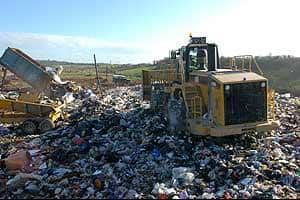
Ten years ago, on July 16 1999, the Directive brought in a range of requirements governing the landfilling of waste in a bid “to prevent or reduce as far as possible negative effects on the environment”.
Most notably, it banned the co-disposal of hazardous and non-hazardous waste, banned tyres and liquid waste from landfill, set out engineering requirements for sites and established challenging targets for the reduction of municipal biodegradable waste to landfill up until 2020. These provisions were introduced bit-by-bit in the UK.
Liz Parkes, head of waste and resource management at the Environment Agency said: “The Directive, with its aims of upping engineering standards, reducing the reliance on landfill and changing what goes into them, has made a whole different culture for landfill.
“Much has been achieved although it is not as if we are finished as there are still diversion targets to meet.”
Mr Parkes explained that in legislative terms, there had been less change over the past 12 months than on any other July 16 date since the Directive was implemented.
She said: “July 16 2009 marks the culmination of the Directive – when we started we had over 2,000 operational sites and now we have about 500. It has been a long journey with lots of milestones including the end of co-disposal.”
LGA
Reflecting on the directive on behalf of local government, councillor Paul Bettison, of the Local Government Association, said that it had helped to create a step-change in waste practices.
He said: “Without this we would be putting the same or more into landfill today. On behalf of local government I can say we would probably be putting more into holes in the ground but with only five years of landfill left, we would only have a couple of years left by now.”
Dirk Hazell, chief executive of the Environmental Services Association, also highlighted the directive's impact on private waste management and recycling firms.
He said: “The Landfill Directive has been perhaps the single most important driver for our sector's future and ESA's members achieved much over the decade.”
“For example, the sector produces a third of the UK's renewable electricity, it more than quadrupled household recycling and overall ESA's members now return to the productive economy far more of the resources contained in waste.”
Criticism
However, despite general praise, the government and agencies also came under some criticism for the way the directive was implemented – especially in its early days.
Mr Hazell said: “The process got off to an awful start with mutual frustration: companies were, for example, confronted with avoidable expense, uncertainty and lack of timely guidance on key aspects of the requirements of the Directive. However, it was also a journey – for which both sides deserve their share of credit – which matured and normalised the relationship between regulator and regulated.”
David Savory, director of environment and external affairs at waste management firm Biffa, also highlighted some difficulties – claiming that some problems still needed to be rectified.
He said: “There is no doubt that the Landfill Directive has been a strong driver for improved environmental protection. However, a key purpose, that of abating the release of climate changing gas – methane, has yet to be fully realised in the UK. The approach taken by Government and Defra to distinguish between household waste and similar commercial and industrial wastes in the setting of biodegradable waste diversion targets was perverse and 10 years on we still await corrective action.
“From a regulatory perspective, the LD has been a challenge for the UK's regulators, particularly for the EA, having led to widespread disagreements about engineering requirements, 3D boundaries, piggyback engineering, etc. Hopefully it will not take another 10 years to sort them all out!” he added.



Subscribe for free