United Kingdom specifications for iron and steel
scrap for the manufacturing of iron and steel
These jointly agreed specifications are subject to
regular review and were effective from October 1,
2006. They supercede those issued on
January 1, 1995.
These specifications were agreed by the Cast
Metals Federation, UK Steel and the
British
Metals Recycling Association, from whom copies of a specifications
booklet can be purchased.
|
General conditions for all grades: |
All deliveries of scrap must comply with all
statutory and legal requirements including those
relating to health, safety and the environment and
should be processed in appropriate ways.
| Safety |
All grades shall exclude:
1) Pressurised,
closed or insufficiently open containers
of all origins which could cause
explosions. Containers shall be
considered as insufficiently open where
the opening is not visible;
2) Dangerously inflammable
material, explosives, small arms,
munitions, or other material which may
contain or emit substances hazardous to
health or to the environment.
|
| Radioactive material |
Any delivery which includes hazardous radioactive
material as defined by the appropriate legislation
will be refused and the supplier notified so that the
appropriate action can be taken.
|
| Cleanness |
All grades shall be as free of dirt,
pollutants or foreign matter of any kind,
excessive oil, grease, rust and corrosion as
is practicably achievable in the customary
preparation and handling of the particular
grade involved.
|
| Residuals and other
alloys |
All grades shall be as free of separate non-ferrous
metals and allows as is practicably achievable. However,
certain proportions may be permitted by joint agreement.
|
| Mixed grades |
No delivery shall contain a mixture of
grades, unless by prior agreement with the
purchaser. |
|
Grade OA
Plate and structural, consisting of cut structural
and plate arisings predominantly 6mm thick in sizes
not exceeding 1.50m x 0.60m x 0.60m (or as otherwise agreed)
prepared in a manner to ensure compact charging. May
include properly prepared wagon material less than
6mm thick. Excludes tube and hollow section.
Grade 1
Old Steel, predominantly 6mm thick, in sizes
not exceeding 1.50m x 0.60m x 0.60m (or as otherwise
agreed) prepared in a manner to ensure compact charging.
May include tube and hollow section, wire rope properly
prepared by agreement with consumer, properly prepared
material from heavy commercial vehicles including
wheels, but excluding body and wheels from light
vehicles.
Grade 2
Old Steel, predominantly 3mm thick, in sizes
not exceeding 1m x 0.60m x 0.60m (or as otherwise agreed) prepared
in a manner to ensure compact charging. May include
properly prepared material from dismantled vehicles
including light vehicle wheels, but must exclude
vehicle body arisings and also domestic appliances.
Grade 3A
Fragmentised, old light steel arisings fragmentised into pieces not exceeding
150mm in any direction. Must be free from dirt, free non-ferrous metals
and foreign material and exclude excessive moisture, introduced loose
cast iron, incinerator material, grindings, swarf, turnings and borings.
Should also be free from tin cans. Must conform to the following specifications:
- Density: 1
tonne per cubic metre minimum
- Sn content: 0.03% max
- Cu content: 0.20% max
Grade 3B
Fragmentised, old light steel arisings fragmentised into pieces not exceeding
200mm in any direction. Must be free from dirt, free non-ferrous metals
and foreign material and exclude excessive moisture, introduced loose
cast iron, incinerator material, grindings, swarf, turnings and borings.
Should also be free from tin cans. Must conform to the following specifications:
- Density: 0.8
tonne per cubic metre minimum
- Sn content: 0.03% max
- Cu content: 0.25% max
Grade 3C
Fragmentised, old light steel arisings fragmentised into pieces. Must be
free from dirt, free non-ferrous metals and foreign material and exclude
excessive moisture, introduced loose cast iron, incinerator material,
grindings, swarf, turnings and borings. Should also be free from tin
cans.
- Density: 0.60
tonne per cubic metre
Grade 4A
New production compressed steel sheet (less than 3mm thick) bales, in works
furnace sizes, free from all coated, tinned, galvanised, enamelled and
deleterious material (other than by joint agreement from a specified
source). Tightly baled and free from loose material.
Grade 4C
New production compressed steel sheet (less than 6mm thick) Bales in works
furnace sizes, including a proportion of coated material, but excluding
tin, enamel and terne coating, stamping and forging
flash, bar and billet ends and other high residual
material. Tightly baled and free from loose material.
Grade 4E
New production compressed steel bales, including rod and wire, in works'
furnace sizes, including a proportion of coated material but excluding
tin-coated ferrous material and excluding copper washed steel wire other
than by joint agreement. Tightly baled and free from loose material.
Grade 4F
New production steel strip and/or wire bobbins. In works' furnace sizes,
including a proportion of coated material, but excluding tin-coated ferrous
material and excluding copper washed wire other than by joint agreement. Must be
securely fastened.
Grade 4G
New Production Compressed De-tinned Steel Sheet (less than 0.25mm thick)
Bales in works' furnace sizes. Tightly baled and free from loose material.
- Sn content 0.05%
max
- Cu content 0.15%
max
- Cr content 0.04%
max
- Ni content 0.02%
max
Grade 5A
Compressed old light steel in works' furnace sizes. Must be free from tin
coated and non-metallic material. Must not include heavy iron and steel,
wire ropes, wire, fuel tanks, or tin coated
materials and must not include loose or free dirt or
tyres.
Grade 5B
Pressed and sheared old light steel. To include material emanating from
press shears, consisting of pressed and sheared depolluted motor cars, white goods
and old light iron and steel arisings. Must not include heavy iron and
steel, wire ropes, wire, fuel tanks, or tin coated materials and must not include loose or free dirt
or tyres.
Grade 5C
Loose old light steel. May consist of depolluted motor cars, white goods and old light
iron and steel arisings. Must not include heavy iron and steel, wire
ropes, wire, fuel tanks,
or tin coated materials and must not include loose or free dirt or tyres.
Grade 6A
Incinerator Bales - Compressed Steel Bales consisting predominantly of
tin coated steel cans processed through an incinerating plant and magnetically
separated following incineration and prior to baling. Bale size and
density to
be jointly agreed.
Grade 6B
Loose incinerated - Steel arisings in loose form consisting predominantly
of tin coated steel cans processed through an incinerating plant and magnetically
separated following incineration.
Grade 6C
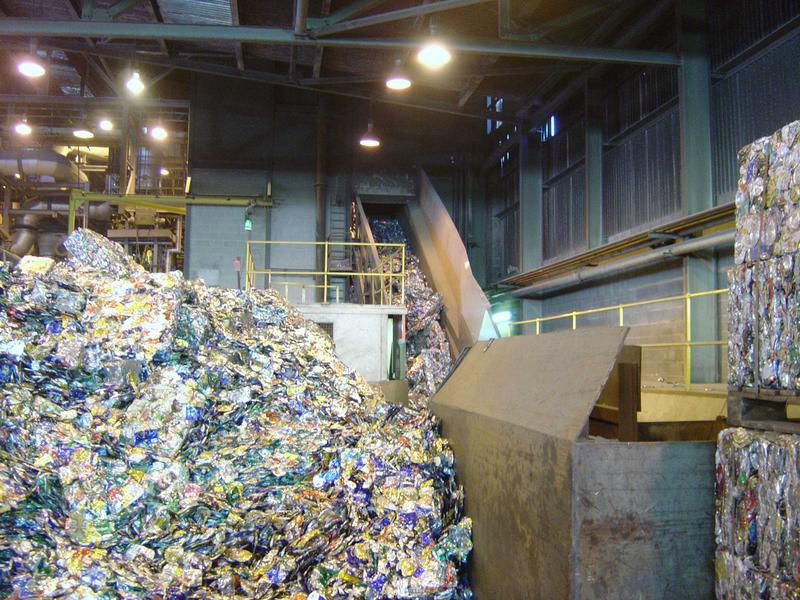
Non-incinerated magnetically extracted steel cans - baled.
Steel food, drinks and other domestic cans magnetically
extracted from non-sorted and non-incinerated domestic waste
at municipal and private waste treatment plants and
materials recycling facilities. May have minor visible
presence of other materials such as paper and plastics. Bale
size and density to be jointly agreed.
Grade 6D
Non-incinerated magnetically extracted steel cans - loose.
Steel food, drinks and other domestic waste at municipal and
private waste treatment plants and materials recycling
facilities. May have some minor visible presence of other
materials such as paper and plastics.
Grade 6E
Clean steel cans - baled. Steel from food, drinks and
domestic aerosol cans collected from the public e.g. by can
banks and door-to-door ("kerbside") collection schemes. Cans
should be free from excessive contamination by other
materials. Bale size and density to be jointly agreed.
Grade 6F
Clean steel cans - loose. Steel from wood, drinks and
domestic aerosol cans, collected from the public e.g. by can
banks and door-to-door ("kerbside") collection schemes. Cans
should be free from excessive contamination from other
materials.
Grade 7A
Heavy Carbon Steel Turnings. Crushed or naturally short, shovellable,
excluding bushy or heavily oxidised turnings, free non-ferrous metals, scale, grinding dust, or other materials from chemical industries and free from excessive
oil.
Grade 7B
Heavy Carbon Steel Turnings. The majority crushed or naturally short, but
with up to 20% bushy content permissible (by volume as determined by
visual examination) not shovellable, excluding free non-ferrous metals, scale,
grinding dust, heavily oxidised turnings or other materials from chemical
industries, and free from excessive oil.
Grade 8A
New Loose Light Steel Cuttings. Suitable for pressing, free from coated,
tinned, enamelled and all deleterious material (other than
by joint agreement from a specified
source). May include galvinised steel (although the proportion may be
limited by joint agreement).
Grade 8B
Loose Light Steel Cuttings suitable for pressing. May include an agreed
proportion of coated material, but excluding tin coated, terne coated
and enamelled material.
Grade 9A
Heavy Cast Iron. Not less than 13mm thick, in works' furnace sizes, free
from burnt metal.
Grade 9B
Cylinder Block. Low phosphorus iron, usually arising from the dismantling
of vehicles and commonly known as cylinder block arisings (including
the cylinder block head). Gearboxes containing gears to be discarded. Gearboxes
stripped of gears may be included. Steel crankshafts, connecting rods,
aluminium pistons and all other aluminium components to be removed.
Grade 9C
Oil Free New Production or Burnt Cylinder Block. Low phosphorus iron. Cylinder
block heads and stripped gearboxes may be included if oil free and all
steel, alloy and non-ferrous components are removed.
Grade 10
Light cast iron. In works' furnace sizes, free from burnt metal.
Grade 11A
Clean Cast Iron or Malleable Iron Borings and Drillings, free from steel
turnings, scale, lumps and excessive oil.
Grade 11B
Briquetted Cast Iron Borings, free from corroded lumps and excessive cutting
fluids.
Grade 12A
New Production Heavy Steel, excluding forging, flashings and stampings,
predominantly 6mm thick in sizes not exceeding 1.50m x 0.60m x 0.60m (or
as otherwise agreed) prepared in a manner to ensure compact charging,
may include tube and hollow section with a wall thickness of not less
than 6mm and a maximum overall outside diameter or wall to wall outside
measurement of 50mm.
Grade 12C
New Production Heavy Steel, predominantly 3mm thick in sizes not exceeding
0.60m x 0.60m x 0.60m, or as otherwise agreed, prepared in a manner to ensure
compact charging. May include tube and hollow section, new vehicle wheels,
forging flashings and stampings.
Grade 12D
New Production Clean Shovellable Steel, in sizes not exceeding 150mm in
any direction. May include new factory sheet clippings, punchings and
stampings.
|