Incineration
According to Defra forecasts made under the Labour government, energy from waste is expected to account for 25% of municipal waste by 2020 but less than the 34% by 2015 which was anticipated in 2000.
The majority of this would be through traditional incineration and energy recovery which is widely seen within the waste management, local authority and banking sectors as the most proven and reliable technology.
Incinerators, sometimes referred to as mass-burn or direct combustion, usually have a role within a local authority strategy in the UK which requires a specific level of recycling and residual waste going for incineration and energy recovery. This is driven largely by the need to divert material from ladnfill – the UK has long-depended on sending residual waste to landfill rather than for energy recovery through incinerators.
Opponents of plants suggest that incineration will reduce recycling but the waste management sector would counter this by saying that there is room for growth in recycling rates and that some materials are recovered from the incinerator ash.
One of the UK’s largest energy from waste plants will open this year on the south side of the river Thames at Belvedere, London. This, as with many other plants, will be by an incinerator process using a moving grate, which works on the principle akin to the penny machines found in amusement arcades where coins can tumble down a layer and fall off. The incinerator grate sees the waste continually entering and being burnt on it and residues in the form of ash falling down at the end.
Moving grate
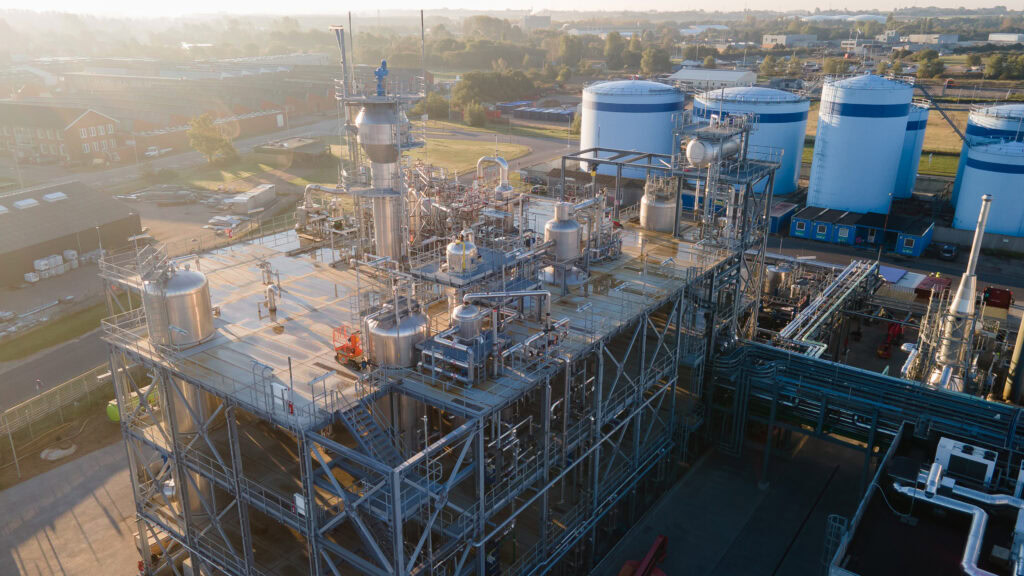
Moving grate processes have the advantage that pre-treatment of the waste is usually not required. Much of an incinerator plant is built around emissions reduction and pollution abatement and control. Typically abatement plant will be installed which will consist of flue gas recirculation with the input of ammonia or equivalent. The flue gases are neutralised by scrubbing in a solution of lime and water. Activated carbon injection systems can also minimise flue gas emissions. The gases also pass through bag filters.
Incinerators are regulated under the Waste Incineration Directive which is implemented through Environmental Permitting Regulations in England and Wales.
Health impacts
The issue of health impacts still emerges as a topic of debate for new incinerators and some other energy from waste facilities. The plants are regulated by the Environment Agency and have to meet the requirements of the Waste Incineration Directive.
Defra has noted that to the UK Health Protection Agency, the incineration of MSW accounts for less than 1% of UK emissions of dioxins, and are significantly less than the amount of dioxins released into the atmosphere on bonfire night or from accidental fires. The combined emissions of nitrous oxides (NOx), sulphur dioxide (SO2), particulate matter (PM10) and volatile organic carbon (VOC) from the all of the UK’s EfW facilities are significantly lower than that emitted by transport and other major industries.
The Environment Agency has said that the Waste Incineration Directive (commonly known as WID) aims to limit the risks that waste incineration poses to the environment and human health.
The Agency states: “There are a large number of waste incinerators in England and Wales, ranging from small laboratory incinerators to large operations that burn household waste. Incinerators burn waste at very high temperatures, which turns the waste to ashes. The directive also applies to co-incinerators, such as combustion plants and cement works which burn waste as a fuel. Some wastes are exempt from the requirements of the directive.”
It adds: “Waste incinerator operators have improved their environmental performance greatly in recent years. They used to be the largest producers of harmful substances called dioxins, but these days, they're among the lowest. New rules like the Waste Incineration Directive aim to keep up these improvements, so we limit the risks that waste incineration poses to the environment and human health.”
Concerns
Some critics of energy from waste and especially incinerators would disagree with this view on health concerns. One of the main groups opposing energy from waste plants is the UK Without Incineration Network. It argues that the incineration of household waste:
• Depresses recycling and wastes resources
• Releases greenhouse gasses
• Is often forced through against strong public opposition
• Relies on exaggerating future quantities of waste instead of strongly increased recycling and composting
• Creates toxic emissions and hazardous ash
• Poses significant health risks