AD (Anaerobic Digestion)
Anaerobic Digestion (AD) has been a fashionable topic for politicians and some in the waste sector since the government committed to 'introduce measures to promote a huge increase in energy from waste through anaerobic digestion" in its 2010 coalition agreement.
The advantages of AD for the biodegradable fraction of the household waste stream – mainly food waste – is that plants attract a low level of public concern and almost blend into rural settings. They also generate energy and attract double ROCs, which means a relatively high level of subsidy for the power generated from the methane gas captured as the food waste decomposes.
The technology is not new with the water industry having processed sewage sludge for many years, sometimes in an AD process. And, the interest in the sector by the water industry is one reason that in 2011 the Office of Fair Trading published an investigation into AD. The waste industry had said it was concerned to ensure there is fair play and that water companies don’t muscle in to dealing with food waste on the back of previously funded infrastructure and sites.
Food waste
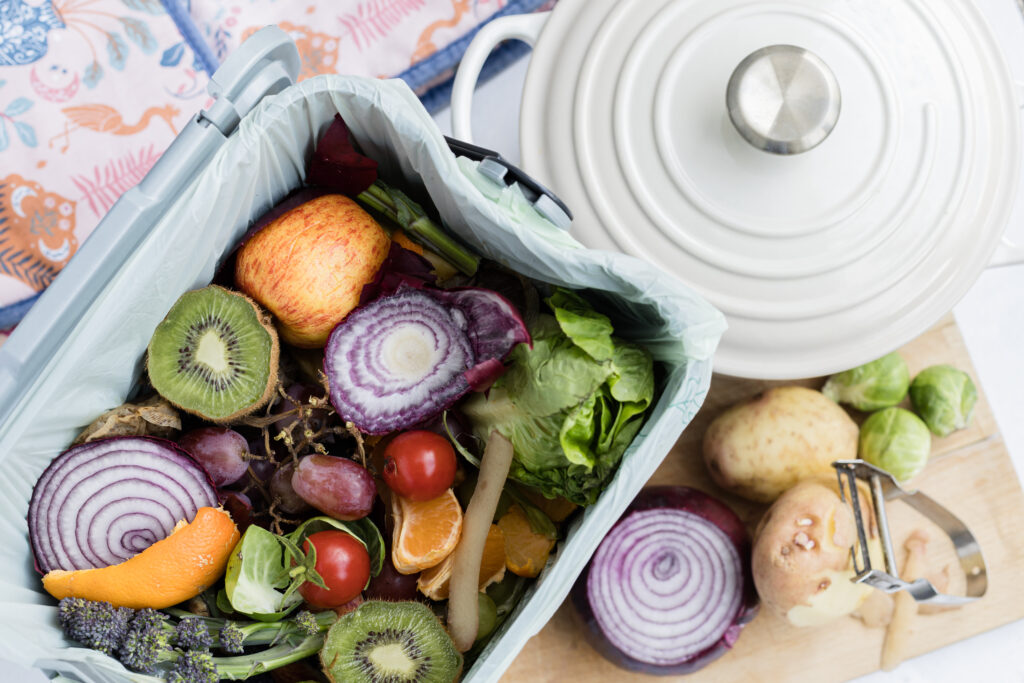
In a typical AD plant food wastes are shredded. Some offer depackaging facilities and metals and other packaging materials can be collected for recycling. The plants take in commercial and domestic food waste, often in solid form but some plants also take in liquid, such as brewery, wastes.
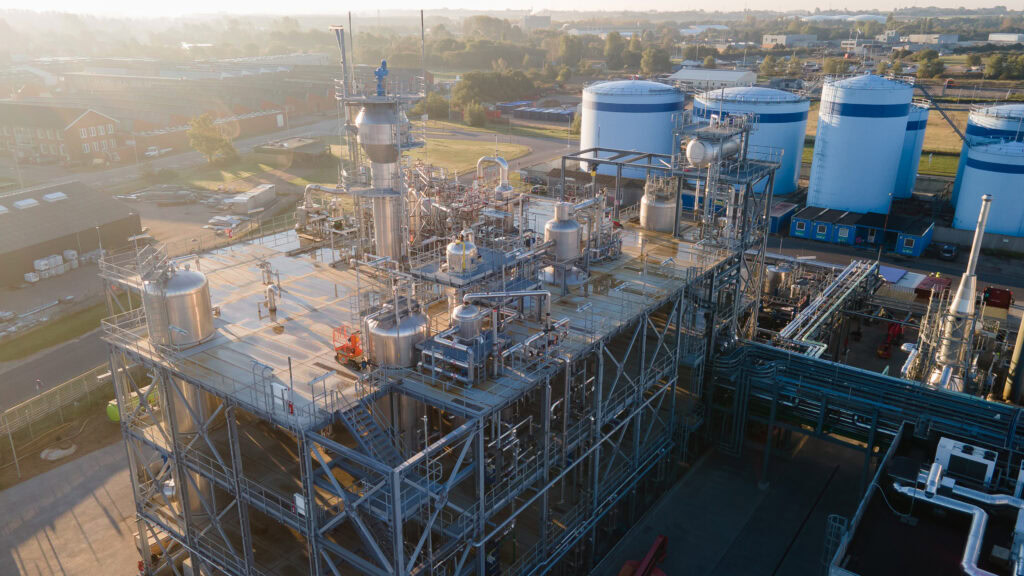
The material is initially treated at a high temperature to ensure it is pasteurised and then flows into a series of tanks where the methane gas generated by the process is captured.
In a consultation paper on AD in December 2010, the coalition government highlighted benefits including the following three points:
- Diverting waste from landfill: AD could make an important contribution to
achieving our waste management goals through the diversion of waste
away from landfill. AD is an important technology for producing energy
from waste, AD also recovers valuable nutrients for recycling back to land. - Creating renewable sources of critical resources such as phosphorus: The
digestate that is produced by AD is a valuable source of renewable
fertilisers that can be used by farmers to replace inorganic sources. - AD also has a role to play in the management of manures and the control
of diffuse pollution, and nutrient management, and could if developed fully,
produce green jobs and develop the green economy as well as improving
environmental quality.
Strategy
In June 2011 the government published an Anaerobic Digestion Strategy and Action Plan alongside the Review of Waste Policy in England. The document aims to stimulate the further uptake of AD technology and, while not a comprehensive roadmap for its delivery, it is hailed as an important ‘first step’.
One major element is the inclusion of a £10 million loan fund which will be administered by WRAP over the next four years. This will provide debt finance to projects in order to stimulate outside investment. Information and guidance on AD is also picked up by the government as a major issue which needs to be addressed, with ministers keen to ensure that operators, landowners, communities, local authorities, farmers and financiers are fully aware of what is being developed, why and where it fits in national plans.
The Strategy and Action Plan does not set specific targets or regional ambitions for the delivery of AD. It claims its purpose is more to ensure that all “unnecessary obstacles”, such as those around planning, funding and knowledge, are overcome to make delivery of AD plants easier.
Identifying the current state of the AD landscape, the document indicates that, as of April 2011, there were 54 operational AD facilities in the UK, 32 on-farm and 22 off-farm, with a further 50 with planning consent.
The government claims it is difficult to quantify what this equates to in terms of processing capacity but says that a “medium expansion” of AD plants would lead to five million tonnes of food waste and 20-60 million tonnes of waste being treated via AD by 2020.
And, it says that if the afore-mentioned practical barriers are overcome, there is an estimated potential for AD deployment for heat and electricity that could reach between three and five TerraWatt Hours (TWh) by 2020.
Need for feedstock
A number of AD plants for food waste came on stream in 2011 and many more are scheduled to open in 2012. A key issue for all the plants will be securing enough feedstock and finding outlets for the liquid digestate, and in some cases solid digestate. Usually this will be spread on farmland and consequently most AD plants are situated close to farmland to provide a ready outlet for the material.
AD plants operational as at December 2011 include the following (proposed plants with estimated opening dates are also shown.) Please email news@letsrecycle.com with details of plants to add to this list or amend it.
Cassington, Oxfordshire – Agrivert
Ludlow, Shropshire – BiogenGreenfinch
Milton Ernest, Bedford – BiogenGreenfinch
Rushden, Northamptonshire - BiogenGreenfinch
Driffield, Yorkshire – GWE Biogas
Lower Reule, Staffordshire – Lower Reule Bioenergy
Holsworthy, Devon – Andigestion
Deerdykes, Cumbernauld – Scottish Water
Cumbernauld, Scotland – Shanks
Wanlip, Leicestershire – Biffa
Poplars, Cannock - Biffa (opened spring 2011)
Doncaster – PDM Group/ReFood (opened summer 2011)
Perth, Scotland – TEG with Albion Ventures (opened spring 2011)
Kettering, Northamptonshire - Fernbrook Bio
Newport, Shropshire – Harper Adams (Energy) Ltd
Barkip, North Ayrshire - Scottish & Southern Energy (opened March 2011)