




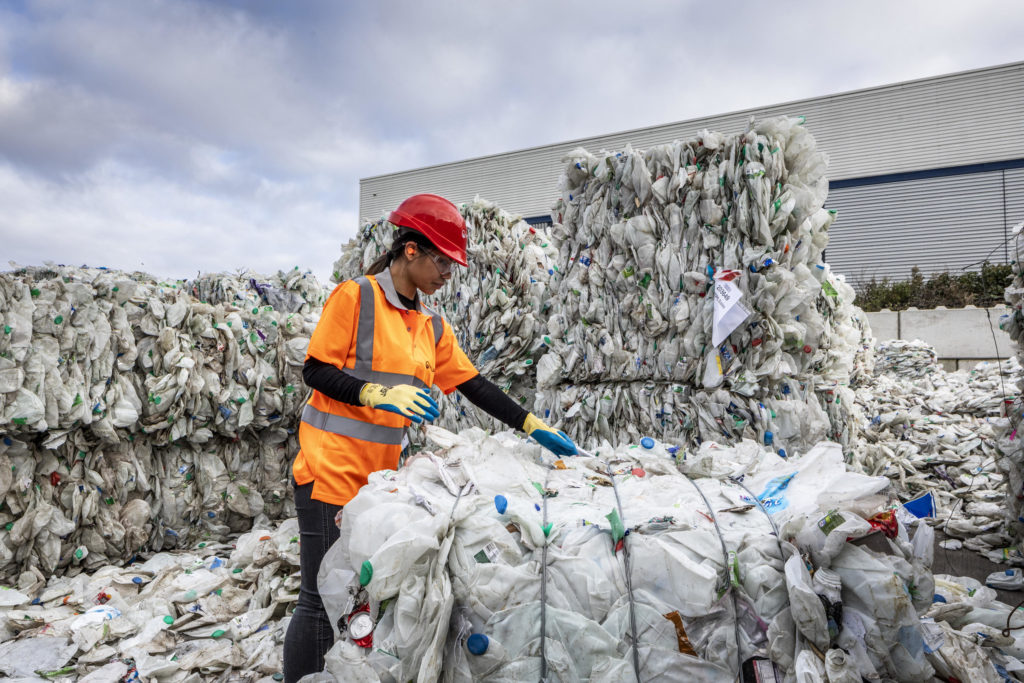
The company said it will provide all the necessary internal bins and recycling bags needed to manage separated materials, and this will contribute to the Welsh government’s carbon goals.
Businesses who sign up will need to separate recyclables into paper and card, metal and plastic, glass, and food.
The company said that “by targeting single line separation, it will be able to optimise operational efficiency ahead of imminent legislation”.
Legislation change
The Welsh government’s goal is to achieve circular economy, 100% recycling and zero waste by 2050. It will soon set out legislation to achieve this.
Veolia said this will see organisations obligated to ramp up efforts on recycling.
The company’s collection services, specialist recycling and treatment infrastructure mean that it will be able to cater to customers with even further segregation including textiles, electrical and electronical equipment, and hazardous materials, Veolia said.
Recycling saves between 30 to 80% of the energy used to extract and process virgin resources, so its approach will seek to “save resources and cut carbon emissions, contributing to the net-zero carbon target”.
Under proposed plans, any organisation not separating its waste will be liable to penalties and waste companies will not be able to collect waste if not segregated correctly.
Any other residual waste can be repurposed to produce low carbon energy through energy recovery facilities.
Contamination
Keith McGurk, managing director of commercial at Veolia said: “In Wales the amount of waste recycled has risen from 5% in the late 1990s to 65% in 2020, which is strong progress. But there are still valuable resources in mixed recycling that fail to meet the quality needed for recycling due to contamination.
“The solution is single line separation. If we can collect, transport and treat waste as a single line we can increase the amount that can be recycled.”


Subscribe for free