



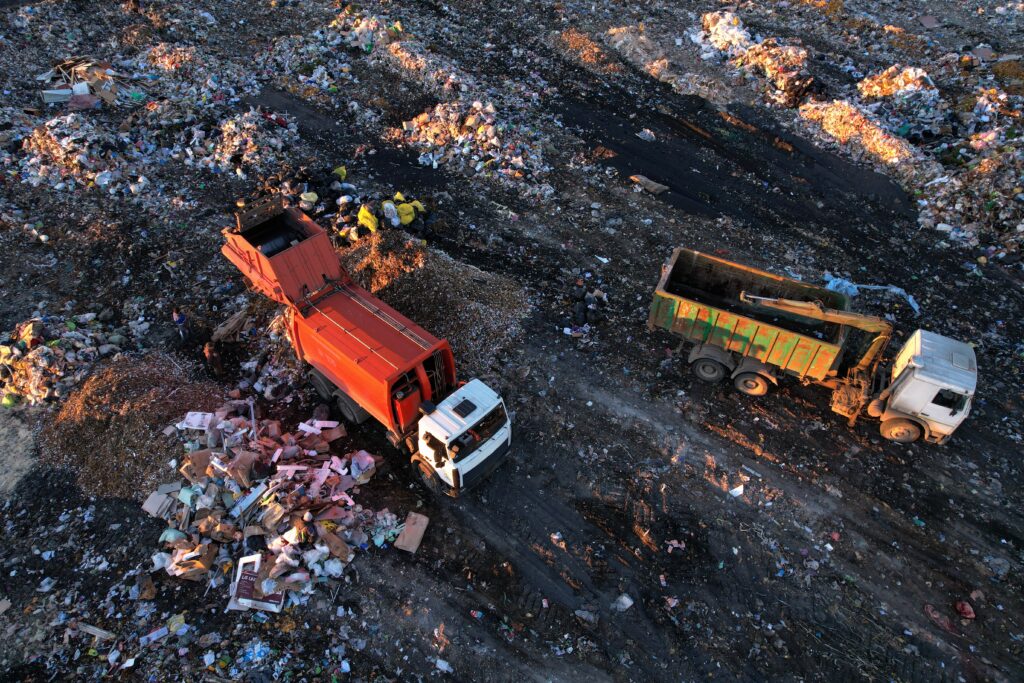
According to figures published by the Scottish Environment Protection Agency (SEPA), 254,000 tonnes of household waste were landfilled in 2024, a decrease of 37.7% on 2034 levels.
Since 2011, the landfill rate has fallen by 82.5%, going from 120,000 tonnes diverted to just over one million tonnes diverted in 2024.
SEPA said this marks the lowest amount of household waste landfilled in the current time series.
The upcoming ban will prohibit the landfilling of mixed and separately collected biodegradable household waste – including paper, cardboard, food waste, textiles and wood – as well as non-household wastes such as bulky items and mixed commercial waste.**
However, questions remain about capacity to manage residual waste after the ban comes into force.
Incineration continues to rise
With landfill tonnages falling, the majority of diverted household waste was instead managed through incineration, which accounted for 853,000 tonnes in 2024 – 82.3% of all waste diverted from landfill.
This marks an increase of 107,000 tonnes compared with 2023, when 746,000 tonnes were incinerated.
Almost half of all waste from Scottish households continues to be disposed of either through landfill or incineration rather than recycled.
Ross Haggart, SEPA’s Chief Operating Officer for Regulation, Business and Environment, said: “Research from Zero Waste Scotland shows that around 52% of what goes into general household bins could be recycled, including key materials like food waste, paper, cardboard, and plastic.
“By making better use of existing recycling schemes and ensuring key recyclables don’t end up in general waste bins, we will see a real change in how much residual waste needs to be incinerated.
“What is clear is that in order to reduce the need for energy from waste facilities, we must all strive to reduce the waste we produce and increase our recycling as much as possible.”
Paper and cardboard remain most recycled materials
Scotland’s household recycling rate rose incrementally in 2024, with 44.3% of household waste recycled – up from 43.8% in 2023.
In total, 1.02 million tonnes of household waste were recycled, an increase of 21,000 tonnes (2.1%) year on year.
The total amount of household waste generated stood at 2.32 million tonnes, slightly higher than in 2023 (0.4%) but 11.2% lower than in 2011.
Paper and cardboard remained the largest material category recycled or reused, accounting for 167,000 tonnes (25.2%) of all recycling. However, this represents a 30.6% decline since 2011, reflecting a long-term shift from print to digital media.
Among material streams, wood waste saw the biggest annual increase, up 9,900 tonnes (14.3%), followed by metallic wastes, which rose by 7,700 tonnes (9.0%) compared with 2023.
Haggart continued: “Every household can play a part in reducing emissions and supporting Scotland’s transition to a circular economy by recycling more and wasting less.”
Kim Pratt, Circular Economy campaigner at Friends of the Earth Scotland commented: “Year after year, we see mounting evidence of a broken waste management system in Scotland. The Scottish Government’s 2025 recycling target is now a distant dream.
“Poor recycling rates and rising incineration means rubbish collections are expensive and ineffective. The impact of toxic emissions from incinerators is being felt by communities across Scotland and contributing to climate breakdown.”
**Since publishing, SEPA has updated the landfill ban, so that it will now come into effect on 1 January 2028.


Subscribe for free