




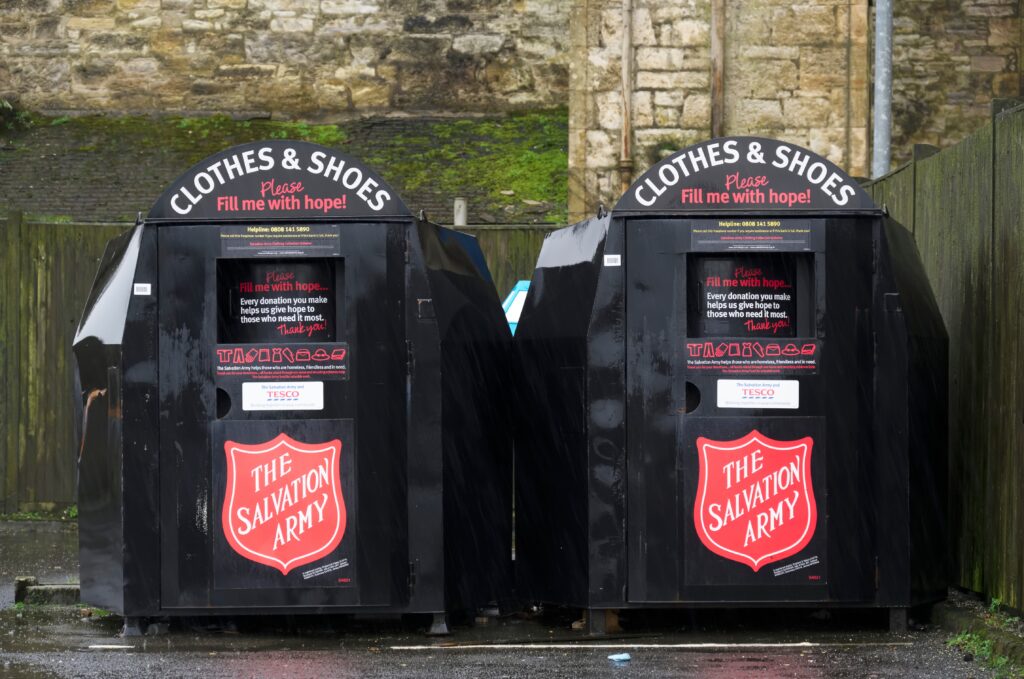
Local authorities were informed in writing that the contracts would be paused from 22 December 2025 to the end of January 2026 – traditionally the busiest period for donations.
The company confirmed it will conduct “a full review” of its future position in February.
SATCoL is the trading arm of The Salvation Army and one of the largest second-hand textiles merchants in the UK.
A SATCoL spokesperson told Letsrecycle: “The volume of donations has soared and so we have been forced to take urgent action to manage the expected volumes in the peak month of January.
“This is not a decision we took lightly but unless we reduce the volume of clothes for processing, we face operational challenges which would impair our ability to generate money for The Salvation Army.
“We know this will inconvenience people trying to donate their clothes to an important cause, but we hope the public understand that like many charity collectors, SATCoL is experiencing real challenges to manage the volume and quality of clothing donations.”
SATCoL added that it will continue liaising with local authorities and will monitor the situation closely.
The company told local authorities that it will communicate with councils about the removal of any on-site assets, but otherwise they will remain in situ.
Local authorities ‘disappointed’ by development
LARAC have said that its members are “disappointed” by the development.
The committee said that it has been engaged in long running discussions about declining markets for post-consumer textiles collected across the UK.
LARAC Chair Cathy Cook said: “Whilst the Salvation Army has cited global challenges as a result of geopolitical instability, the long running issues of limited UK infrastructure, reliance on oversees market, and poor-quality material will be no surprise to the sector.
“The impact on local authorities that have worked with the Salvation Army to have textile banks at their HWRCs will be evident, and while we hope that this is not a sign of further challenges for UK textiles recycling, it should act as a signal to government that action needs to be taken to support this sector if Circular Economy and Net Zero targets are to be achieved.”
LARAC called for the government to introduce an Extended Producer Responsibility (EPR) scheme for textiles to help mitigate the ongoing difficulties being faced by the sector.
Difficulties in the second-hand textiles market
The second-hand textiles sector continues to struggle amongst dwindling demand from overseas markets and surplus of low-quality textiles due to ultra-fast fashion.
Charity shop collections and textiles banks continue to see low pricing which has further decreased this month.
Some in the industry have warned that they may soon have to look at charging local authorities for collections from HWRCs due to the low grade of the textiles they are collecting.
View our more detailed textiles price index here.



Subscribe for free