



The Local Government Association has warned that losses could be expected if authorities opt to absorb VAT into existing charging levels – rather than adding 20% to current bills for the collection services they provide directly to customers.

The VAT exemption case has been brought by private waste business The Durham Company, trading as Max Recycling.
The North-East firm is bringing the judicial review against HMRC – which ruled to introduce VAT exemptions for councils providing commercial waste services in 2011 on the basis that they have a duty to arrange for collections under the Environmental Protection Act 1990.
But, Max Recycling claims that the exemption is anti-competitive, and gives councils a commercial advantage over private waste businesses offering the same type of service.
Max Recycling applied to take out judicial review proceedings against HMRC and the Treasury at the end of 2014. The case will be heard next week (18 July) as an Upper Tax Tribunal hearing at the Royal Courts of Justice in London.
The preferred position of the government body is to acquire a preliminary ruling on whether there is a ‘special legal regime’ for the exemption – and to determine whether there is a ‘significant distortion of competition’ by means of the review.
LGA
HMRC has meanwhile included the LGA as an ‘interested party’ in the case, with the Association suggesting the outcome is likely to be a ‘critical issue’ for its members.
LGA also hopes that its involvement will strengthen the case of HMRC and the Treasury ‘in the eyes of the courts’.
In its ground for resistance, LGA states: “As presently advised, HMRC do not know the position of the Local Government Association. HMRC can do no more at this stage than put down a marker that they regard it as very important that the interests of local authorities, as the parties that the Claimants says should be required to account for VAT on the supplies at issue, are properly represented on this Application.”
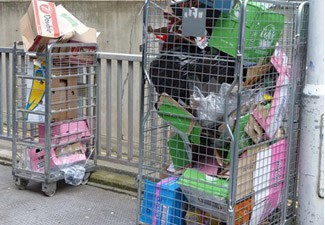
According to LGA, the 326 councils in England eligible to offer commercial waste collections share less than ‘10%’ of the overall market. It adds that not all eligible local authorities choose to offer the service and in some areas of the country there are no commercial providers.
Outcome
The outcome of the hearing could have serious ramifications for local authorities. LGA states that in 2013/14, the income from commercial waste collections to councils was valued at £172-388 million.
Assuming councils would need to absorb the impact of VAT into their existing rates, it adds, a decision to remove exemptions could result in a loss of 20% of income from the collections – between £34 million and £77 million based on the 2013/14 figures.
The LGA suggests that other consequences for waste collection assets, infrastructure and contracts also need to be considered in the event that the exemption is withdrawn. The Association will assess the need to work with councils as the case between the principal parties develops.


Subscribe for free