




For a long time I couldnt get too excited about waste prevention. Sure, its top of the hierarchy, and from an analytical perspective I could see that reducing waste arisings was a good thing.
But it can be hard to see what waste prevention looks like, especially at an individual level. What is it that were trying to get people to do? Or is it simply about inaction, about not doing something? To me that kind of message is unlikely to set pulses racing.

I dont think the majority of the public are excited about it either that is, if they even give a thought to waste prevention – and I dont believe that the Waste Prevention Programme has done anything to change this. To my mind, what the Programme lacks is iconic interventions that people will engage with – and possibly for reasons other than preventing waste.
For me, three recent pieces of work have fundamentally changed my thinking on the matter.
The first was a study investigating the social impacts of third sector reuse organisations.
Research
Beyond alleviating material poverty through providing low-cost household goods to the needy, there is evidence of benefits such as improved well-being and self-esteem to volunteers. Moreover, where people such as young offenders are able to obtain placements with reuse organisations, this can lead to both direct savings to statutory bodies, and possibly indirect financial savings to wider society, for example through helping people move away from crime.
‘I dont think the majority of the public are excited about it either that is, if they even give a thought to waste prevention – and I dont believe that the Waste Prevention Programme has done anything to change this.’
Chris Sherrington
The second, for Zero Waste Scotland, explored the indirect costs of litter. This uncovered evidence that litter can be a causal factor in crime, and suggested that a littered environment has a negative effect on peoples mental health and wellbeing. Defras own research, which we reviewed in the course of the work, has identified that litter is the most significant factor affecting residents perceptions of their neighbourhoods, with a high willingness-to-pay to reduce litter levels. While picking up litter promptly is one way of dealing with the matter, this is expensive, and the problem is better tackled at source by measures that can also reduce waste.
Thirdly, over the past year, Eunomia has been working for Nesta, assessing impacts of finalists in their Waste Reduction Challenge Prize. This has brought home to me the importance of the work of food redistribution organisations not just in respect of the physical availability of food, but the social element of projects such as the Brixton Peoples Kitchen, where people are cooking and eating together.
The common thread with all of these is waste prevention, but it is not necessarily the headline grabber. So when Eunomia launched its own Waste Prevention Wish-list in December, we aimed to include measures that would, in their own right, engage the public, regardless of the fact that they lead to waste prevention. In short we sought to promote measures that would spread a little more joy and a lot less waste.
The specific interventions included in the Wish-list are:
1. Pay As You Throw for household waste which while possibly not the most joyous of measures, is very important. From examples in Europe, well designed schemes can be expected to bring about a reduction of 10% in the tonnage of household waste generated. Without PAYT, the marginal cost of waste generation to the householder is zero. If England is to be serious about waste prevention this misalignment of incentives has to be addressed. Furthermore, paying for what we throw, just like paying for the electricity or gas that we consume, is arguably much fairer than the current system.
2. A levy on all single-use carrier bags including paper and biodegradable plastic.
Given the negative impacts associated with littered plastic bags in the marine (and terrestrial environments), there is a strong justification for taking action. This is the rationale behind Nick Cleggs recent announcement of a proposed levy in England.
However, in order to be most successful as a waste prevention instrument, the levy should be applied to all single-use carrier bags. Not only would this avoid the arguments about the relative impacts of paper versus plastic (including biodegradable plastic) bags, but it would more fully respect the waste hierarchy and present a clearer and more consistent message to the public.
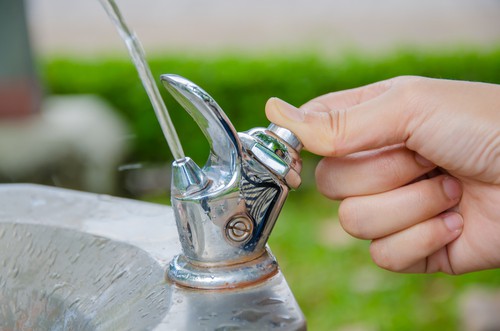
3. A network of public water fountains, including taps for refilling water bottles. Installing fountains in prominent locations, such as railway stations, city centres and parks would not only assist in tackling litter (and marine litter) through reducing consumption of plastic bottles, but would bring a range of wider benefits:
- The risk of dehydration would be reduced, which is of growing importance given the increased likelihood of heatwaves in future years;
- The likelihood of impulse purchases of drinks, including those containing sugar, would be reduced, possibly helping to address issues such as diabetes;
- Citizens would save money; and,
- If displacing bottled water, environmental impacts would be considerably reduced as the energy requirements to produce bottled water are much greater than for tap water.
4. Adoption of the food waste hierarchy. The reliance on food banks has increased dramatically over the past year. At the same time, most pigs in the UK eat feed made primarily from crops like soya, maize and wheat. This is expensive, and brings with it a number of environmental impacts. These problems can be tackled through implementing the food waste hierarchy, originally proposed by the organisation Feeding the 5000.
After seeking to avoid generating food waste in the first place, this involves:
- Surplus food from businesses being directed to charities and organisations that redistribute food to people in need; and,
- Food unfit for human consumption being directed to livestock feed wherever possible, and legally permissible. The Pig Idea project has recently demonstrated that bakery, fruit, vegetables and dairy products can safely and lawfully be directed to farm animals.
Last year the MP for Bristol East, Kerry McCarthy, tried to bring the food waste hierarchy into law, through the Food Waste Bill. Unfortunately the proposed Bill fell at the end of the Parliamentary session. Reviving the key elements of the Food Waste Bill, possibly through including them within other developing legislation, should be a priority.
5. Local authority targets for reuse In common with food-redistribution charities, the current economic climate has meant that third sector reuse organisations are experiencing dramatic increases in demand for their services. In the case of items such as beds, cookers and other white goods, supply has not kept pace. In 2012/13 the Furniture Reuse Network (FRN) reused 2.7 million items of furniture and electrical equipment. Their figures suggest this equates to 110,000 tonnes of waste prevented, leading to a reported saving to low income families across the UK in the order of around 350 million. Based on current demand, FRN is confident that they could double the amount of reuse if supply were to increase.
Reuse
However, the sector is not currently able to access sufficient reusable goods. As a result, reuse organisations are forced to buy new items in order to meet their social objectives. Establishing a reuse target on household furniture and electrical items for local authorities, at 5% in the first instance, would not only have a positive effect on waste prevention, but would make a considerable difference to the lives of many people.
These ideas arent rocket science. Each has merit and, arguably, intuitive appeal, even aside from their impact on waste. They are measures that could be expected to have a long-term positive impact on poverty, mental health, hunger and farming.
Importantly, I believe they are ideas that can capture the publics imagination, in a way that targets that talk about gradual, small percentage decreases in waste cannot. A key challenge of waste prevention is to help people understand what it looks like. High-profile interventions such as these would be a great place to start.


Subscribe for free