




The research was carried out on behalf of Jo Swinson, the Liberal Democrat MP for East Dunbartonshire, who has campaigned against excessive packaging since she attempted to introduce legislation to curb over-packaging of products in Parliament in 2007.
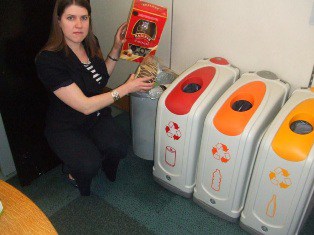
Nestl
Earlier this month, Nestl announced it was the first confectionary manufacturer to make all the packaging across its entire Easter egg range recyclable (see letsrecycle.com story). The company has replaced the rigid plastic used in the packaging with FSC approved cardboard, while plastic windows have been replaced with compstable film.
Commenting on the findings of the report, Environment Secretary Caroline Spelman urged companies to follow Nestls lead. She said: Nobody wants broken Easter eggs, but excessive packaging costs everyone money and creates unnecessary waste – which is bad for the environment. Many companies are doing a great job of significantly reducing Easter egg packaging and I applaud Nestls example of making all packaging 100% recyclable. Now I am calling on other Easter egg makers to follow suit.
Packaging
In the report, Easter eggs have been ranked by the volume of egg compared to the amount of packaging used, with the research showing that Thorntons and Guylian eggs use the most packaging, with egg to packaging ratios of 15% and 20% respectively. The best performer was Sainsburys, whose own brand Easter eggs had an egg to packaging ratio of 69%.
The report suggest that manufacturers are heading in the right direction, with historic data showing that the proportion of packaging used by manufacturers has decreased since 2008, when the average volume of egg to packaging was 29.4%, up to 35.4% in 2011.
Labelling
Another concern highlighted in the study is that recycling information on Easter eggs is often misleading and as not all local authorities across the country accept the same types of packaging for recycling, consumers can be unsure what can and cant be recycled.
While the study found that recycling information does seem to be more commonplace across Easter eggs, one egg, Baileys, had no recycling information on any of its packaging.
Launching the report, Ms Swinson, said: Since launching this report in 2007 the main chocolate companies have acted to reduce their packaging and improve recyclability. However there are still a number of companies who rely too much on plastic and are sitting on their laurels.
A few manufacturers are hiding behind green credentials with packaging that isnt easily recyclable by the majority of consumers. Manufacturers know that their plastic boxes arent widely recycled and yet they continue to use them, despite other companies showing how Easter Eggs can be packaged with a mind to efficiency and recyclability.
Related Links
Its not impossible and there are now a number of examples of best practice out there t show how it can be done. Companies need to realise they havent gone far enough yet and still need to change the fact that so many Easter eggs are drowning in excess packaging.

Subscribe for free