
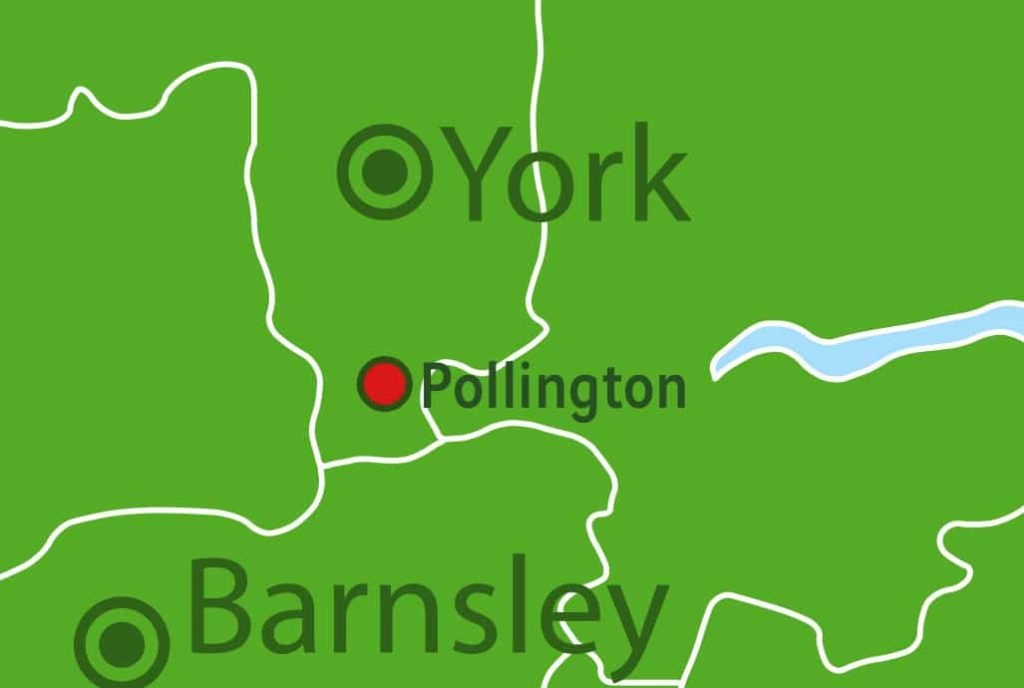

After almost a year of delays, the fire tests are being carried out at Stobart’s waste wood site in Pollington, Yorkshire, with burn days scheduled for today and Friday (November 18 and 20) this week, while yesterday and Thursday (November 17 and 19) were both set aside to prepare for burning.
With gales forecast for northern parts of the UK, Friday’s controlled burn is still weather dependent, but a spokeswoman for the Chief Fire Officers Association – which is helping to carry out the tests – confirmed this morning that today’s controlled burning has started.
Further delays to testing had previously been feared due to the site’s proximity to the neighbouring large pile of waste material at Great Heck (see letsrecycle.com story), which a partnership of the Environment Agency, Selby district council and North Yorkshire county council has now secured funding to begin clearing.
Weather
Speaking to letsrecycle.com on Monday (November 16), WRA director Simon Dowson said while there were concerns about the weather impacting on the test “we will keep our fingers crossed and hopefully over the course of the week we will get some luck”.

He explained that strong windspeed and wind direction could scupper the measurement of emissions from the fire tests, as well as adding that “we don’t want more smoke going in the direction of the villagers”, who have been suffering as a result of the nearby Great Heck waste pile.
The live waste wood stack burns have been organised in order to both assess safer spacing for piles of material and to establish the flammable properties of material.
They will also look at the effect that rising columns of gas have on fuelling waste fires, wind-current effects, and how different materials burn or smoulder depending on their make-up.
Part-funded by the Wood Recyclers’ Association (WRA) in partnership with the Chief Fire Officers Association, the tests are the first of major significance in around 40 years, with further fire tests for other waste and recyclable materials likely to take place in Essex next year.
Stack size guidance
The tests come amid widespread concern in the recycling industry – particularly for wood, tyres and organics recyclers – about the impacts of limits for maximum wood stack sizes outlined in current Environment Agency Fire Prevention Plan (FPP) guidance.
The Agency issued TGN 7.01 on fire prevention at waste and recycling sites in October 2013 stating that stacks of material should be a maximum of 1,370 cubic metres in volume, 10 metres high and 20 metres wide or long, with a minimum of six metres separation between stacks.
These restrictions seen as too severe for some businesses, including Hadfield Wood Recyclers Ltd, which has since earlier in the summer been forced to close its gates to incoming lower grade waste wood in order to avoid enforcement action over stack sizes from the Agency (see letsrecycle.com story).
Meanwhile, both the WRA – which has previously described the FPP guidance as “inoperable” – and the Tyre Recovery Association (TRA) have called for amendments to the Agency guidance (see letsrecycle.com story).


Register for free to comment