


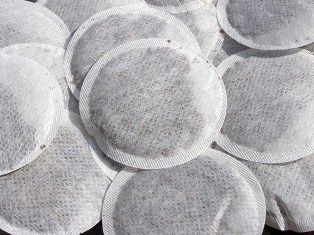
Used tea bags should be composted or collected with food waste, while their packaging should be recycled, according to the Waste & Resources Action Programme (WRAP) and industry organisations.
The support for the disposal of tea bags for composting follows comments made by Diana Fox Carney the wife of Bank of England governor Mark Carney on her personal blog about sustainable products.
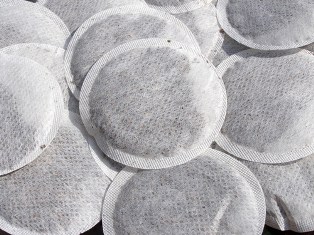
Reports about Mr Carneys views on tea bags in national newspapers suggested that she had taken issue with the tea bags themselves, but on her blog she writes that one of her pet hates is individually wrapped tea bags.
While Mrs Carney also notes that tea bags can be composted and the packaging recycled, she asks: do we really need an extra 40cm of bleached and printed paper with every cup of tea?
WRAP and the Organics Recycling Group (ORG) both support the disposal of used tea bags in food waste bins or through home composting, rather than disposing them alongside other household waste.
But, responding to Mrs Carneys comments about individually wrapped tea bags, WRAP said that its work on tea bags had been on their compostability and that the vast majority of tea is sold in bags that are not individually wrapped.
A WRAP spokeswoman said: For our wider work on packaging, WRAPs role is focused on helping brands and retailers produce products with packaging that, where possible, is optimised and can be recycled. Therefore if individual packaging of tea is required (for example to maintain freshness or flavour) we would always encourage it to be recyclable or compostable.
‘if individual packaging of tea is required (for example to maintain freshness or flavour) we would always encourage it to be recyclable or compostable’
WRAP
Speaking to letsrecycle.com, Stuart Pohler recovered paper sector manager at the Confederation of Paper Industries said that manufacturers needed to react to consumer demand in terms of packaging.
He said: The CPI supports waste prevention where possible, however, there is a fine line between over packaging and under packaging, the latter often resulting in a far more negative impact.
Dick Searle, chief executive of the Packaging Federation, Dick Searle, also said that there was a demand for individually wrapped tea bags, but said that there was a need to differentiate between catering use and home use.
Mr Searle told letsrecycle.com: In a sense I can understand where Mrs Carney is coming from if you are buying individually wrapped bags to drink at home. But this packaging does have a use when it comes to catering or hotels because then it is more of a hygiene issue. In those circumstances it is much more about hygiene and shelf life, but I imagine that is a relatively low volume.
Polypropylene
According to the UK Tea Council, 96% of tea consumed in the UK is made using tea bags rather than loose leaf tea, representing around 165 million cups per day and 62.5 billion cups per year in the UK.
As a result, WRAP estimates that more than 370,000 wet tonnes of tea bags and leaves are disposed of each year in the UK.
Although tea bags themselves are made from biodegradable paper or abaca a type of hemp the tea leaves are usually sealed inside the bag using a plastic called polypropylene, which takes longer to break down in compost than paper.
Bill Gorman, chairman of non-profit organisation the Tea Council, explained to letsrecycle.com: A fraction of polypropylene is used to seal the tea bags as there is no product at the moment on the market to seal the bag and that is where the debate comes in terms of tea bags.
I am told that if you put tea bags on the compost you see fractional amounts of polypropylene in your compost which will eventually break down.
Asked by letsrecycle.com whether he was aware of any issues arising as a result of composing tea bags, technical director of the ORG, Jeremy Jacobs, said: They are something that should be going in the compost bin rather than mixed in with residual waste, which will end up in landfill most likely.
I think they are getting smarter on the formulation of the tea bags themselves and things are improving, but Im not aware of any problems with tea bags being composted.
Unilever
Consumer goods giant Unilever, which owns tea bag manufacturer PG Tips, said that tea bags provided a convenient solution for enjoying a cup of tea, adding that its own bags used very lightweight filter paper of around 16.5gsm (grams per square metre) compared to 75gsm for typical printing paper.
A Unilever spokeswoman said: We strongly advocate that teabags be included in residential food waste collection or composted at home as over 95% of the teabag is organic waste. This enables the maximum environmental benefit possible as teabags can be repurposed as compost or used to generate renewable energy from anaerobic digestion.

Register for free to comment