

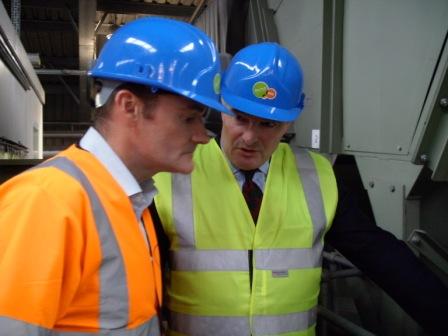
Waste and recycling minister Lord Henley has said he does not support anaerobic digestion over every other waste treatment technology and understands that for many waste streams incineration is the preferred route.

He said: “I wouldn't want to support anaerobic digestion over everything else. It's a jolly useful way of getting rid of food waste but it is not necessarily the best way with a lot of other things and I am advised that with lots of green garden waste composting is probably going to be better and we are obviously not going to be able to digest anaerobically plastic bags – the incineration process will have to come in.”
Drawing on his visit the previous day to SITA's Billingham energy-from-waste plant (see letsrecycle.com story), Lord Henley pointed out that, if anything, incineration would often be the most appropriate treatment option.
He said: “I think there are many occasions where incineration is going to be the preferred route over anything else because it is the only route. But, where appropriate, anaerobic digestion is a good thing to do. But one must not begin to think it's the only option because it is only an option for food waste.”
Education
Discussing what he had learnt on his tour, which will inform the government's ongoing review of waste policy, the minister said there was a lot of fear surrounding certain technologies, such as incineration, which needed to be addressed.
This follows data released yesterday by SITA UK showing that a high proportion of waste treatment facilities and incinerators in particular fail to make it through the planning system (see letsrecycle.com story).
Lord Henley said: “I think there is a great deal that we are going to have to do in terms of selling certain technologies to the public because there is a lot of fear out there as to what it means.”
Tour
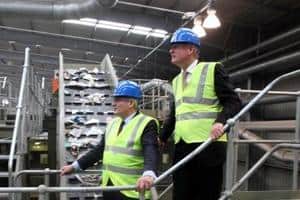
At the West Sleekburn site, Lord Henley was given a tour of the MRF by Richard Hinchcliffe, SITA UK's general manager in Northumberland and SITA UK chief executive David Palmer-Jones who explained how recyclables from across Northumberland are sorted into different streams. The minister asked about the revenue gained from recyclables and about how the plant dealt with contamination and educating the public.
The plant is capable of sorting 50,000 tonnes of recyclables a year and sits alongside a transfer station which together cost £12 million to develop.
When asked about packaging – which makes up a large part of its feedstock – Lord Henley acknowledged that “packaging is a problem” and that progress had been made, but could not give any time scales as to when packaging recycling targets might be set for 2011 (see letsrecycle.com story) and instead pointed to “some very useful voluntary deals” in the sector.
During his tour of the North East, Lord Henley also visited Richmondshire and South Tyneside councils and a Fareshare depot in Sunderland, which distributes food which would have been disposed of by manufacturers and retailers to disadvantaged people.
He said that he was trying to see “as much of the different bits of the waste process as possible” during the summer recess and is even planning on visiting a landfill site. Next week, he is due to visit ASDA in Carlisle to see their dispensing trial for fabric softener, an on-farm anaerobic digestion facility, a trade waste bring bank site, a composting site in Haydock and Recresco's glass recycling facility at Ellesmere Port.

Register for free to comment