

After eight years handling the day-to-day management of the organisation, Mr Wilcox this week (July 1) handed the reigns to a former RAF colleague, Peter Butt.
Mr Butt is a newcomer to the recycling sector but has experience managing a number of department stores including John Lewis at Brent Cross in North London, during which he became accustomed to dealing with government and regulators, which will be important in his new role.
The change comes just two weeks after Geoff Hadfield, managing director of Manchester-based Hadfield Wood Recyclers and WRA chairman for four years, was replaced by Clem Spencer, who runs Wood Yew Waste in Plymouth. The changeover took place at the WRA’s quarterly meeting on June 17.
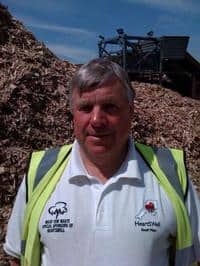
Both Mr Wilcox and Mr Hadfield have helped grow the WRA’s membership tenfold, from six members in 2001 to 58 today and built up close relationships with government, WRAP and the Environment Agency.
Other achievements have included the development of a Wood Recyclers’ Code of Practice designed to raise operational standards, a Wood Packaging Protocol to help operators correctly identify packaging waste, and the publication of annual wood waste market statistics.
Commenting on his departure, Mr Wilcox said: “It has been great working for the WRA and for me it has been all about the people who it has been an absolute pleasure working with. I am glad I can hand it over to Peter, someone I have known for 35 years, is very talented and has a wealth of experience at the highest level, through his work in the retail sector. He will bring a fresh mind and fresh impact in partnership with Clem Spencer.”
Mr Hadfield added: “Rick has done a lot for the WRA and we have both learnt a lot from one and other. The association is in very good shape to build on and Clem and Peter will make the ideal team to take it to the next level.”
Priorities
Looking forward, Mr Butt and Mr Spencer said they were both excited about the prospect of a Wood Recycling Protocol, as exclusively reported by letsrecycle.com last week (see letsrecycle.com story).
The protocol is being developed as part of the Waste Protocols Project run by WRAP and the Environment Agency, and aims to reclassify the point at which non-virgin wood ceases to be a waste. It is particular important because an earlier protocol was abandoned due to lack of data and it could mean that engineered products, such as waste wood-derived animal bedding, would be free from the constraints of waste management regulation, making them easier to market.
Mr Butt said: “The chance to develop a quality protocol is a golden opportunity to take wood recyclers to the next level and increase the confidence in the products we produce. When the WRA presented to the Environment Agency in May I think they were really impressed.”
The new WRA secretary added that the Association wanted to get “more of the right people into the fold” in order to drive the industry forward at a difficult time in the global economy.
He added: “There is a shortage of wood and we have to redouble our efforts to make sure we get our hands on whatever material is available to us, especially because there are opportunities in areas such as biomass.
“I’m very excited about my role. In retail, I have been involved in a business that is really struggling and this is a chance to get into a tremendous growth area.”
Biomass
Mr Wilcox said it would continue to be the aim of the WRA to develop new markets for post-consumer woodchip, such as biomass, while preserving a good relationship with the panelboard sector, which is the main consumer of the material.
The WRA would like to see a ban on wood to landfill, as mooted by the government earlier this month (see letsrecycle.com story), which would help make more material available.
Mr Spencer added that it would be important that the UK did not make the same mistakes as Germany, where the development of too many biomass plants over a short period of time had seen gate fees for wood disappear, as plants sought to source more and more feedstock.
There are also difficulties in the UK with regards to contracts, as large biomass companies often wanted long-term wood supply contracts for material with wood recyclers, in order to help make their plants bankable, while councils preferred shorter deals to supply wood recyclers with waste wood.
Mr Spencer said: “I don’t know how we are going to address this but it is something we are going to have to be very proactive on.
“I am very excited about the role. It is an honour for me. It is great to be there and I will be looking after members’ interests.”
Board
Mr Spencer is to sit on a new WRA board alongside Mr Butt, Mr Hadfield, Geoff Hornsby, of Gateshead-based wood recycling firm Reivers Reprocessing, David Laing, of Carnoustie-based D J Laing (Contracts) Ltd and David McEwan, managing director of Edmonton-based wood recycling firm Larner Recycling. Mr McEwan has also been appointed the new deputy chairman of the WRA.

Register for free to comment