

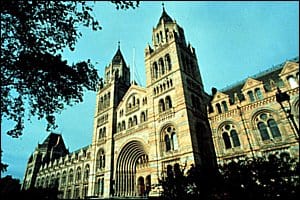
The first museum to sign up as members of Green-Works, the Natural History Museum will now have its unwanted furniture re-distributed at discount prices or, if it is damaged, recycled.
Winner of the 2003 Visitor Attraction of the Year Award, the world-famous museum in South Kensington has already donated 600 square metres of carpet.
 The Natural History Museum in South Kensington leads the way in museum environmental practice |
Tony Claiden, the museum's assistant environmental manager, said: “Our new relationship with Green-Works is part of our campaign for sustainable working practices. We've implemented several new recycling projects at the museum, resulting in around 80% of our materials now being recycled – from paper to cooking oil.
“We can now make sure that our unwanted furniture is disposed of in the most environmentally friendly way. It's good to know that we're also helping smaller organisations who can put it to good use,” he added.
Commenting on the addition of the Natural History Museum to Green-Works' members, chief executive Colin Crooks said: “Green-Works is thrilled to play a key role in the Natural History Museum's commitment to recycling initiatives.”
Expanding with the second phase of the new Darwin Centre expected to be completed in 2008, the Natural History Museum improved its environmental credentials officially in April 2003 as the first museum to gain an ISO 14001 for its Environmental Management System.
Expansion
The museum joins Green-Works shortly after the group expanded with a new franchise in Leicester (see letsrecycle.com story).
“We are taking on ever larger contracts and developing franchises across the UK to enable more organisations to maximise re-use of their surplus furniture in order to fulfil their environmental and social responsibilities,” Mr Crooks said.
“The Natural History Museum sets a leading example and we hope this will encourage other organisations to review their own environmental policies.”
Based in Woolwich, the non-profit social enterprise group also takes unwanted furniture from public and private sector members including HSBC, PriceWaterhouseCoopers and the Foreign and Commonwealth Office. The furniture mainly goes to community groups, charities, hospitals, the voluntary sector, start-up businesses and to individuals.

Register for free to comment