

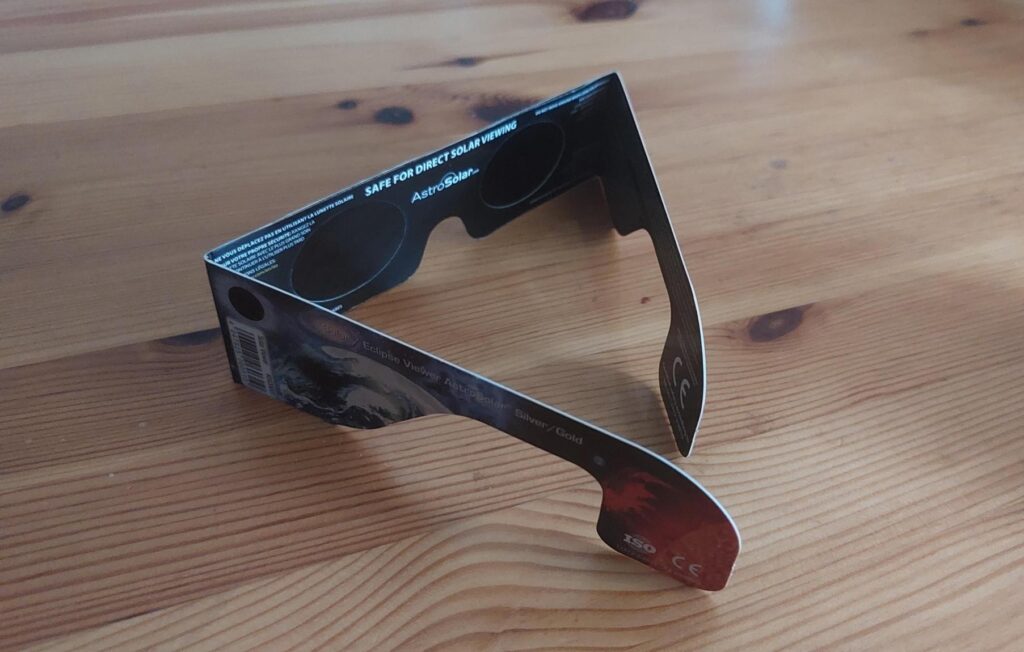
The glasses are typically manufactured from thin, coated or laminated cardboard, while their lenses contain a polymer solar-filter film, which means that the different materials need to be separated before the cardboard frames can be recycled.
With no official sales figures available for the specialist glasses, the exact number expected to be discarded is unclear.
However, Google searches for “solar eclipse glasses next day delivery UK” have risen by more than 3,200% over the last four days, highlighting the surge in demand ahead of the eclipse.
Looking at the top 20 best-selling solar eclipse glasses products on Amazon alone, sales amount to around 152,600 pairs, although many of these are sold in multipacks.
Elsewhere, Blackpool Pleasure Beach has distributed 1,000 pairs, while Go Stargazing founder Stuart Atkinson has imported 300,000 pairs from the US, with 100,000 sent out in recent weeks.
As a result, hundreds of thousands of pairs are expected to have been used to view the eclipse.
Solar eclipse glasses pose recycling challenge
The issue facing recyclers is that the specialist construction of the glasses make them difficult to recycle through conventional household collections.
People looking to dispose of their glasses are being encouraged to consider donation first, with local science and astronomy museums and organisations potentially able to accept used pairs.
Astronomers Without Borders has also traditionally operated a collection scheme for eclipse glasses, although its website currently states that the programme is on pause.
For those looking to recycle their glasses, the plastic film lenses should be removed from the cardboard frames.
The cardboard can then be placed in dry mixed recycling, although the plastic film lenses are unlikely to be accepted through local authority household recycling collections.
With the next total solar eclipse which will be visible from the UK not expected until 2090, simply storing the glasses until the next UK event is unlikely to be practical for most people.
However, the glasses could be retained for future eclipses in other parts of the world, or passed on to relatives in years to come.
Mark Hall, Director at BusinessWaste.co.uk, commented: “The solar eclipse has got plenty of people excited, the first chance to see the significant event since 1999, with the next not due until 2090.
“However, many haven’t planned beyond this, stopping to consider what they will do with the glasses once the fanfare is over.
“We want to remind people how they can ensure as much of the glasses as possible are recycled, or encourage the public to seek out donation routes where possible.”
Hall added that people who had not obtained specialist glasses could consider a cardboard pinhole projector as a lower-waste alternative.
He said: “If you haven’t been lucky enough to snag a pair, a cardboard pinhole projector can be a great low-waste alternative, making use of materials many people already have in their recycling bins.”

Keep your glasses for 2nd August 2027, that’s when the next solar eclipse is visible from the UK. No need to dispose of them, as long as they are not damaged you can use them to view the Sun anytime! (Neill from Go Stargazing)