

The announcement has prompted the company to renew its call for the Department for Environment, Food and Rural Affairs (Defra) to remove an exemption to environmental permitting regulations that allows APC to continue to be disposed of via landfill.
APC residue is typically a mixture of ash, carbon and lime, left over from the chemicals used to reduce emissions from the energy from waste process, with the resulting material classed as a hazardous waste.
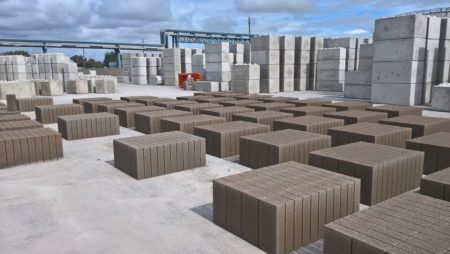
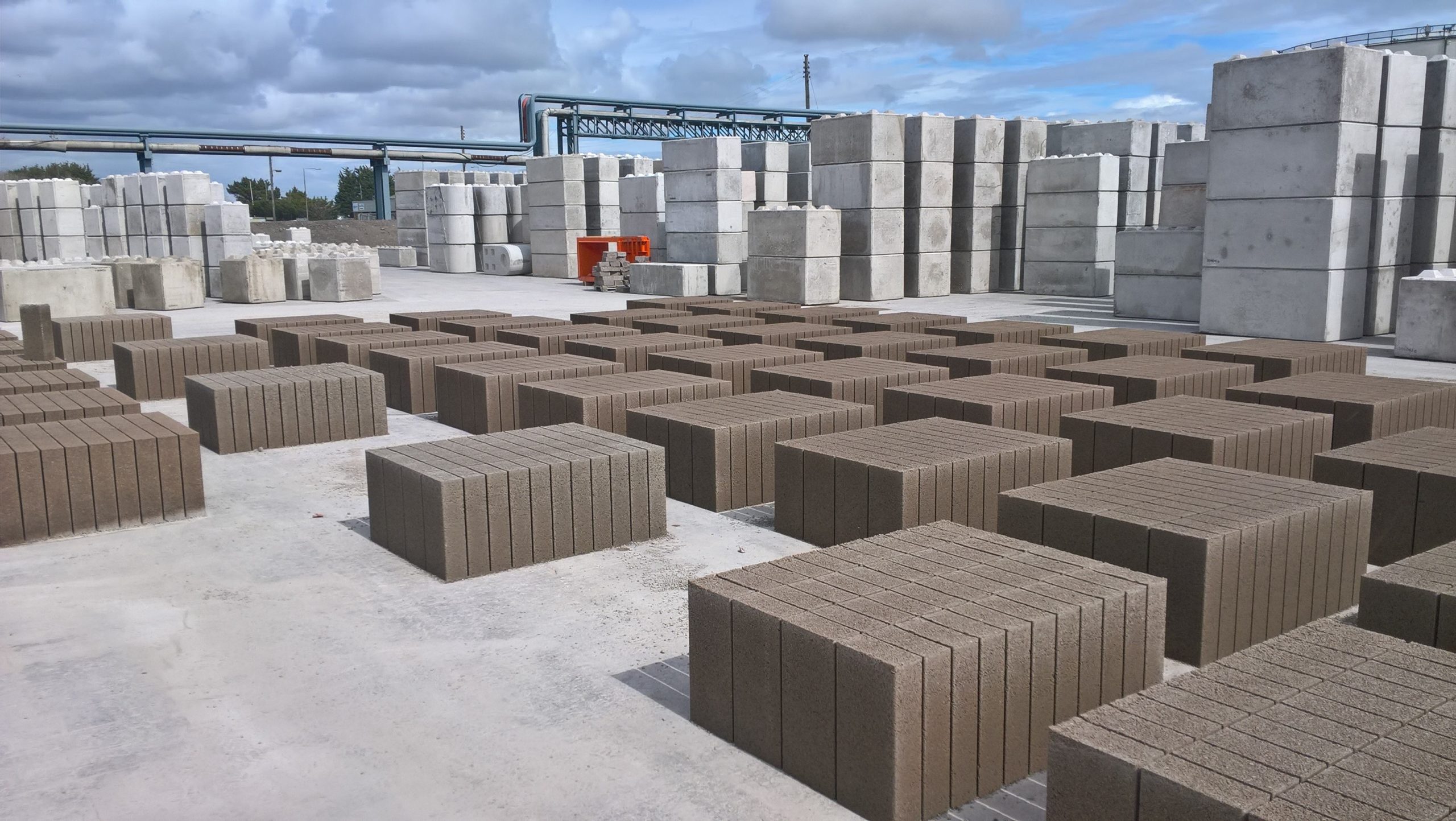
Castle treats APC residues at sites in Stoke and Cardiff, creating an aggregate feedstock that is then used as an aggregate replacement in bound precast concrete products.
The company uses a two-stage process which involves the hydration and washing of the APC residues and removal of ‘soluble salts’ such as chlorides. This material is then incorporated into a concrete mix which is used to manufacture the interlocking concrete blocks.
End of Waste
Approval of the aggregates for End of Waste status is assessed by the Environment Agency, means that the product is no longer subject to waste management controls, reducing the red tape involved in the movement of the products.
Castle Environmental has said that it is currently investing, alongside its sister company Castle Construction Products, in additional production capacity to increase the volume of APC residues it can handle.
However, the company adds that without a change in current permitting rules which allow the material to be sent to landfill, further investment could be limited.
The government has promised to review the permitting rules, claiming that there is a sufficient lack of treatment routes for the material, however it has yet to set a timetable for when the landfill exemption might be removed (see letsrecycle.com story).
Derogation
Following the announcement, Castle Environmental has claimed that its achievement of End of Waste status ‘supports the prompt removal of such [landfill] derogations’.
In a statement, the company said: “Although the market for aggregates produced from other thermal process residues is well developed, APCr have historically been less likely to be processed for re-use due to the concentration of soluble species which would be detrimental to cement matrices. However, the novel and unique proprietary process operated by Castle Environmental removes these soluble species and produces a fine material suitable as a replacement aggregate.
“The recycling of APCr not only replaces virgin materials in the production of concrete products but also diverts APCr from landfill in accordance with the requirements of the waste hierarchy. Significant quantities of APCr are still disposed of to hazardous landfill by reliance on temporary derogations to the Waste Acceptance Criteria.”

Register for free to comment