

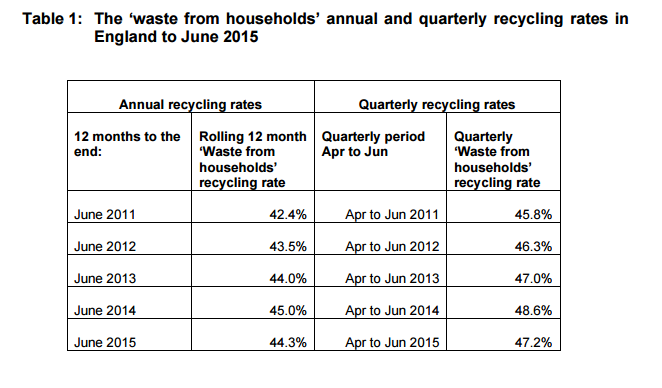
The provisional figures, for April to June 2015, show that the recycling rate for the 12 months stands at 44.3% – while on a quarterly basis the decline was also apparent – dropping 1.6% compared to the same quarter for the previous year.

Defra has blamed the drop on a 5.7% fall in organics recycling against ‘unusually high’ figures posted for the previous year. The government last year attributed the recycling boost to a ‘warmer than average spring’ (see letsrecycle.com story).
The Department illustrates the point by highlighting there was a marginal 0.2% increase in dry recycling in the 12-month period to June 2015 compared to last year.
However, the total residual waste generated by households over the year has also risen by 0.6% in the 12 months leading to June 2015 to 12.3 million tonnes – showing that the amount of black bag waste collected at the kerbside and at CA sites is climbing.#
‘Gloomy’
The statistics paint a “gloomy” picture according to Suez chief executive David Palmer-Jones, who today (March 23) expressed concern that England’s rate is now not only flatlining but “going into reverse”.
Mr Palmer-Jones continued that short of Defra “pulling the proverbial rabbit out of a hat” the latest figures suggest the UK’s 50% recycling target by 2020 is receding “ever further into the distance”.
He said: “Budgetary pressures on local authorities will make it even more difficult to recover lost ground in the short time we have left, if services are cut back. And depressed markets for recyclates only exacerbates an already challenging situation.
“There has been no shortage of advice as to what Defra should do, but with time running out the window for implementing most of these options is closing fast, and it is now difficult to envisage any ‘service’ fixes that would make up the lost ground.
“No doubt this will be near the top of the agenda for the top brass at Defra over the next year. Convening a ‘waste summit’ involving local authorities, private sector operators and Defra would be a good way to start.”
Wales
Wales achieved a quarterly result of 56.2% over the same period in 2015, but there are signs that its rate too is now slowing as a number of councils struggle to meet the 58% annual recycling target set for the end of the year.

Register for free to comment