


The LGA, which represents councils across England, also says reforming local government revenue financing could help councils deliver household waste and recycling services to a higher standard.
Meanwhile, the LGA has also separately called for labelling on packaging to be made “easier and simpler for consumers to understand”.
The LGA commissioned economic consultant WPI Economics to carry out a review of the current and alternative sources of local government revenue financing, and the resulting report was published on 13 January.
According to the report, funding cuts have damaged the ability of councils to deliver services “adequately”, which in turn “damages our economy and society”.
The LGA argues that councils can only provide services at pre-pandemic levels in 2022/23 if council tax is raised by the maximum amount permitted, meaning local authorities face the choice of bringing in funding or placing a “significant” burden on households “during a time when the cost of living is rising”.
As an example of a wider societal benefit which could arise as a result of tax reform, the LGA cites the government’s ambition to reach net zero greenhouse gas emissions by 2050.
The association says levies on waste could change behaviour and contribute to “better environmental outcomes”.
Funding
Councils have access to four main sources of revenue, the report says, including council tax, the Settlement Funding Assessment, other central government grants and incentives, and sales, fees, and charges.
In 2020/21, 48% (£31.1 billion) of local governments in England’s “core spending power” came from council tax, the report says.
The report identifies four main problems with the current system of local government revenue financing. These are that the system:
- Does not provide sufficient revenue to fund services of an adequate standard;
- Is “unfair”; for example, council tax is not linked to the ability to pay;
- Does little to support the local economy;
- Does not incentivise better societal outcomes, such as to reduce carbon emissions.
Reform of the current system will go “some way” to addressing the problems with local government revenues, the report suggests, while “being clear on what local government is ‘for’” will guide which reforms are most necessary.
However, the report concludes that some options for local revenue reform, such as localising inheritance tax or vehicle excise duty, should be “discarded”.
Packaging
Elsewhere, the LGA says it would like to see one ‘do not recycle’ label prominently displayed on packaging so householders see “quickly and clearly” how to dispose of it.
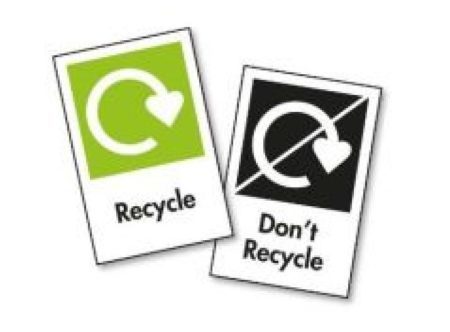
Cllr David Renard, LGA environment spokesperson, said households had made “a real shift” over the past decade to ensure they are recycling as much as possible, with figures showing there has been a more than 5% reduction in waste sent to landfill in the last year alone.
“We would ask residents to play their part by ensuring their recycling is clean, dry and empty, to avoid any contaminated waste getting in the recycling system,” Cllr Renard said.
“There is also the added issue where manufacturers of plastic packaging products are still continuing to create and sell packaging that cannot be recycled and will be put in the recycling bin by people in good faith.
“The burden then falls on councils to not only collect it and dispose of it, but to pay the extra cost of disposing of it.”
Cllr Renard said councils were working towards achieving net zero “with one hand tied behind their back” as manufacturers “litter our communities with plastic they know cannot be disposed of sustainably”.
Related link
Reforming revenues – options for the future financing of local government

Register for free to comment