

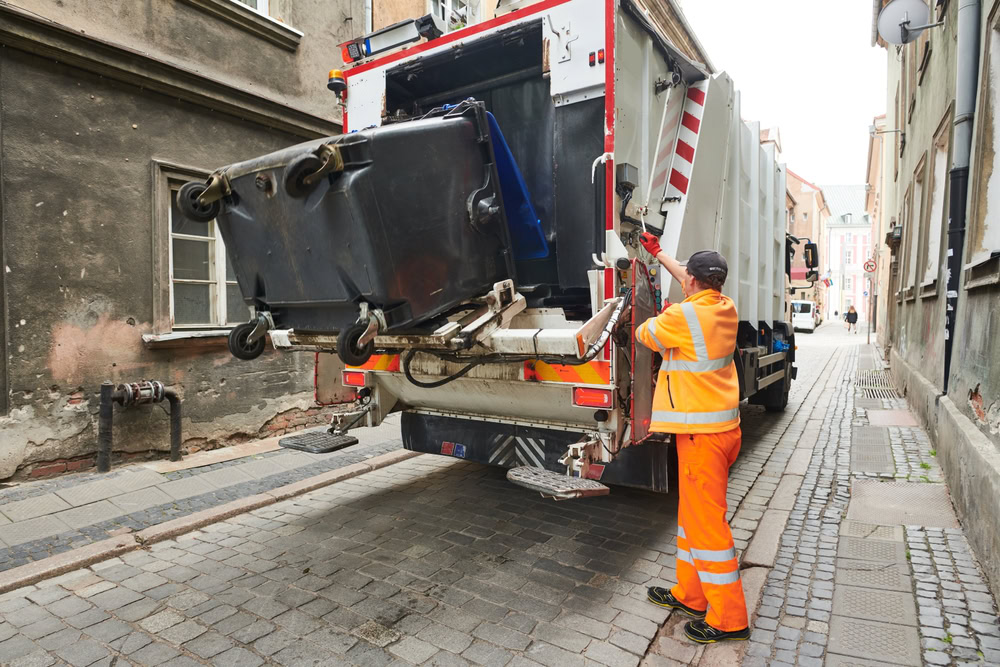
Despite the overall fall in fatalities nationally, the waste and resources sector remains one of the most dangerous industries to work in.
The provisional figures shows the sector recorded a fatal injury rate of 5.47 per 100,000 workers, second only to agriculture, forestry and fishing. It recorded six worker fatalities and three member of the public fatalities over the 2025/26 period, charting up to March 2026.
Over the reporting period, the waste and recycling sector’s fatal injury rate was around 10 times higher than the average across all industries.
Transport and machinery risks remain key concerns
Workplace transport continues to account for the largest proportion of fatal incidents in the waste sector, making up around 30% of all fatalities.
Common scenarios include workers being struck by moving vehicles, collisions during reversing manoeuvres, and incidents in yards or transfer station environments.
While being struck by a moving vehicle accounted for around 17% of all workplace deaths across all industries, this rose sharply to 48% in waste and recycling.
Across all sectors, around 60% of fatal injuries were linked to three accident types: falls from height, being struck by a moving object, and being struck by a moving vehicle.
Falls from height have remained the leading cause of workplace fatalities in almost every year since at least 2001/02, according to HSE.
Alongside transport incidents, entanglement and entrapment in machinery has emerged as one of the fastest-rising causes of serious injury in the waste sector, now accounting for around 28% of major injuries and an increasing share of fatalities.
Industry concerns have also been raised over a small but notable increase in explosive incidents, including fires and explosions linked to hazardous materials such as gas cylinders, lithium batteries in WEEE streams, and volatile waste at anaerobic digestion facilities.
Long-term improvement, but challenges remain
HSE’s annual work-related fatalities statistics for 2025/26 show that 126 workers were killed in work-related incidents across Great Britain – provisionally the lowest annual total on record outside of the years impacted by the coronavirus pandemic.
The latest HSE figures show workplace safety has improved significantly over the longer term, with annual worker deaths down from 217 in 2005/06 and 495 in 1981.
But while Britain continues to rank among the safest places in the world to work, HSE has warned against complacency.
HSE Chief Executive Sarah Albon commented: “Every one of these numbers represents a loved one lost; serving as a powerful reminder of the importance of the work we do.
“We can be proud that Great Britain remains one of the safest places in the world to work, and the new analysis we have developed this year, for the first time, allows us to compare our safety record with a wide range of other advanced economies.”

Register for free to comment