
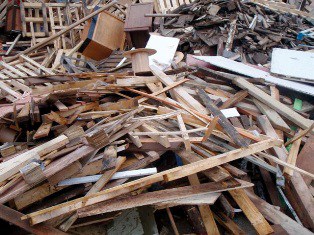
Wood recyclers have claimed that the industry is not ready for a ban on sending waste wood to landfill and say that estimates on the amount of usable wood being landfilled are inaccurate.
Responding to the Department for Environment, Food and Rural Affairs (Defra) consultation on a potential ban on the disposal of waste wood in landfill, which closed on Friday (September 28), the Wood Recyclers Association (WRA) said that the time was not right for a ban.
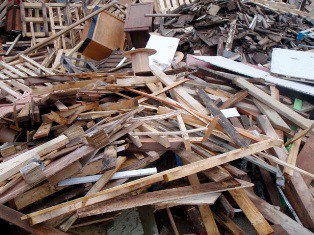
According to the group, a landfill ban could aggravate a situation that has seen recyclers inundated with material due to a fall in demand for wood from European export markets and the slow growth of biomass capacity in the UK. (see letsrecycle.com story).
The group also believes that the amount of useable waste wood that is currently being sent to landfill is a lot less than claimed by supporters of a ban.
Speaking to letsrecycle.com, WRA executive director Peter Butt said that accounts of large quantities of usable wood being disposed of in landfill had been over-egged and that evidence from landfill operators suggested differently.
He said: I have anecdotal evidence, mainly from people who operate landfill sites who will tell you that there is not much decent wood going to the ground. You might see an object like a sofa which does contain a lot of wood but there is also a lot of fabric and springs, and it is uneconomical to separate it out.
However, he did state that the group would ultimately support a ban on landfilling waste wood, but that it was bad timing to consider the measure in the current climate without encouraging alternative routes for the material.
In the WRAs response to the consultation, Mr Butt said: This leads the WRA to the inescapable conclusion that now is not the time to be restricting, let alone banning, the land-filling of wood. That time may come again, depending on economic trends, emerging markets, the continued impact of landfill taxes, government priorities, and so on. But for now, we feel that Defra might better spend its time dealing with more pressing imperatives.
‘For now, we feel that Defra might better spend its time dealing with more pressing imperatives.’
Wood Recyclers Association
ESA
Also responding to the consultation, waste management trade association the Environmental Services Association (ESA) said a ban could on sending wood to landfill could be difficult to enforce, as wood is typically difficult to extract once it has been mixed in with other residual waste.
The group also supports the view that the wood recycling sector is not ready for a ban, claiming that the UK market for processing waste wood into refuse derived fuel (RDF) is still immature and would need to grow before a ban could be considered.
In its response to Defra, ESA claimed that increases in landfill tax and the requirement to follow the waste hierarchy were likely to continue to see more waste wood diverted from landfill, but raised doubts as to how practicable and necessary a ban would be.
ESAs response stated: It is difficult to perceive how you can restrict wood from landfill unless the requirement is enforced at the producer end of the waste chain. Once mixed into the residual waste stream it is very difficult and costly to extract, as well as being difficult to enforce at the landfill. Landfill operators have often been seen as the Waste police men for waste regulations but clearly the focus should be placed further up the chain to ensure compliance with the waste framework and regulations.
Air quality
Air quality campaigners have also responded negatively to the proposed ban, claiming that it would only provide economic benefits and has no regard for the health risks associated with storing and burning waste wood.
The Greater Manchester Breathe Clean Air Group claims that burning wood produces fine particulate matter (PM1s) and burning waste wood produces heavy metals such as arsenic and lead, volatile organic compounds and dioxins, which has implications for respiratory illness, heart attacks, strokes and cancer.
Related Links
Pete Kilvert, chairman of the Breathe Clean Air Group, said: It would appear that Defra is only focussed on the economic benefit of recycling wood and has paid scant regard to health impacts. I am greatly concerned that this consultation document will be seen as a “Biomass Burners’ Charter”, and there will be an acceleration to burning this valuable resource and causing massive health impacts.

Register for free to comment