
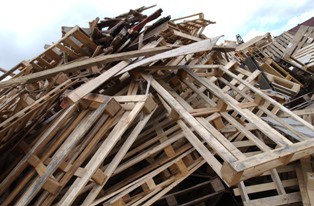
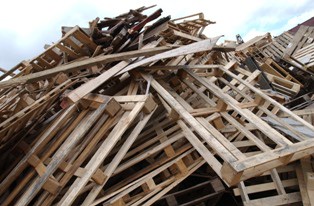
Wood recyclers in the South East of England and Midlands have been warned that they will have to weather the storm as low demand for recycled wood has lead some operators to stop taking in material.
A number of factors are thought to have caused the fall in demand for recovered wood since late 2011, including a milder than expected winter in Sweden which is the regions primary export market for waste wood for use in biomass heaters.
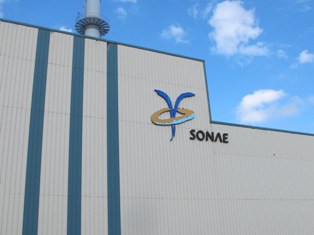
The suspension of operations at chipboard manufacturer Sonaes Merseyside panel board mill following a fire at the site in June 2011 is also thought to have contributed to the fall in demand for material, with the facility yet to be running at full capacity.
The fall in demand has lead some wood recycling site operators to stockpile material that cant be moved. Gate fees have risen from 20-30 per tonne at start of the year towards 40 in some yards, in order to reduce the amount of material being received.
However, many within the sector believe that the problem has not spread beyond the South East, as other parts of the UK have a greater number of waste wood biomass heaters where material can be burnt.
Peter Butt, secretary of the Wood Recyclers Association (WRA), told letsrecycle.com that the issue is a real problem and had been discussed at a board meeting last week with the trade body continuing to monitor the situation. He said: “The general view is that it is a combination of factors that have exacerbated a small problem. Sweden uses a lot of biomass fuel and the winter was mild so there has been a build-up of material, which means that demand has been lower.
Gate fees
Mr Butt also commented that many companies had resorted to increasing gate fees to reduce the amount of new material they received, as material continues to pile up in yards across the region.
Most of the UK biomass is based in the north so obviously with the ready market the wood recyclers do not have the same problem. It is an uncomfortable situation as very few companies have huge yards and can only take so much before the Environment Agency get on their backs.
Gate fees are rising because companies are dependant on demand there is for the wood and in some cases recyclers are having to turn away biomass grade wood. It is a real problem, although it is not expected to be a long term issue, many companies will have to weather the storm.
However, despite the difficulties currently being experienced in the South East, Mr Butt said that the sector remained optimistic that demand would pick up as more biomass facilities come online, and when production at the Sonae panel board facility returns to full capacity.
Trelawney Dampney, managing director of Eco Sustainable Solutions, based in Dorset, said: In the North there is a lot more demand for wood in biomass facilities and the wood does not usually travel from the South. Demand for wood has fallen massively after the mild winter in Sweden, so there is no market for wood in the South and Midlands compounded by the fact that Sonae and others are taking less.
Kevin Sibley, commercial manager at Countrystyle Group, based in Kent, also confirmed that gate fees had risen as a result of the lack of demand from Scandinavia and other parts of Northern Europe.
He said: Ourselves and other big exporters are sitting on high stock levels and that will continue to be the case until at least the autumn or winter. However we are working very hard to find similar end markets that can take on material, such as other biomass energy projects in Northern Europe.
Europe
Many operators also believe that the continuing economic problems being felt in the Eurozone have lead to reduced demand from Northern Europes panel board manufacturers, another established market for the UKs recovered wood.
According to Alastair Kerr, director general of the Wood Panel Industries Federation, lower demand for wood from the housing industry has hit the panel board manufacturing sector in recent years and this is expected to continue alongside the financial downturn.
Andy Hill, national organics & alternative fuels manager for SITA UK, which operates wood recycling facilities at Ridham in Kent and Fareham in Hampshire allayed concerns that low demand would see a glut of wood being sent to landfill and commented that fluctuations in demand in the market are common, and many wood recyclers have made plans for the lull, including extra storage capacity.
He said: I have been in the industry for eight years and have not seen a time when supply and demand are in balance, but people make contingencies when demand is lower such as extra storage, although obviously there is only finite capacity for material.
We are seeing gate fees rise as demand has fallen, but I am not aware that there has been an increase of wood going to landfill, it is still better economically to pay the higher gate fee than have to pay to more send material to landfill, as well as the associated environmental benefits.
Biomass
David Lee, group operations director at Hadfields Wood Recyclers, which operates a site in Essex, as well as in Manchester and on Teesside, also confirmed that gate fees had continued to rise in the South but echoed the view that the long term future remained bright, with additional biomass capacity coming online: UK waste wood processors are struggling to find the quantity of off take which has been seen in previous years, and some processors have had to stop taking in material as a result.
The market outlook through the rest of 2012 is not too positive with no significant market improvements expected as material arisings remain high during summer. The picture for winter will be determined to some extent by the winter weather across Europe. However the longer term picture is more upbeat, with new capacity coming into the market in Holland, Sweden and the UK.


Register for free to comment