



SITA UK has revealed its first waste plastic-to-diesel plant could be operating in time to provide fuel for its vehicles working at the 2012 London Olympic and Paralympic Games.
Speaking in a 2degrees webinar yesterday afternoon (August 17), SITA chief executive David Palmer-Jones said that the company was hoping to secure planning approval next month for the plant to be built at Avonmouth, near Bristol. SITA would then aim to have the plant operational next summer.
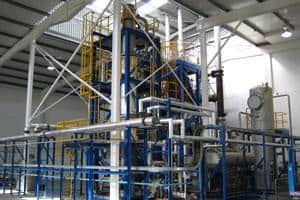
The facility will be the UKs first plant to convert waste plastics into fuel, and is being developed under a partnership with Irish based technology company Cynar, which was signed in November 2010 (see letsrecycle.com story). It will use shredding and then pyrolysis technology to turn one tonne of waste plastics into 700 litres of diesel.
SITA won the contract to provide waste and recycling services for next years Olympics and Paralympics in March 2011 (see letsrecycle.com story), and Mr Palmer-Jones said it would be wonderful if waste-derived fuel produced at Avonmouth could be used there.
He said It would be wonderful as were the supplier of recycling and waste services for the Olympics if we could use some of that fuel in that particular opportunity we have next year. Well see if we can manage that.
Partnership
Mr Palmer-Jones yesterday reiterated SITAs commitment to develop around 10 facilities around the UK under the partnership with Cynar. This would offer the total capacity to treat around 60,000 tonnes of low-grade waste plastics.
South London was earmarked as the location for the second plant, while Mr Palmer-Jones also mooted the North East as a probable location for a facility, given SITAs existing presence in the area.
He explained that, if and when five plants were built, the company would be able to achieve self-sufficiency for its entire vehicle fleet to be fuelled by the diesel, which has received end-of-waste recognition from the Environment Agency.
If all 10 plants are built, SITA expect to produce 42 million litres-a-year of waste plastic derived fuel, as well up to 15 million litres of kerosene for use in commercial boilers. The kerosene produced is in the process of being considered for end-of-waste fuel status by the EA.
Feedstock
With two million tonnes of mixed plastics being sent to landfill each year, Mr Palmer-Jones said he was confident there was adequate feedstock of the low-grade plastics needed to supply the 10 plants.
He explained that feedstock would come from both household waste and commercial and industrial (C&I) sources. Theres an ability to start to blend domestic waste, but weve also had a lot of interest from certain food processing companies, who are part of an industry who have a lot of problems with dirty plastics, he said.
He stressed, however, that higher grade plastics would be sorted out of the material, explaining: We wont use high grade levels of plastics initially – they will be extracted. Were aiming for low grades, not PET. This, he said, was because it was economically and environmentally better to recycle higher grade material, while it also affected the waste-to-diesel system.
Customers
According to Mr Palmer-Jones the company could use the fuel in local authority collection vehicles that collect the plastics used in the process, as well as in SITAS vehicle fleet.
Related links
And, he said there was also the potential for other customers to use the fuel, stressing that, as well as being produced with 20% less carbon emissions than conventional diesel, it would not cost more.
At todays levels we can produce quite easily a diesel product at the price people pay at the pump, he said. Theres no premium.


Register for free to comment