

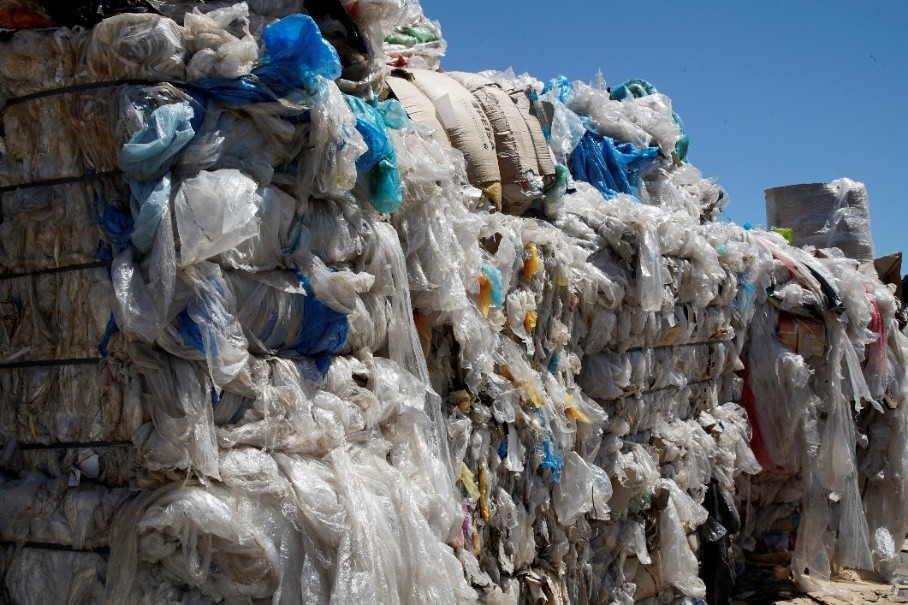
The report argued that increasing collection without developing demand for recycled material such as flexible plastics risks simply moving the bottleneck further along the recycling chain.
It said that packaging initiatives such as EPR can help increase collection, but “collection alone will not achieve recycling targets”.
Without sufficient demand for recycled material, recyclers will lack the confidence to make the capital and research and development investments needed to process material at scale.
Economic support for recycled plastics
The report challenged the idea that recycled material will automatically find a market if it is cheaper than virgin resin.
Where recycled material is of lower quality or more variable than virgin resin, manufacturers may need other incentives to use it.
The report pointed to recycled-content mandates and other regulatory measures as mechanisms that can influence manufacturers’ choice of materials where the market alone does not provide a sufficient incentive.
Eunomia North America Director and Private Lead Sarah Edwards commented: “The hardest part of building markets for recycled materials isn’t ambition – it’s honestly assessing what’s technically and economically feasible and being willing to follow the evidence where it leads.”

Finding new applications
The report assessed more than 40 potential applications for recycled household PE film, with eight applications emerging as the most promising.
These included horticultural liners, trays and pots; industrial liners; rigid houseware; impermeable construction membranes; transit packaging pallets; agricultural heavy-duty covers; rotational-moulded products; and dark-coloured trash bags.
The applications generally share characteristics that make them more tolerant of the variability associated with household recycled plastic.
They are not food-contact sensitive, can tolerate colour variation and imperfections, and are able to accommodate variability in resin composition.
Flexible plastics in England
Under England’s Simpler Recycling requirements, plastic film packaging and plastic bags must be collected with the plastic recycling stream from households by 1 April 2030, following a recent delay to the scheme.
The introduction of film collections means a significant additional stream of material will enter the household recycling system.
A Local Government Association report produced by Valpak warned that current UK reprocessing capacity is insufficient to handle the increase in tonnage expected when mandatory household film collections are introduced.
The delay to the collections have caused extra questions, with some in the industry concerned that confidence in flexible plastics investments may remain low because of the disruptions.
Market bottleneck
Flexible plastics are among the more challenging packaging materials to recycle because household material can contain mixed colours, different resin types and contamination from food, labels, adhesives and other materials.
These characteristics can make it more difficult for recyclers to produce material that meets manufacturers’ quality requirements.
Increasing producer responsibility can lead to more material being collected and sent for recycling. But if manufacturers are not prepared to use the resulting recycled material, there may be insufficient demand to justify investment in the recycling capacity required to process it.
Delterra President and CEO Shannon Bouton added: “A circular economy isn’t created by collecting more material – it’s created when recycled materials become valuable inputs for new products.”
“Unless manufacturers create demand for the material coming out of recycling systems, we simply shift the bottleneck from collection and sorting to market demand.”

Register for free to comment