
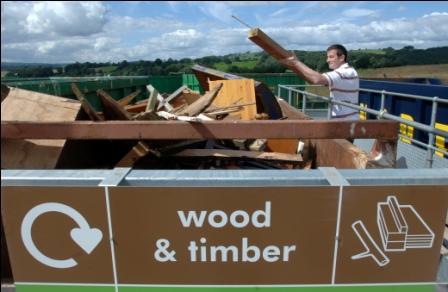
Government-funded research to identify the best way of managing waste wood has indicated that recovering energy from the material delivers “significant” carbon savings.
Launched in January 2010, its aim is to identify suitable optimal routes for treating waste wood and any technical or commercial barriers in place.
In particular, Defra has said it is keen to find out whether the bio-energy potential of waste wood is ‘underutilised', following the publication of a report in 2008 which found that it was being ‘overlooked' as a fuel (see letsrecycle.com story).
And, speaking last Wednesday (November 24) at a quarterly meeting of the Wood Recyclers' Association, Oliver Edberg from AEA said that the project to date had indicated that using wood as fuel did indeed deliver considerable carbon savings – dwarfing the emissions created in transporting and processing the material.
He said: “One of the main conclusions is that getting waste wood into energy recovery delivers quite a significant carbon saving. Process-related emissions are minor when considered in relation to energy recovery.”
Lisa Beardmore, also from AEA, explained that the team had looked at 50 reports on waste wood management and carried out eight site visits to gain a firm understanding of how it was managed- from use in panel board to animal bedding.
Using this data, it then identified 30 routes which it then broke down into stages. Seventeen of the most popular routes were then selected to carry out life-cycle assessments.
While energy recovery performed the best in terms of greenhouse gas emissions saved, Mr Edberg explained that one of the worst routes was sending material from civic amenity sites to landfill, where it emitted methane “even taking landfill gas capture into account”.
He also said that householders taking waste wood to civic amenity sites individually also had quite detrimental results.
Recovery
When taking into account the replacement of virgin materials, the overall best option was found to be sending waste wood pallets for use as panel board followed by energy recovery – although AEA noted that the recycling had a minimal benefit compared to the energy recovery.
Mr Edberg said: “The routes with the energy recovery as the last step has the highest ranking. The use of wood for another purpose before energy recovery improves the sustainability of that route – assuming it can still be captured for energy recovery.”
Over the next couple of months, Ms Bearmore explained that AEA would be looking in more detail at nine of the treatment routes for waste wood and attempt to identify some of the technical, practical, commercial and economic issues involved with the different steps. It would then create an issues hierarchy.
A final report is due to be published in the spring.

Register for free to comment