

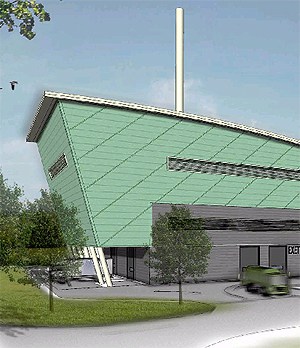
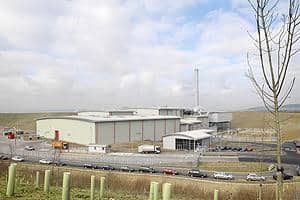
In the statement, COSLA president Councillor Pat Watters stressed that recycling was the preferred way to reduce waste but said that if no other technologies were used, then Scotland would struggle to meet its landfill diversion targets, meaning local government money would have to be used to pay fines.
He added: “EfW is a safe, tried and tested way to deal with waste that cannot be recycled and is commonly used across Europe.”
“The alternative is to do nothing, and wait for the inevitable domestic and European financial penalties. Local government will not stand by and allow vital services for our local people to suffer simply because we have been brave enough to argue for an alternative to landfill,” she added.
Councillor Watters' comments followed a broadcast on Reporting Scotland, the BBC's lunchtime TV news programme, in which the pros and cons of EfW were discussed.
Consultation
Neither of the two partnerships who are presently consulting on waste disposal options have chosen a specific treatment option but Lothian and Borders – made up of Edinburgh, Scottish Borders, Midlothian, West Lothian and East Lothian councils – has an EfW element in each of its proposals. Its consultation closes on August 22.
Lanarkshire – made up of North and South Lanarkshire councils – is also considering mechanical biological treatment with refuse derived fuel, as well as autoclaving, gasification and pyrolysis. Its consultation closes on September 3.
In March, Perth and Kinross councillors backed plans for an EfW plant and had submitted this for approval to the Scottish Executive.
However, the executive has now said that Perth and Kinross must join with Fife, Falkirk, Clackmannanshire and Stirling, to submit a combined business plan for residual waste treatment by the end of 2007.
The executive has previously told letsrecycle.com it is committed to working towards “zero-waste” as it draws up its strategy for the future (see letsrecycle.com story).

Register for free to comment