

More than a year on from introducing soft plastics collections across the whole district, North Somerset Council’s rollout has exceeded expectations, with residents taking up the service at a higher rate than anticipated.
Speaking to letsrecycle.com, a spokesperson for the council explained: “From that Go Live, our North Somerset residents have adopted the service better than we could have expected through excellent uptake across the new Soft Plastic material stream.
“Greater uptake in presentation of the exciting recycling material offering enabled not only excellent results in recycling performance, per our goals at the outset, but also enable a smooth and efficient transition from fortnightly to three-weekly residual waste collections from the very beginning.”
According to the council, more than 197 tonnes of soft plastics have been collected and baled since June 2025, with the material sent to UK offtakers for recycling.
The first two loads, totalling 49 tonnes, were sent to a recycling facility in Hartlepool, where the plastics would undergo sorting, granulation and washing before being sold as recycled LDPE pellets.
From trial to district-wide collection
The soft plastics service was introduced as part of a much wider change to North Somerset’s waste and recycling system.
From 9 June 2025, the council began collecting plastic bags and soft plastic wrapping as part of its weekly household recycling service. During the same period, most household also moved from fortnightly to three-weekly black bin collections.
The council had identified soft plastics as a significant component of its residual waste. Its analysis found that plastic bags and wrapping accounted for 10% of black bin contents, while almost half of all material in the residual stream was potentially recyclable.
The authority therefore saw the new collection as one part of a wider attempt to increase recycling and make the move to less frequent residual waste collections workable.
The spokesperson for the council added: “The introduction of the Soft Plastic collections, as part of our weekly recycling service, concurrently with the introduction of the three-weekly residual waste collection in July 2025, has definitely seen a big influence.
“Many have expressed their surprise, especially in the early days of the service introduction, at how much difference the removal of Soft Plastics from their residual waste containers has made in a positive sense, making the overall transition to the three-weekly services easier for all.”
North Somerset Environment Company and North Somerset Council conducted a controlled trial early in 2025, using data and feedback to refine the eventual district-wide model.
Collection crews were involved throughout the development process, including in the design of the service, trials and feedback sessions.
Familiarisation and open days were held at the depot so crews could become accustomed to the new material, vehicles and technology before the service went live.
The council also invested in new Kerbsort collection vehicles, which have a dedicated compartment for soft plastics and are capable of compacting the material.
Helping residents make the switch
A major part of the rollout was ensuring residents understood what could be placed into the new stream.
The council used a multi-stage communications programme, including information sent through the post, social media, banners on collection vehicles and roadshow displays.
Information leaflets explained which materials were included within the new “Soft Plastics” category, while a new council app provided residents with additional guidance on what could be recycled.
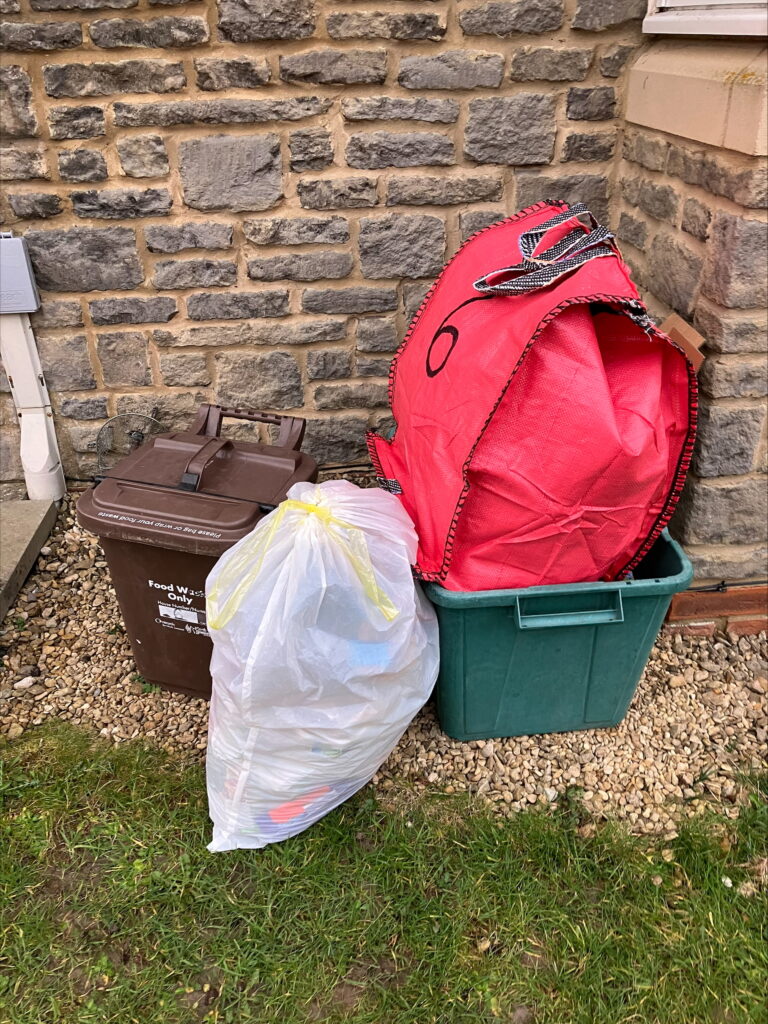
The collection system itself was designed to avoid requiring residents to find space for another container. Instead, residents are asked to place soft plastics inside another soft plastic item, such as a bread bag or small carrier bag, tie it up and put it out with their existing recycling.
The council says the approach has resulted in “excellent adoption” of the service.
North Somerset said in November 2025 that the introduction of the new service had helped residents adjust to three-weekly black bin collections, with early results showing a 15% reduction in black bin waste and a 10% increase in recycling.
More recent council data, covering the period to the end of March 2026, shows residual kerbside waste has fallen by 14%, while kerbside recycling has increased by more than 6%.
Infrastructure challenges
While resident participation has been a success, the council’s experience also highlights some of the less visible challenges of introducing a new material stream.
North Somerset explained its new Kerbsort vehicles were an important part of the rollout, allowing soft plastics to be collected in a dedicated compartment and compacted during collection.
However, the authority said it had not fully anticipated the implications of handling the material once it reached the depot. In particular, the baling process presented challenges.
The council advised other authorities considering similar schemes to seek advice from baler manufacturers about the machines’ ability to compact and securely bale flexible material.
The process of tying off bales and changing between different materials could be “timely and costly” with the wrong machinery and set-up, according to the council.
North Somerset said it had not factored the full impact of this part of the process into its introduction of the material stream in 2025, and has since had to adapt its infrastructure and processes with its partners.
However, the picture remains bright for flexible collections in the region.
Summarising its experience so far, the spokesperson for the council said: “Overall, the rollout of our Soft Plastic material stream has not been without its challenges.
“However, through excellent teamwork and knowledge sharing, we’ve been able to overcome those challenges that come with pioneering a new material and collection philosophy for our industry.”


Register for free to comment