


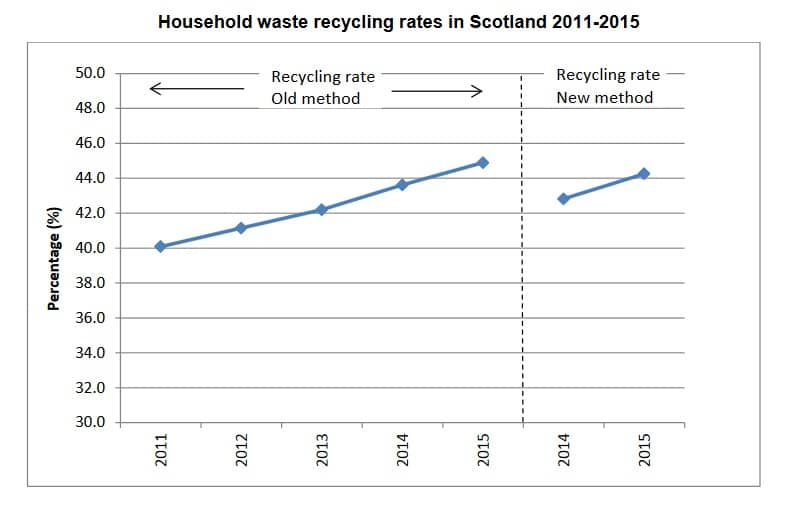
This represents an increase of 1.4 percentage points from the 42.8% recycling rate achieved in 2014, although the figures indicated that the country is still short of its target to achieve a 50% recycling rate – which it had originally aimed to achieve by the end of 2013.
The number of councils to have achieved the 50% goal remained the same as in 2014, with 12 councils exceeding 50%, but a further 20 still falling short of the target, the figures have indicated.
Top performers
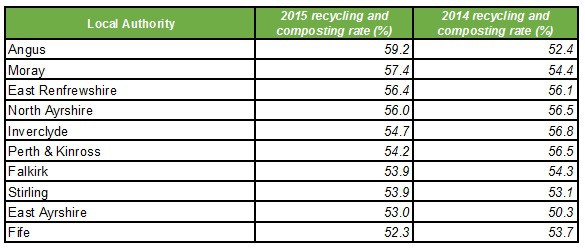
Angus council achieved the highest combined recycling and composting rate, which was recorded as 59.2%, followed by Moray (57.4%) and East Renfrewshire (56.4%).
The previous top performer – Inverclyde – saw a drop in its overall recycling and composting rate from 56.8% in 2014 to 54.7% in 2015, mirroring some of the top councils in England, which have seen recycling rates plateau according to data compiled by letsrecycle.com (see letsrecycle.com story).
The lowest performers included the Shetland Islands, which achieved a 9.2% recycling rate, Eilean Siar (21.2%) and Dumfries & Galloway (27.1%).
In total Scotland’s councils handled 2.46 million tonnes of waste in 2015 – a decrease of 2,273 tonnes (0.1%), with 1,087,648 tonnes recycled or composted, 1,139,946 tonnes sent to landfill.
Growth
Despite lagging behind its neighbours in England and Wales – which have recorded 44.8% and 60% recycling and composting rates according to latest available figures, the figures are likely to offer some encouragement for the Scottish Government, with the growth in performance having sped up after an improvement of only 0.6% between 2013 and 2014.
Part of this slowdown had been attributed to a change in the way that recycling data collected, including a change to reporting of compost tonnages prior to 2014.
Composted wastes which did not reach the PAS 100 or 110 quality standards have been accounted for as ‘other diversion from landfill’ and not as waste recycled. If this material had been included in the 2015 recycling and composting figure – an overall rate of 44.9% would have been recorded for the year, SEPA claims.
Elsewhere, increases have been recorded in the overall tonnage of food waste collected, with 77,921 tonnes collected in 2015, a growth of around 20,063 tonnes compared to 2014.
On dry recyclables SEPA noted that the largest quantity of household waste material recycled in 2015 were paper and card with a total of 222,600 tonnes collected – followed by glass (100,830 tonnes). The amount of paper and card recycled has decreased year on year from 2011 to 2015, with a decrease of 7.4% since 2011, SEPA claims.
Tonnages of waste sent for incineration via energy from waste also continued to increase, with 174,594 tonnes treated in 2015, compared to 132,949 in 2014.

Register for free to comment