

The council's strategic planning committee voted unanimously on Friday (September 4) to grant planning permission for the Irish-based company's factory, which uses recycled glass cullet in the manufacture of up to 320,000 tonnes-a-year of glass.
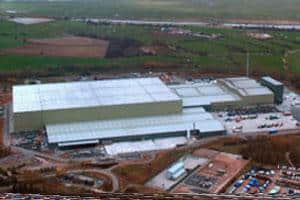
Ardagh had also unsuccessfully sought via the High Court to prevent the planning application being decided retrospectively, and it is now pursuing this in the Court of Appeal.
The council's approval – which rubber-stamped a recommendation made by its planning officers last month (see letsrecycle.com story) – was welcomed by Quinn Glass director Adrian Curry.
“This is good news for Quinn Glass and we're pleased that the council has resolved to determine our planning application,” he said. “Since the original planning permission was issued in October 2003, this process has been beset by legal challenges from our competitors on procedural grounds; however this determination represents a significant step in drawing a line under the planning saga.”
Secretary of State
Despite Friday's decision, the retrospective planning application must still clear a further hurdle, as it will be sent to Secretary of State for communities and local government John Denham who could decide to call it in, a move which would prompt a public inquiry.
And, in granting approval for the application, Cheshire West and Chester stressed that its support was dependent on the company taking into account concerns, in particular over traffic noise.
Following the meeting, the committee's chairman, councillor Malcolm Byram, said: “We had a thorough debate and many local impacts of the plant were probed by members who also decided that Quinn be urged to investigate an alternative road access to the plant.”
He added: “The requirements for a rail line to the plant in the future will help tackle the road traffic problem and this should come to fruition as per the 106 agreement.”
Exceptional circumstances
The planning officers' report which was backed by the planning committee concluded a number of exceptional circumstances justified its decision to grant retrospective planning approval.
These included the site's location on used brownfield land that was in need of redevelopment and regeneration, the fact that remediation of heavily contaminated land on site has already taken place, and a previous planning permission for a smaller facility on the same site, which was awarded in 2003.
And, it highlighted the fact that that, environmental statements that had been carried out for previous planning applications had satisfied the Secretary of State when the project was originally called-in.

Register for free to comment