


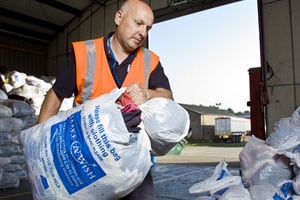
Clothes Aid business manager Michael Lomotey told letsrecycle.com that while some police forces are working hard to tackle the problem, others are not and it falls to Mr Herbert to help resolve it.
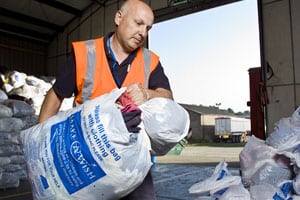
The comments came as textile recycling and charity associations launched Bogus Bags a campaign to raise public awareness of the increasing problem of bogus door-to-door charity collections.
Bogus Bags was launched by the Textile Recycling Association (TRA), the Charity Retail Association (CRA), the Fundraising Standards Board (FRSB) and the Institute of Fundraising (IoF).
Speaking to letsrecycle.com about the Bogus Bags scheme, Alistair McLean, chief executive of the FSRB, said: Theres no magic wand here. Is it going to stop bogus collections? The answer is probably no. But if we ask will it build public awareness about making sure they are giving to a legitimate collector then the answer is yes.
Legitimate
Mr McLean emphasised that the campaign is not intended to discourage people from giving to charitable organisations but is about making sure that the organisations they give to are legitimate.
Work by the scheme initially involves the distribution of 500,000 leaflets encouraging residents to look for the FRSB tick on charity bags, as well as a registered charity number. All members of the FRSB will have the right to place the logo on their collection bags identifying them as a legitimate organisation.
According to the TRA, fraudulent collections in the UK have increased in recent years as textile prices have continued to rise. It is estimated that UK charities lose up to 50 million-a-year in income.
The campaign will initially be launched in Kent, due to support from local MP Tracey Crouch, and if successful will be rolled-out to crime hotspots in England and Wales, including: Leeds; Liverpool; Manchester; and South Wales in spring 2012.
TRA
While Bogus Bags is not directly reducing the level of organised crime, the TRA believes that levels of police interaction are helping. However Alan Wheeler, national liaison manager for the TRA, agreed with Mr Lomotey stating that more needed to be done by local authorities and the police to tackle the problem.
The National Fraud Intelligence Bureau has set up a charity bag fraud desk, designed to tackle the situation by assessing the criminal intelligence and coordinating the national police response. It has found that fraudulent collections are funding more serious crimes such as money laundering, human smuggling and drug trafficking. This TRA highlighted its concern over this issue earlier this year (see letsrecycle.com story).

Register for free to comment