


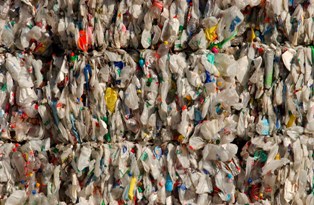
Businesses collecting plastic scrap have historically been heavily dependent on export markets – particularly China – to take a significant proportion of the material collected from households and businesses across the UK.

This became particularly acute in 2015, with the collapse of two of the UK’s largest plastics recycling businesses – Closed Loop Recycling and Eco Plastics.
However, many scrap recyclers have noted that economic growth in China has slowed dramatically in recent years. Reports also suggest that the country is looking to establish its own internal market for scrap materials, a factor which could reduce demand for recyclable plastics from overseas.
This comes at a time when oil prices have dropped to the lowest level in around 13 years, close to $28 per barrel. This is expected to have a further negative effect on the price paid for scrap plastics, as virgin polymers become more cheaply available to manufacturers, at the expense of recycled plastics.
Challenge
Barry Dunne, client manager at Swindon-based reprocessor Thamesdown Recycling, told letsrecycle.com that the plastics market remains ‘challenging’ at the start of 2016.
“The impacts are going to be felt greater with the lower end recyclates that exhibit contamination and mixes of plastic types. This could result in gate fees being charged to local authorities and industries that have been getting rebates,” he noted, adding: “High end and specialist regrind markets in Europe and the UK are expected to remain stable.”
While Mr Dunne acknowledged that falling oil prices are largely bad news for the recycling sector, there is some hope that this could spark increased spending by consumers, which could then feed through to the manufacturing sector.
He said: “The UK at 2-3% and Europe at 1-2% growth predictions could be harmed by the Chinese slowdown but if people have more money to spend due to the fall in the oil price, the effect could be higher than expected growth.
“The outlook for 2016 is currently not any better than it was for 2015. Plastics recyclers have got to accept that it is only through their own efforts that they will get through the current difficult trading period.”
Mike Baxter
BPI

“As long as manufacturing is stable and people still shop, plastics will be available to recycle. It will be the prices and rebates that will be the challenge. The market will always be where it is in terms of its ups and downs, it’s all about being able to extract the value to enable a gain.”
PRNs
Any drop in the value of plastic scrap is likely to put particular focus on the value of packaging waste recovery notes (PRNs) for the material.
PRNs reached a high of around £75 per tonne in the latter end of 2015, which intensified calls for a reform of the PRN regime in some corners of the plastics reprocessing sector – where it is claimed that exporters enjoy an ‘unfair advantage’ over domestic reprocessors as they are able to count non-target material in bales toward PRN tonnages.
However, Mike Baxter, external affairs director at film recycler BPI, warned that there is unlikely to be any relief through PRNs in the near future, and warned that the recycling sector must adapt to the challenging market conditions currently being experienced.
Speaking to letsrecycle.com, he said: “The outlook for 2016 is currently not any better than it was for 2015. Plastics recyclers have got to accept that it is only through their own efforts that they will get through the current difficult trading period.
“There have been calls for changes to PRNs, target percentages, greater enforcement and a whole raft of other things but looking at the political horizon and budget cuts that Defra faces that looks unlikely.
“A big concern for the UK is the export market and those concerns are still there. The price of virgin raw materials looks unlikely to rise and if anything could fall further. Anyone wanting to stay in the sector needs to find new markets.”

Register for free to comment