



The quality of plastic bottles collected for reprocessing is “diminishing” due to more councils collecting mixed plastics commingled at the kerbside, plastic reprocessors have claimed.
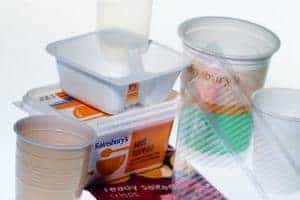
Purchasing managers said increased levels of mixed rigid plastics – such as tubs, trays and pots – were currently driving prices for higher quality mixed bottles up as firms competing for the material sought to cherry-pick better quality material from an increasingly mixed stock.
The current price for mixed plastic bottles is between £170 and £210 per tonne, which has risen from £130 to £170 per tonne in July. Both ‘grade one' and ‘grade two' bottles – the latter tends to have a greater level of contamination – have seen their prices increase.
And, commenting on the impact of this on the market, reprocessors claimed that technology at materials recycling facilities (MRF) is not at a stage where it can sufficiently separate mixed plastics from the, traditionally more valuable, plastic bottle bales and as a result was adversely affecting prices.
Recent figures published by plastics recycling organisation Recoup highlighted a considerable rise in the volume of mixed plastics collected by local authorities at the kerbside between 2008 and 2009 (see letsrecycle.com story).
One plastics purchasing manager, who wished to remain anonymous, said: “We are aware that the level of mixed plastics is changing the dimension of the mixed plastic bottles and it is becoming around 35-40% in some mixed bottle bales. And, that is diminishing the value and I think we are going to see much bigger impact on plastics and there will be more difference in the price between places.”
Adverse
With regards to other grades of plastic bottles, reprocessors claimed that the price of so-called ‘pure' grades, such as clear and light blue PET and natural HDPE, could be adversely affected if there is a further increase in mixed rigid plastics in bottle bales.
“It does affect the price because if we are getting pure bottles then you are going to want a higher quality but if we are getting mixed trays, which are not valuable and a different type of PET to what we want, then there is no suitability there,” commented one reprocessor.
He added that, while mixed rigid plastics had previously comprised around 5% of a plastic bottle bale dealt with by his company, this number was now “nearer to 20%”.
Facilities
Mixed plastic is here and it is a challenge but it is also a big opportunity because more and more people say that they want to recycle it
One plastics purcashing manager
The main issue has been touted as the lack of plastics recycling facilities, or PRFs, which are used as another sorting phase after a MRF to help differentiate polymer types further before resale.
However, concerns have been raised over how viable MRF-sorting of mixed rigid plastics is at present.
Another plastics purchasing manager said that the sector would have to bend to meet councils' intention to collect more plastic material alongside the existing bottle grades and pointed to the proposed development of Biffa Polymers' – formerly Greenstar WES – 20,000 tonnes-a-year capacity mixed plastic facility at Redcar as a sign of the future for the market.
He said: “It is going to be about sorting stuff out and assessing what it costs to do that at the end of the day. Mixed plastic is here and it is a challenge but it is also a big opportunity because more and more people say that they want to recycle it.
“The collection infrastructure is going to have to go towards the commingled, single stream model in order for embattled local authorities and their contractors to do [mixed plastic collections]. They are just going to say what is the cheapest method of collection we can run? So everything will go into it, the one box or one bin, with a MRF sort.”
Supply
On the subject of meeting council needs, an industry expert told letsrecycle.com that a similar issue had been faced by the paper sector with regards to quality contamination and said this had led to firms, such as UPM, constructing their own MRFs in a bid to ensure a secure supply of quality feedstock.
The Waste & Resources Action Programme, which has actively sort to help foster an increase in the uptake of mixed plastic collections in the UK, has previously dismissed industry claims that mixed plastics are contaminating plastic bottle bales (see letsrecycle.com story).


Register for free to comment