

According to Make UK, the sector must grow by 25% annually to meet projected demand by 2035.
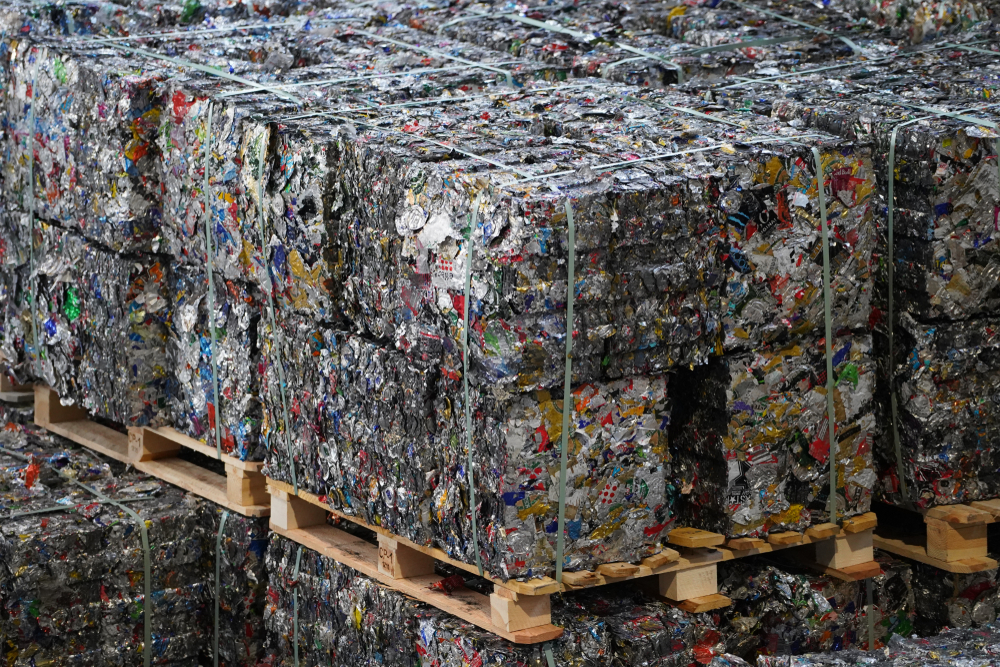
In the report, the Manufacturers’ Organisation said that aluminium scrap has become a strategically important resource for defence, automotive, digital technologies and clean energy sectors, but warned that “scrap leakage” to overseas market has risen by 84% over the past decade.
The analysis suggested that UK industry could require up to six million tonnes of aluminium scrap by 2035 to meet a projected eight million tonne demand under the government’s Critical Minerals Strategy and Modern Industrial Strategy.
Daniel Paterson, director of sector specialisms at Make UK, said: “The size of the prize is significant, with UK aluminium collection and sorting alone needing to grow by 25% each year.
“But this important opportunity will be lost if the UK continues to export a critical material that our future economic growth sectors and national security and resilience depend on.”
Exporting UK aluminium scrap
At present, Make UK found that the UK exports almost half of the aluminium scrap that it generates.
The organisation warned that this trend risks undermining domestic manufacturing capability and increasing reliance on imported primary aluminium at a time of growing geopolitical instability.
The report highlighted a sharp increase in exports to the US after aluminium scrap was excluded from Section 232 tariffs, with volumes rising form 2,000 tonnes in 2024 to almost 24,000 tonnes in 2025 – a 990% increase.
Of that total, around 15,000 tonnes was aluminium packaging.
More broadly, around 200,000 tonnes of UK aluminium scrap as exported to India in 2024-25, with a further 173,500 tonnes sent to Hong Kong and China.
According to Make UK, the increase in global competition for secondary aluminium is accelerating as countries seek to secure domestic feedback for manufacturing and decarbonisation.
The report notes that China has already introduced measures to retain scrap domestically, while the EU is expected to introduce aluminium scrap export limitations before summer 2026.
This, the report warned, could leave the UK squeezed between growing export demand and restricted access to higher-grade EU scrap.
‘Time to invest’ in domestic aluminium manufacturing
Make UK said the UK currently has just one primary aluminium smelter remaining – ALVANCE in the Scottish Highlands – operating at around 70% capacity due to high electricity costs.
That leaves the UK increasingly dependent on secondary material to meet future industrial demand.
The report also found that the UK has lost around 45% of its aluminium extrusion billet production capacity in the last two years, alongside at least 30,000 tonnes of extrusion capacity, raising concerns over further offshoring if domestic scrap availability continues to tighten.
Under its highest-growth scenario, Make UK estimated the UK would need to retain an additional 950,000 tonnes of scrap by 2035 – more than 150% of current annual export volumes – in order to support a circular aluminium economy.
The organisation has called for targeted investment in collection and sorting infrastructure, stronger quality standards for scrap, and the introduction of “smart scrap retention measures” for strategically important alloys.
It also urged the government to secure exemptions from planned EU scrap export restrictions as part of wider trade negotiations.
Paterson added: “Right now is the time to invest in the future of aluminium manufacturing, improve collection standards for scrap materials, retain the alloys we need within a domestic circular economy.
“Government now needs to work with business to move quickly and build domestic processing capability to stem the tide of exports, or risk losing growth, ongoing investment, jobs and supply chain resilience to competitors overseas.”

Register for free to comment