


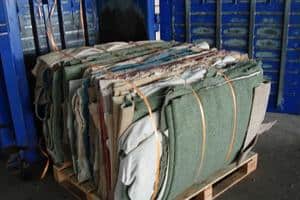
The proposed Plan, which has backing from Defra and the Waste & Resources Action Programme, would be used to help curb the 350,000 tonnes of broadloom carpet waste currently being disposed of in the UK. Broadloom carpets are those which are woven on a wide loom.
In July 2009, Carpet Recycling UK claimed that carpet recycling a “nascent industry” in the UK and would need to follow examples from America to improve (see letsrecycle.com story).
The organisation is currently holding meetings with stakeholders from across the carpet supply chain, such as carpet producers, distributors and carpet recycling firms as well as government bodies, with a view to having a plan in place by March 2010.
Measures
At the meetings, the trade association said it would hope that a National Action Plan would include measures such as a collection system capable of handling the array of disposal routes waste carpet currently enters and a system to readily identify the composition of carpet waste.
In addition, Carpet Recycling UK claimed it would want to develop a ‘one-stop shop' for floor recycling services, which would allow anyone wishing to dispose of flooring waste to contact a central point to arrange for it to be recycled or reused.
Furthermore, the idea was forwarded for the sector to work with the Environment Agency to develop a Quality Protocol for carpet waste – which would outline when the material was no longer classed as waste but able to be reused.
However, in minutes of the October 13 stakeholder meeting, there was a consensus that an outright landfill ban on carpet would be detrimental. It was suggested that the lack of recycling infrastructure for the material would lead to it being incinerated or fly-tipped.
One of the barriers to recycling carpets was also highlighted as consumers tending to dispose of old carpets before new ones were delivered – meaning it would be hard to introduce a backhaul system. It was also noted that it was difficult for people to store old carpet.
Stakeholders are set to meet next on December 15 and once more in the New Year before developing the full action plan.

Register for free to comment