


According to APPE and its sister company Artenius – which describes itself as the market leader in the manufacture of PET preforms and containers, and virgin PET resin, as well as the largest food-grade PET recycler in Europe – brand owners perceive rPET as a solution to their sustainability objectives and a way to communicate environmentally friendly credentials to consumers. However, some also incorrectly perceive it as a cost-reduction initiative.

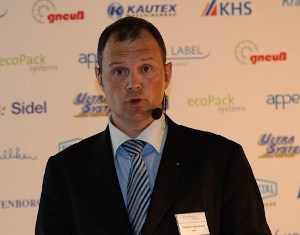
This message was delivered to industry figures by Frdric Blanchard, plant director of APPEs dedicated recycling plant in Beaune, France, at the PETnology Europe 2011 conference held in Nuremberg, Germany last week.
In his presentation, The Challenges of Recycling for Food-Grade Application, Mr Blanchard said APPE had already responded to the surge in demand for rPET by investing a further 10 million euros at Beaune, increasing its output by 40% from 25,000 to 35,000 tonnes and that further expansion of the facility is now being considered. However, he said that this could be constrained simply by the lack of post-consumer PET for processing.
Two of the major challenges facing rPET recycling for food-contact applications are the availability and quality of bale feed-stock, explained Mr Blanchard.
European reclamation capacity is increasing through the entrance of new but inexperienced recyclers into the market, but the collection of suitable material is not rising at the same pace. This imbalance of demand and supply is causing the price of the raw material post-consumer PET bales to rise to record highs, albeit recently price levels have dropped significantly as such high price levels were unsustainable. Longer term prices are set to rise once again and to track virgin PET pricing.
While stringent technical specifications have been put in place for the supply of virgin resin, Mr Blanchard said that comparable requirements had not been established for rPET. APPE has implemented its own specifications for rPET production, but claimed that other, less experienced food grade rPET producers had not yet introduced such measures. In order to maintain quality and safety, he said that food-contact end-use customers must therefore adopt high-quality standards and ensure that closed-loop food-grade rPET is truly food-approved.
Complexities
According to APPE, only 22% of rPET produced in Europe is currently reused in rigid PET packaging that can be recycled time and time again. The company believes that the biggest challenge of all is getting the brand-owners and fillers to understand the huge complexities involved in processing rPET into new packaging while maintaining the necessary quality controls. Additional activities such as blending, process controls and changeovers all lead to increased costs, it explained.
The greatest contradiction faced by rPET producers and processors is that despite these complexities and their cost implications, the industry still expects rPET to be cheaper than virgin resin, said Mr Blanchard.
Mr Blanchard said there are several potential solutions for the current situation, from better consumer awareness and education in order to improve collection rates and sorting, to establishing a realistic vision of rPET content and enhancing bottle technologies to support the recycling stream.
The challenges of stepping up rPET usage, which several brands are now driving, are clear and we feel it is important that the industry understands the full picture, concluded M. Blanchard.
APPEs Beaune facility produces a consistent high quality supply but the industry as a whole needs to look to the material collection systems to keep pace in order to satisfy customers requirements. Increased regulation also has a part to play. Until then, the potential for bottle-to-bottle rPET will always be limited by the amount of recycled material available.
UK
APPE, formerly known as Artenius PET Packaging Europe, is a division of La Seda de Barcelona (LSB). The company runs a site at Gresford, near Wrexham,whichhas the capacity to produce up to six billion preforms a year. It supplies to sectors such as soft drinks, bottled water, wine, food, personal care and household care. Customers include Coca Cola, Sara Lee, Britvic and Unilever.
APPE does not currently have any recycling activity in the UK, but does source rPET from UK recycling companies. In 2008 it awarded a contract to AWS Eco Plastics (see letsrecycle.com story) .

Register for free to comment