

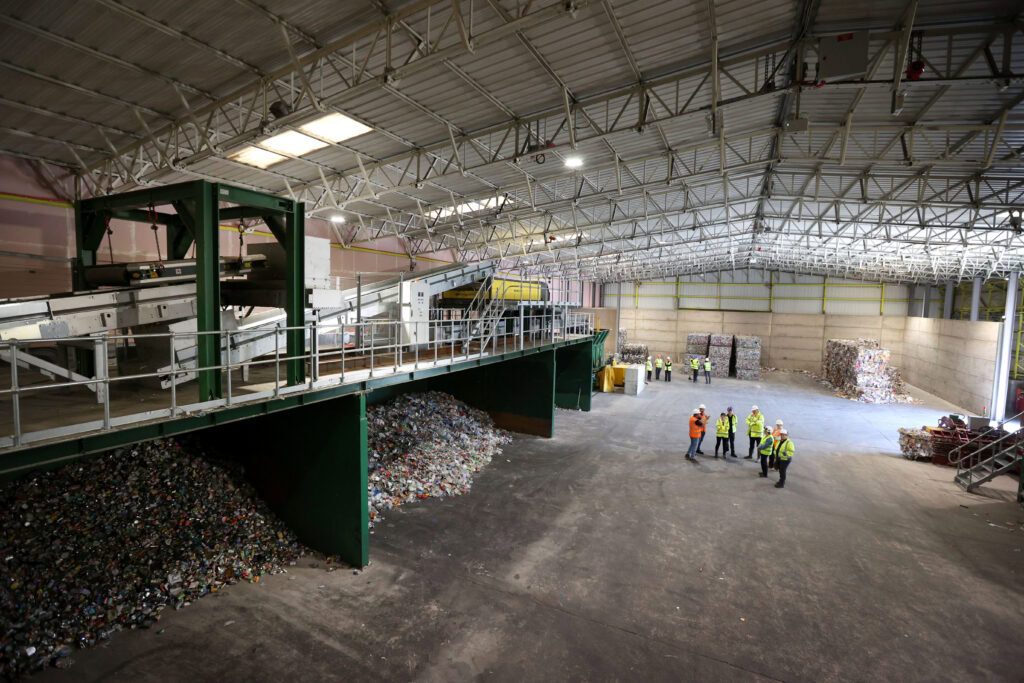
When Plan B Management Solutions officially opened its first Materials Recovery Facility (MRF) in Cardiff earlier this year, the launch marked a significant milestone for a company that was operating as a small consultancy business with a turnover of around £300,000 six years ago.
Founded originally in 2006, Plan B was taken over by Managing Director Maz Akhtar and Materials Director Craig Cutajar in 2019. Today, the company revenue has exceeded £20 million, with operations spanning consultancy, materials management and waste collection services.
The new 75,000 tonne-per-year Cardiff facility – developed through a multi-million-pound investment – now forms a wider strategy to expand Plan B’s infrastructure footprint across the UK.
From consultancy to operational services
That growth has come during a period of considerable change for the waste and recycling sector, with local authorities grappling with financial pressure, policy reform and increasing operational complexity.
For Plan B’s leadership, those challenges created opportunities for smaller and more flexible operators to establish themselves in a market traditionally dominated by large contractors.
Cutajar explained: “We had a plan from the beginning to add new services and change the direction of the business.
“The consultancy side remained important, but materials services really drove growth and then later managed services became a major focus.”
Consultancy work remains central to the company’s identity, with Plan B supporting local authorities on service transformation, procurement, transition planning and operational reviews. It’s delivery of front-line services ensures their consultancy work is underpinned by real life deliverable solutions.
Alongside this, its materials division manages and markets recyclable materials, with a current portfolio of 300,000 tonnes, on behalf of councils, both from household collections and household waste and recycling centres (HWRC). The managed services arm delivers operational environmental services collection and HWRC contracts.
The company now works with dozens of local authorities across the UK in various capacities, ranging from consultancy support to operational material management.
Bridgend Council: Finding Plan B’s place in the market
Its major operational breakthrough came through Bridgend County Borough Council, where Plan B secured its first waste services contract.
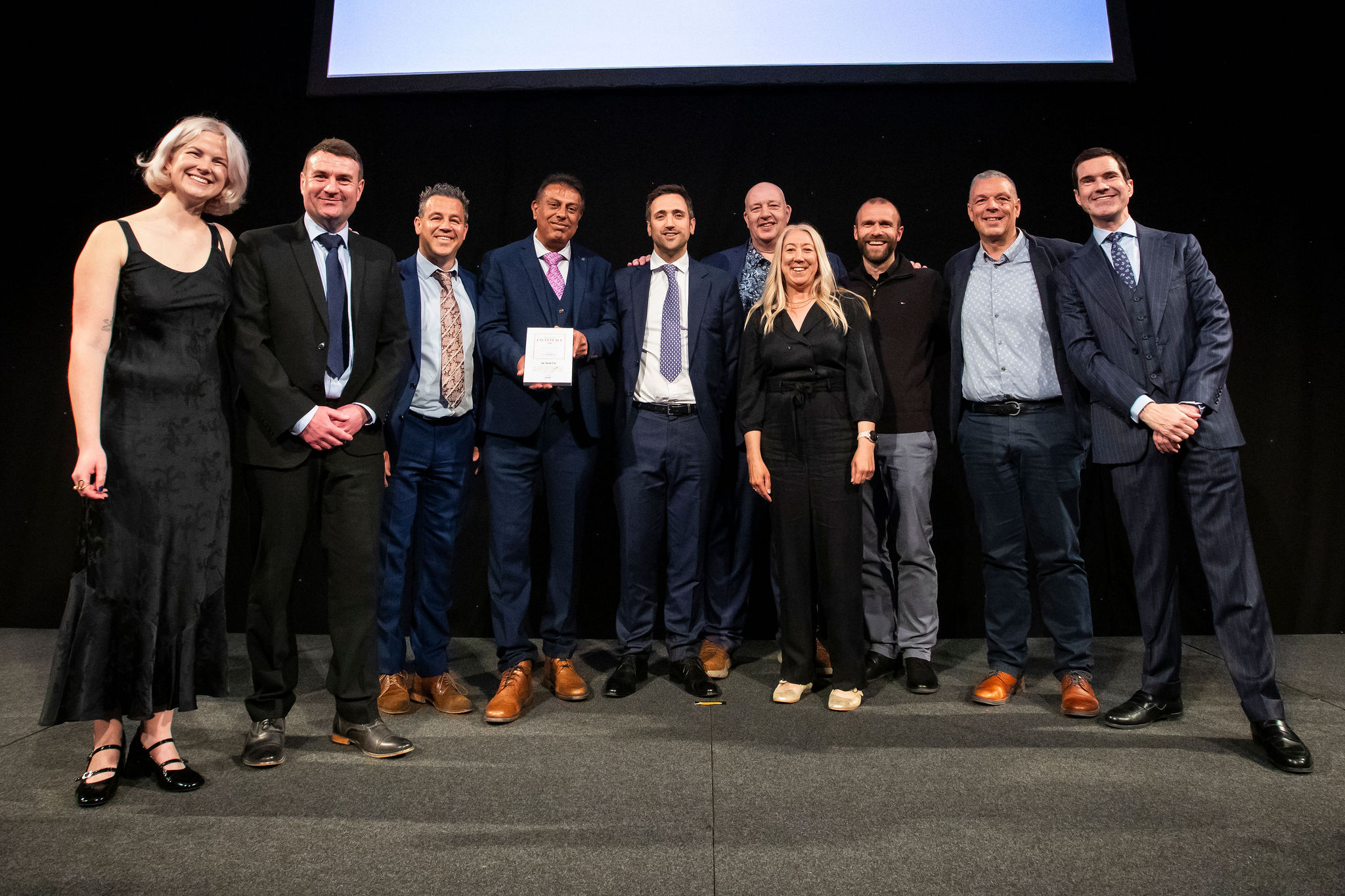
The project provided an opportunity to demonstrate that smaller operators could successfully deliver complex frontline services typically associated with much larger firms. Plan B’s recent award for Civic Amenity Site of the year at the Awards for Excellence for the Pyle Community Recycling Centre, which is part of the Bridgend contract, is testimony of their ability to deliver.
Cutajar added: “We’re a new entrant to the market competing against very established companies.
“Getting a foot in the door is a challenge.”
However, leadership believes its size has become one of its advantages.
Akhtar commented: “As a smaller organisation, we have the benefit of flexibility. We’re able to be more agile with our decision making, and are willing to help our clients where they need it and finding solutions, rather than sticking to a rigid corporate position.”
That flexibility has become increasingly relevant as councils navigate uncertainty surrounding Local Government Reorganisation (LGR), Extended Producer Responsibility (EPR), Deposit Return Schemes (DRS), Emmissions Trading Scheme (ETS) and Simpler Recycling reforms.
A different contracting model
One area where Plan B believes it has identified a gap in the market is around shorter-term operational contracts.
Traditionally, large waste collection contracts often span eight to sixteen years, partly due to the need for operators to recover investment costs on vehicles and infrastructure.
But with many authorities now purchasing vehicles directly, Plan B argued there is increasing demand for shorter arrangements that allow councils more flexibility during periods of organisational transition.
The company has begun offering contracts lasting three to four years, aimed particularly at authorities navigating LGR or considering whether to outsource services or bring them back in-house.
Akhtar explained: “We saw a gap where councils didn’t necessarily want to commit to another long-term contract while things are changing.
“We’re willing to offer shorter-term solutions that help them through that transition period.
“So as well as exploring opportunities for the normal and traditional long-term outsourced service contracts, we’re also keen to support Councils that wish to internalise services but may require support and a stepping stone to achieve that, which is another way we believe a shorter term service contract can help facilitate that.”
Investing in the Cardiff MRF
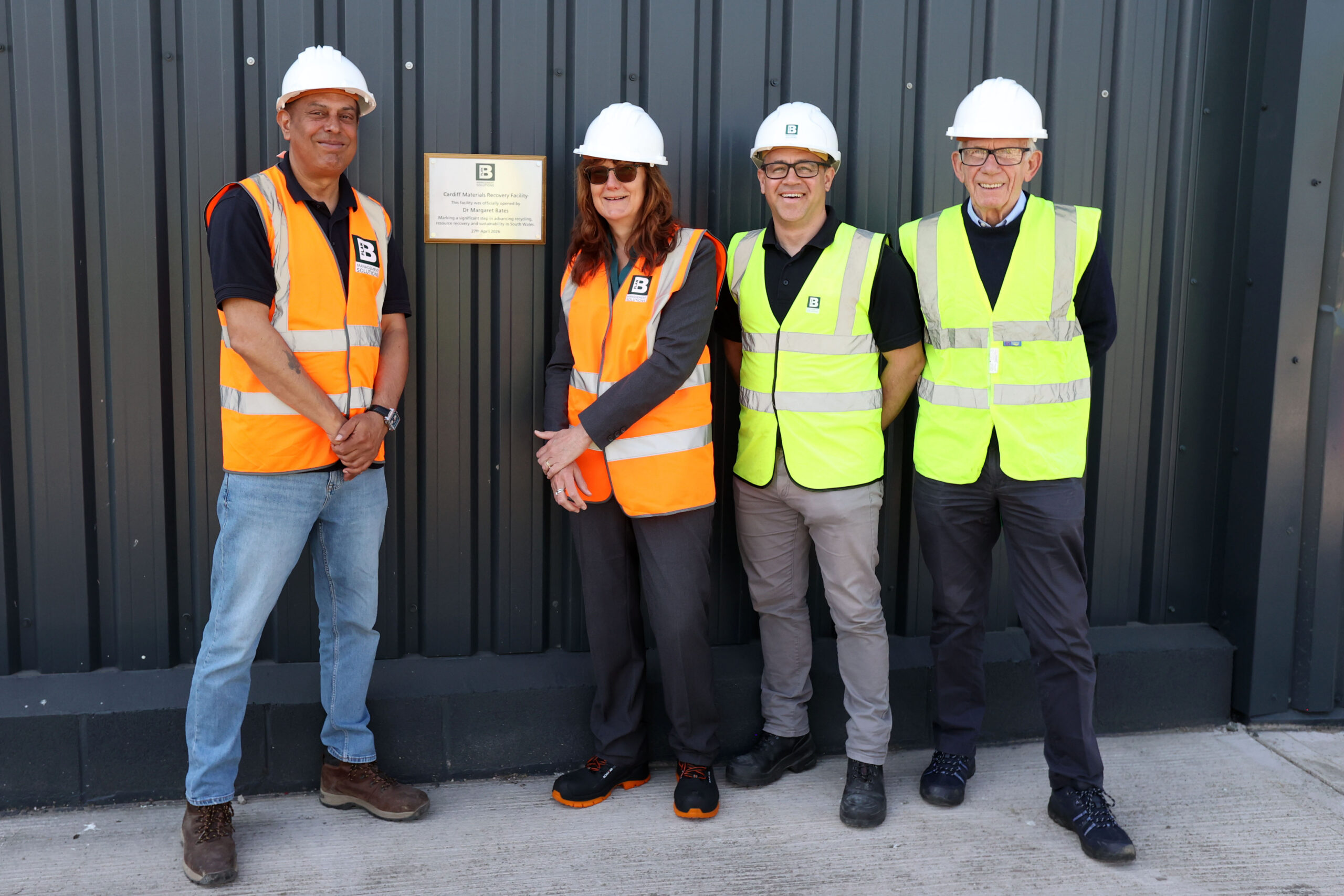
The clearest signal yet of Plan B’s ambitions came with the opening of the Cardiff MRF. The facility, formally opened by Margaret Bates on 27 April, represents the company’s first wholly owned processing site and forms part of a wider strategy to invest directly in recycling infrastructure.
Located in Cardiff, the MRF has been designed with a dual-line system, comprising a container line and a fibre line. The facility also incorporates enhanced fire prevention system, including multi-detection cameras and automated foam suppression technology in response to increasing risks linked to lithium-ion batteries and disposable vapes.
For the company, Cardiff represents more than just a processing facility. Cutajar explained: “This is about having our own infrastructure and capabilities rather than only supporting clients externally.
“Cardiff is the first. Hopefully there’ll be more to follow.”
Plan B said the business spent several years exploring different growth options, including acquisitions, leased sites and existing facilities before deciding to build its own operation.
Cutajar added: “We looked at multiple ways of achieving that aim before deciding to push the button with Cardiff.
“We’re open-minded about future growth as well – whether that’s acquisitions, new facilities or processing different material streams.”
Six years after taking over, Plan B Management Solution’s Vision 2030 strategy now focuses on expanding all three business areas while growing its infrastructure footprint beyond Cardiff.

Register for free to comment