

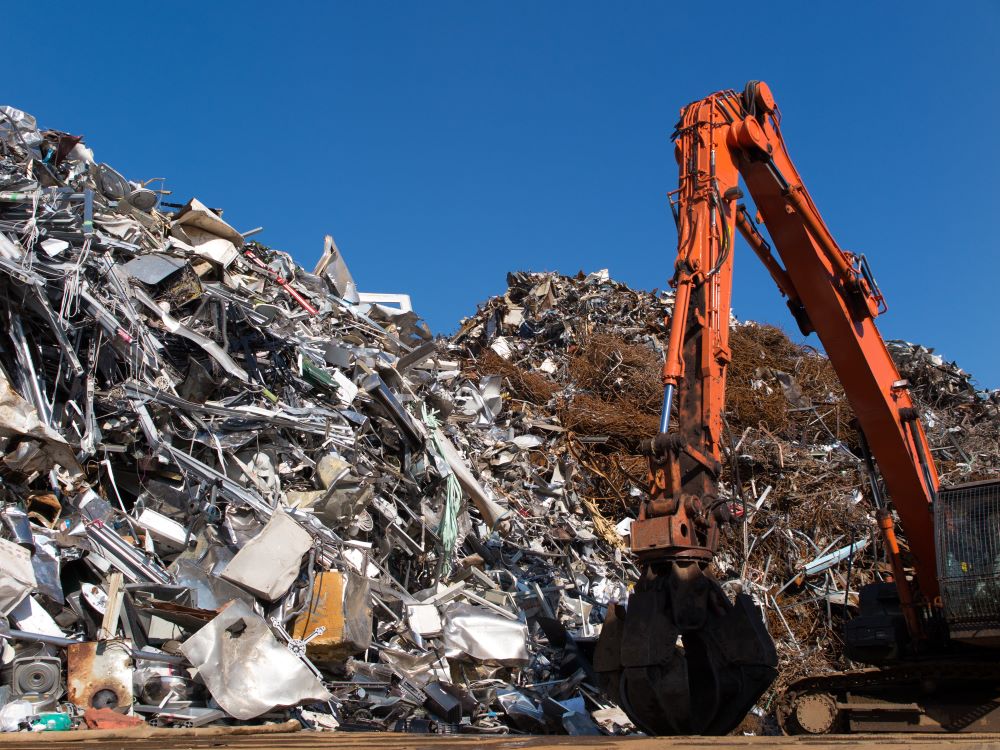
The UK exports millions of tonnes of recycled metal every year, supplying steelmakers, manufacturers and foundries across Europe, Asia and the Middle East.
Yet as the government seeks to revive domestic steel production, questions are increasingly being asked about whether more of that material should remain in the UK.
The debate has intensified following the publication of the government’s Steel Strategy, which confirmed plans for a new scrap working group and outlined ambitions for a steel sector increasingly integrated with electric arc furnace (EAF) technology.
Because EAFs rely heavily on recycled steel scrap as feedstock, some argue the UK should make greater use of its own recovered materials.
Industry representatives, however, say the UK’s dependence on exports reflects a simple reality: The country currently generates far more recycled metal than domestic manufacturers can consume.
Why does the UK export so much metal?
Despite having a well-established recycling industry, the UK’s capacity to use recycled materials domestically remains limited.
According to the British Metals Recycling Association (BMRA), there is currently an extremely limited market for recycled non-ferrous and ferrous metals in the UK.
The country has only one remaining major aluminium smelter at Lochaber in Scotland, while major copper and brass producers are largely absent.
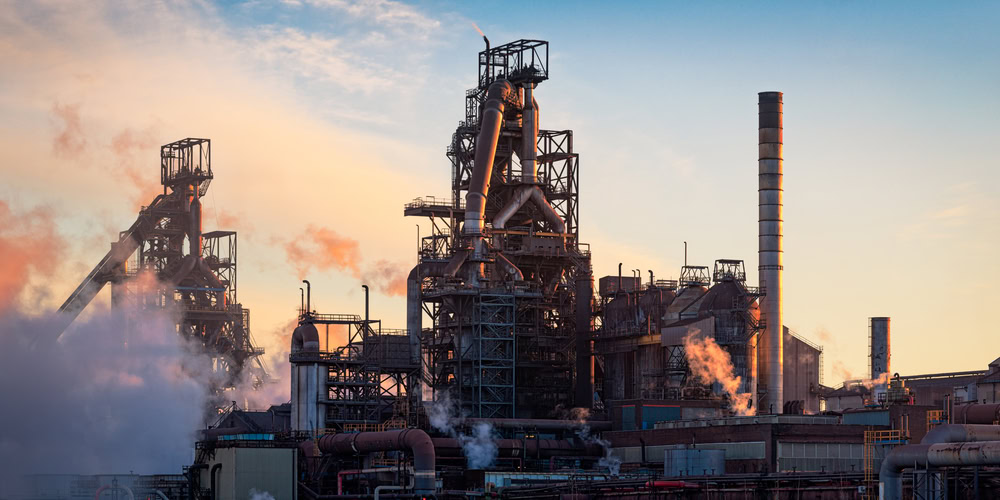
Demand for ferrous metals has also fallen in recent years due to the closure of Tata Steel’s blast furnaces at Port Talbot ahead of redevelopment, intermittent demand from Liberty Steel’s South Yorkshire operations and reduced demand from British Steel.
The BMRA estimates that domestic demand for recycled ferrous material now sits at less than 1.5 million tonnes.
Against this backdrop, exports have become an essential outlet. According to the International Steel Statistics Bureau, the UK exported approximately eight million tonnes of recycled ferrous material in 2025, alongside around one million tonnes of non-ferrous metals.
The figures suggest around 84% of the UK’s recycled ferrous material and 71% of non-ferrous material was exported during the year.
While policymakers often stress the strategic value of retaining more material domestically, the BMRA argues recyclers would generally prefer to supply UK manufacturers if sufficient demand existed.
The association said: “We do not disagree with the numerous articles which cite the unique availability of recycled ‘scrap’ material that is produced in the UK and fully understand that the message of greater domestic retention of recycled material is an altruistic one.”
Where does Britain’s scrap metal go?
Export destinations vary, but certain markets consistently emerge as major buyers.
Between 2022 and 2025, Türkiye was the largest importer of UK recycled ferrous material in three of the four years. India consistently ranked as the biggest destination for recycled aluminium exports, while China remained the principal market for recycled copper.
In 2025, the leading markets for ferrous exports were Türkiye, Egypt, Morocco, Pakistan, India, Spain and Portugal.
Aluminium exports were primarily sent to India, Hong Kong, China, Germany, Switzerland, Thailand, the United States and Türkiye, while recycled copper was exported mainly to China, India, Germany, Belgium, Spain, Japan, South Korea and Greece.
The BMRA explained: “The common theme across these export markets is that they have a strong manufacturing base.”
Many of the largest steel importers operate substantial EAF capacity. Türkiye, for example, has one of the world’s largest EAF-based steel industries, while countries including Egypt and Morocco also rely heavily on electric arc furnace production.
These facilities depend on recycled steel as a key raw material, sustaining demand for imported scrap.
Competitive pricing and long-term market stability also help explain the strength of these overseas relationships.
The economics of exporting
Like all commodity markets, scrap metal trading is volatile. The BMRA said the sector operates within “complex and volatile markets”, with risks including “logistical delays, currency fluctuations, and additional compliance measures in any transiting and destination country.”
The association added that “metal price volatility, owing to a range of factors including wars and tariff measures, is also problematic.”
Even so, export markets offer significant commercial advantages. The BMRA says one of the main benefits is the consistency of overseas demand compared with intermittent domestic purchasing. Payment terms are another important factor.
The association explained: “Whilst you may expect non-payment to be a common risk for exports more broadly, the likelihood of non-payment is relatively low in metal markets.”
Conversely, it added that insurers “believe the domestic (UK) steel market is particularly risky”, with many recyclers reporting difficulties obtaining credit insurance against domestic steelworks.
Taken together, these factors mean export markets are often viewed as a more reliable commercial proposition, even when recyclers would prefer to sell domestically.
A changing political debate
As governments seek to secure access to critical raw materials and reduce reliance on imports, scrap metal is becoming a valuable strategic resource.
Supporters of greater domestic retention argue that exporting millions of tonnes of recycled metal while importing raw materials and investing in manufacturing capacity appears contradictory.
The issue has become especially prominent in discussions around green steel. EAFs can significantly reduce carbon emissions compared with traditional blast furnace production, but they require a steady supply of recycled steel feedstock.
Recyclers, however, argue that any discussion about retention must reflect current market realities. Without sufficient domestic manufacturing capacity, restricting exports could leave businesses with fewer outlets for material and undermine the economics of collection and processing.
How could the Steel Strategy affect exports?
The Steel Strategy could prove one of the most significant developments for the sector in decades.
Although it does not impose export restrictions, it sets out a vision for a steel industry centred on EAF technology. If planned investments by Tata Steel and British Steel proceed, domestic demand for recycled ferrous material could rise substantially.
According to the BMRA, UK demand for recycled steel could increase to as much as seven million tonnes by 2030.
The association said: “If this does transpire, we can expect to see a significant fall in exports for recycled ferrous metal.
“Natural market forces will dictate that, and UK metal recyclers have consistently stated they would prefer to supply domestically, assuming consistent demand, competitive pricing and adequate payment terms.”
The outlook for non-ferrous metals is less certain. While there have been reports of potential investment in new secondary aluminium facilities, the BMRA does not expect a substantial increase in domestic retention without major new manufacturing capacity being announced.
The Steel Strategy also confirmed the creation of a new scrap metal working group. Industry representatives say collaboration between recyclers and manufacturers will be essential if the UK is to maximise the use of recycled materials in domestic production.
The future of metal exports
While greater domestic use of scrap metal is increasingly seen as a desirable policy objective, the debate remains contested.
The BMRA argues that recycled metals operate within global commodity markets and that maintaining free and fair trade remains essential.
It warned: “Export bans therefore represent an existential threat for many UK businesses.
“Direct restrictions on exports of metals are not a feasible approach to supporting UK steel production, and more stringent restrictions may cause the UK metals recycling industry to no longer function.”
The wider European market also offers a glimpse of how policy intervention could reshape scrap flows. New EU steel regulations due to take effect in July will tighten import controls and increase monitoring of secondary raw materials, amid growing debate over whether more scrap should be retained within Europe to support domestic electric arc furnace production.
Recyclers have warned that such measures risk distorting markets and undermining the economics of collection if export routes become more restricted.
Even if planned steel investments proceed, the UK is still expected to generate more recycled metal than domestic manufacturers can consume. For non-ferrous metals in particular, limited domestic markets mean access to export destinations remains critical.
The coming years may nevertheless mark a turning point. If the government’s steel ambitions are realised and new manufacturing capacity emerges, a greater proportion of Britain’s scrap metal could remain within the UK supply chain.
For now, however, exports remain an integral part of the UK’s metals recycling system, connecting British recyclers to manufacturers around the world and providing a vital outlet for material that currently has few domestic homes.
Join over 3,500 metals recycling professionals at CARS & MRE 2026 for two days of live demonstrations, expert insights and networking – find out more here.

Register for free to comment