
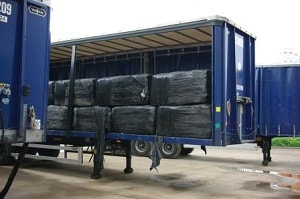
German operators of incinerators, RDF power plants and cement works are being offered substantial extra tonnages of waste material, as are German processors who are upgrading British RDF to a higher quality feedstock.
Consequently gate fees are rising and some of Germany’s own RDF-producing MBT plants are said to be suffering because they are having to pay increased gate fees for their own domestic material.
[testimonial id = “238” align=”right”]
In 2014, Germany received about 480,000 tonnes of refuse derived fuel (RDF) from Great Britain. Operators of mass burn incinerators consider the extra waste on the market as coming as something of a relief after suffering for a decade from overcapacity.
Additional waste is coming into Germany from the neighbouring Netherlands where British RDF has partly pushed out Dutch waste volumes from the incineration plants because British suppliers are willing to pay higher gates fees. And the Dutch waste was also welcomed by the energy from waste plants particularly in North-Rhine-Westphalia in the north-west of Germany.
Now, the incineration market is more or less in balance, was the consensus at the Kassel Waste and Bioenergy Forum, held at the end of April and which is the largest German waste congress.
“We hardly have any free capacity left,” commented Bernard Kemper, managing director of EEW Energy from Waste GmbH.
Heavyweight
Since the beginning of May, the former E.ON subsidiary has become wholly-owned by the strategic investor EQT from Sweden. EEW is a heavyweight in the sector. It operates 19 incineration plants of different types in Europe, most of them in Germany, with a total annual intake of waste and RDF in the range of five million tonnes.
“Since 2013, we see the gate fees slightly rise,” said Mr Kemper. “Prices are depending on the pressure in the UK to place quantities on the market.“ Until 2020, he foresees a stable situation of capacities taking account of the waste imports. Besides imports from Ireland, Poland and the Netherlands, the waste from Great Britain has reached a considerable dimension.

In the prevailing view of German experts, RDF from Great Britain is mass burn grade. Without further treatment this medium calorific fraction is accepted in mass burn incinerators with gate fees in the range of between 50 and 65 Euros (approx. £36 – £46 GBP) per tonne, according to the evaluation of Thomas Obermeier, President of the German Association for Waste Management (DGAW, Deutsche Gesellschaft für Abfallwirtschaft e.V.).
In the past, British RDF was generally shipped to German ports and then moved on to the northern regions of Germany. Now, this approach is less important, says Mr Obermeier as the alternative of road haulage direct from England is on the rise due to low freight charges.
Return loads
As the United Kingdom is a net importer of goods from Germany, return trips leave many empty lorries as a result. To avoid this, return loads are offered at very low fares such as 25 Euros (approx. 18 GBP) per ton of baled RDF, and similarly to East Germany, which was traditionally not affected by waste imports. At present, forwarders from Eastern Europe are particularly active in this business. And, recently, lower prices for diesel fuel have also stimulated the trend to road haulage.
Germany and the Netherlands are competing for RDF from England, notes Mr Obermeier, commenting that “UK imports of RDF boost German gate fees”. Due to the new Dutch incineration tax with an amount of 13 Euro (approx. 9 GBP) per tonne gates fees for mass burn incineration rose to beyond 50 Euros per tonne. In consequence of the rise, quantities of Dutch waste are being moved to Germany.
The quality of the British RDF does not really matter, said a German producer and processor of RDF. Upgrading the imported RDF from medium calorific value to a high calorific quality is also a good business as the processing capacities are available anyway. In fact, this producer said that he considers Europe as a large marshalling yard for RDF.
German operators of mechanical biological treatment plants (MBT) who produce RDF are worried about the rising imports as they drive up the gates fees for their own material, concerned parties report.
Typically, payments for the disposal of RDF are the largest cost factor within the overall expenses of MBT. In 2013, some MBT received a reward of up to 20 Euro per tonne for high RDF qualities. Lower qualities had to be paid for with rising gate fees within two years from about 30 Euros (approx. 22 GBP) per tonne to more than 50 Euros now.
Trend
Within existing contracts, payments range from 40 to 60 Euros, and on the spot market about 35 Euros may have to be paid. In 2016, the trend to higher gate fees is expected to continue. According to some MBT plant owners, the German recipients of RDF argue in negotiations of new contracts that there are enough imports from the UK on the market which bring with them more money.
In East Germany the MBT market is “tense”. Several factors are impacting on the RDF recipient: equipment breakdowns at cement works, coal and RDF power plants, as well as partial shutdowns of power plants due to high feed-in of wind and solar power into the grid. At the same time, there is a massive flow of commercial waste with high payments from South Germany.
Some German MBT plants are thought to be already stockpiling their RDF in interim storage facilities and describe their situation, with rising gate fees as “uncomfortable”, some as “dramatic” and they fear for the future which they expect to become more difficult. The only reason that those who have contracts in place, perhap between one and three years, are not panicking is because they have contracts which are at lower gate fees or that they even receive some level of income. It is the MBT plants who depend on the spot market, where prices are rising up to four times in a year, who face the toughest challenges.
Calorific value
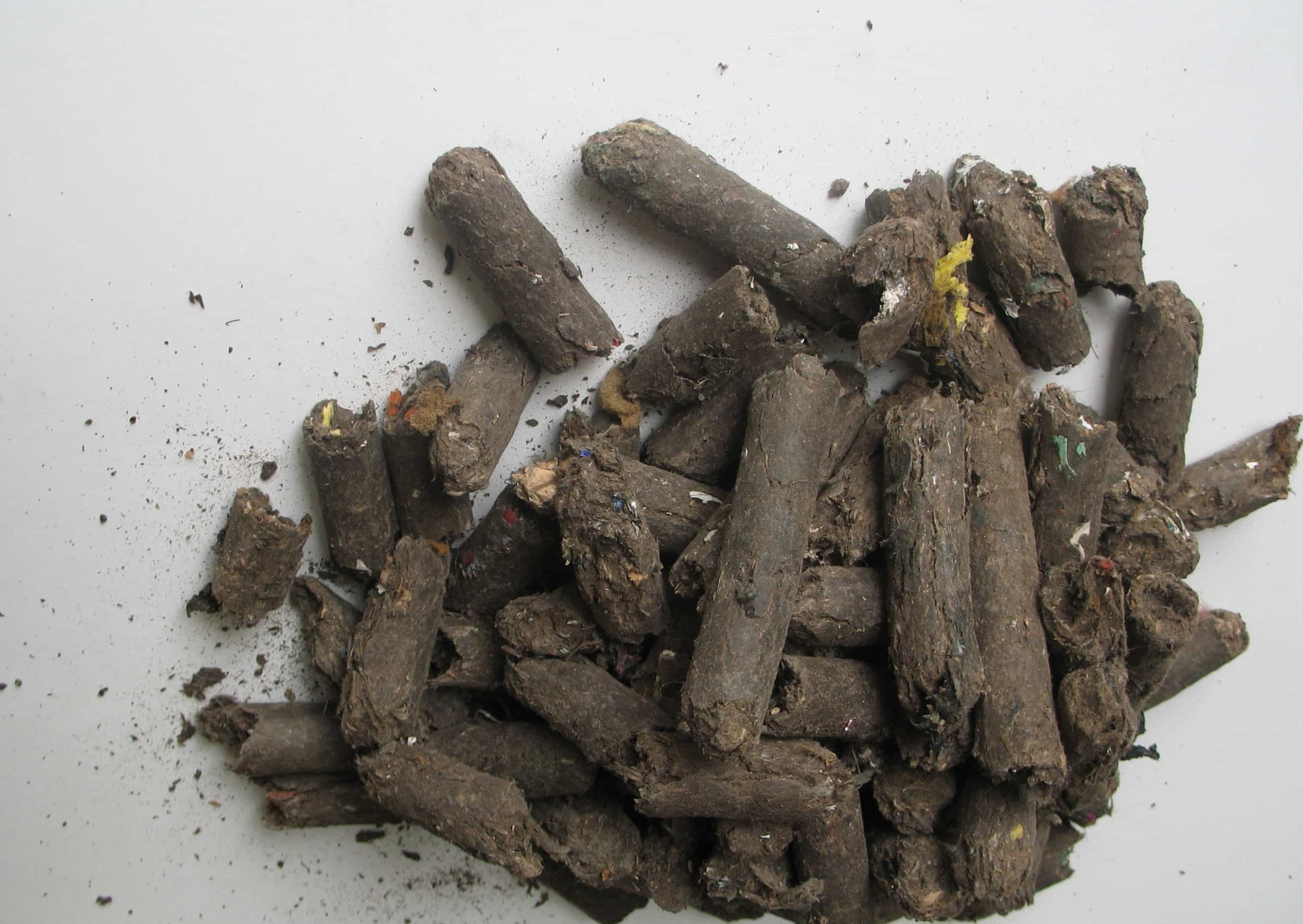
Generally gate fees, or even positive payments in the past for RDF, relate to a number of parameters around the materials: high calorific value, low chlorine value, heavy metals, sulphur and ash material. Conditions for pellets are better than for slightly pelletized material, followed by simple fluff.
Usually producers of RDF lower the content of chlorine by avoiding the intake of PVC-containing materials from suppliers. When the final RDF still shows a high chlorine value a new technical measure can reduce it. “We can eliminate 85% of the PVC contained in RDF,” said Arno Moeller, sales manager of the Austrian company Redwave, an exhibitor at the Kassel forum. He referred to a supposed PVC-content of 3% which would be lowered to 0.45%, an acceptable value for industrial use. The technology is based on optical sorting via near-infrared light (NIR) and realsed for RDF-upgrading in a plant of Müllex-Umwelt-Säuberung in eastern Austria.
On the German RDF market there are winners and losers with regards to British exports. The peak of exports at 2.5 million tonnes annually predicted by British market researchers is accepted. But stock market wisdom says: “The trend is your friend.” Why should the increase stop?

Register for free to comment