
The implementation of and compliance with extended producer responsibility (EPR) policies, which regulate the collection, treatment and recycling of waste, are difficult enough even in advanced economies. The situation in developing regions, where the consumption of finished goods is rising rapidly, is even more complex. Legislators need to take account of rising waste volumes, as well as the importance of informal recycling sectors, when developing EPR policies. Multinational organizations must also be aware of their role in waste generation and their responsibility to understand and uphold environmental standards.
Growth versus the environment
Developing countries face a difficult task. While economic growth is often achieved at the expense of environmental standards, improving environmental standards benefits the population’s health and wellbeing. This challenge is one that other regions have already faced; for example, some of the momentum behind the exponential increase in European environmental protection policies in the 1970s was triggered by a need to remedy immediate problems, such as the issue of acid rain in Scandinavian countries, as well as longer-term concerns about the sustainability of continued economic growth.

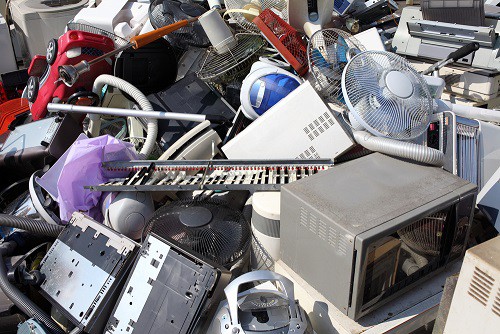
Now it’s the turn of emerging markets to introduce or review general waste framework legislation. These laws are put into place to lift environmental standards and usually place the ‘waste hierarchy’ (of reduce, re-use, recycle) at the heart of their objectives. They can also often provide the statutory framework for governments to apply EPR responsibilities. They usually identify and aim to tackle the fastest-growing, highest-volume and most hazardous forms of waste, such as waste electrical and electronic equipment (WEEE).
Global manufacturers also recognise the problem of waste management and the damage that could be caused to people and the environment because of inadequate treatment of end-of-life products. Many have acted accordingly, either by introducing their own, voluntary EPR policies, or by supporting the introduction of statutory policies.
The difficulties of development
“Simply replicating the obligations contained in advanced markets’ EPR acts and regulations in developing countries is very unlikely to work,” cautions Richard Barnish, global regulatory research manager at DHL Envirosolutions. “There are several complicating problems and opportunities that must be considered when drawing up and implementing EPR programs.”
Particular challenges that governments in developing markets need to overcome when attempting to assign, measure and enforce EPR obligations include:
- Difficulties determining where best to place the responsibility for EPR waste collection
- Problems identifying who originally produced equipment once it has reached the end of its life, because it may have been broken down into components
- Grey markets, waste imports and used equipment, which add another layer of complexity
- The possibility that improving EPR standards could damage the livelihoods of people who are financially dependent on the informal waste-collection and recycling sector
A global challenge
Emerging markets across the world are drawing up and introducing EPR policies, with varying degrees of success.
Vietnam is planning a phased implementation of EPR policies from January 2015. This will be difficult, says Mr Barnish, because waste is often collected via informal, door-to-door arrangements, rather than state-organized efforts. Also, the materials may go through a number of stages – including whole-item re-use, stripping for component re-use and raw material recycling – before final disposal. “By the time a computer, for example, reaches the raw-material recycling stage, it probably exists only as a mixture of components,” he says. “And these components may well be mixed with other raw materials from outside the electronic waste stream. It will therefore be difficult to know how much and what types of material the manufacturer should be taking responsibility for.”
Brazil published a new waste framework law in 2010 that contained aspirations to implement EPR through ‘sectoral agreements’, where businesses that are responsible for selling or manufacturing products are asked to propose their own EPR solutions. This framework requires producers to take responsibility for their waste but doesn’t define how this must be achieved, so discussions about how best to implement a system of WEEE collection that encompasses reverse logistics and recycling responsibilities for technology producers are still ongoing.
EPR is being addressed differently elsewhere, although few region-wide initiatives have yet been attempted. In Kenya, the eWaste Solutions Alliance has been working to implement WEEE-related EPR for some time. The group’s members include Hewlett-Packard, Philips, Dell, Nokia and Reclaimed Appliances UK. One of its projects, the East African Compliant Recycling (EACR) scheme, provides shipping containers that enable informal collectors to gather WEEE. Full containers are then sent to a facility where the recycler pays for the collected material.
Back in Vietnam, leading international electronics companies such as Apple, Canon, Panasonic and Sony have joined together to create the Information and Communications Technology (ICT) Group, which aims to help the government meet its aspirations for a full EPR system. The group plans to collaborate with the country’s Institute for Environmental Science and Technology (INEST) to propose solutions to environmental and waste challenges, and help meet the government’s proposed timetable for implementing EPR.
The role of a supply chain partner
Meeting EPR objectives is fundamentally about the collection, movement and management of waste, while complying with high technical and ethical standards – something that Mr Barnish says DHL has been doing in numerous territories for many years. “We have been closely involved with producers, policy makers and other stakeholders through the EPR implementation process in numerous developing markets,” he explains. “We use our global expertise and local network capabilities to provide solutions for clients affected by EPR policies as they emerge and evolve.”
A general lack of existing infrastructure and formal recycling markets has resulted in a national governments concentrating on operational solutions, with the assistance of organizations such as DHL that have experience of working in this area across different territories.
“DHL is trying to help that process, by speaking to developing countries and producer groups and helping to put something together that’s workable, based on our experiences,” says Mr Barnish. “There are certainly valuable lessons that can be learned from other territories, but you can’t just pick up one piece of legislation and transplant it into another country.”
How the issue of EPR will shape up in emerging economies remains unclear, and it seems unlikely that a one size fits all solution can be found. Furthermore, EPR models that have been used successfully in the EU, US, Australia and Japan may not work in other countries because of cultural and political differences, and issues with infrastructure and scale.
But, says Mr Barnish, we can be reasonably confident about a couple of things. “Countries that traditionally didn’t have or didn’t enforce legislation are now introducing higher standards of environmental protection,” he says. “EPR is likely to be an increasingly common tool employed globally.” And, while the future of EPR is still evolving in countries across Asia, Africa and Latin America, Mr Barnish says that “most producers and policy makers are favouring statutory regimes over voluntary systems, so a level playing field is established.”

Register for free to comment