

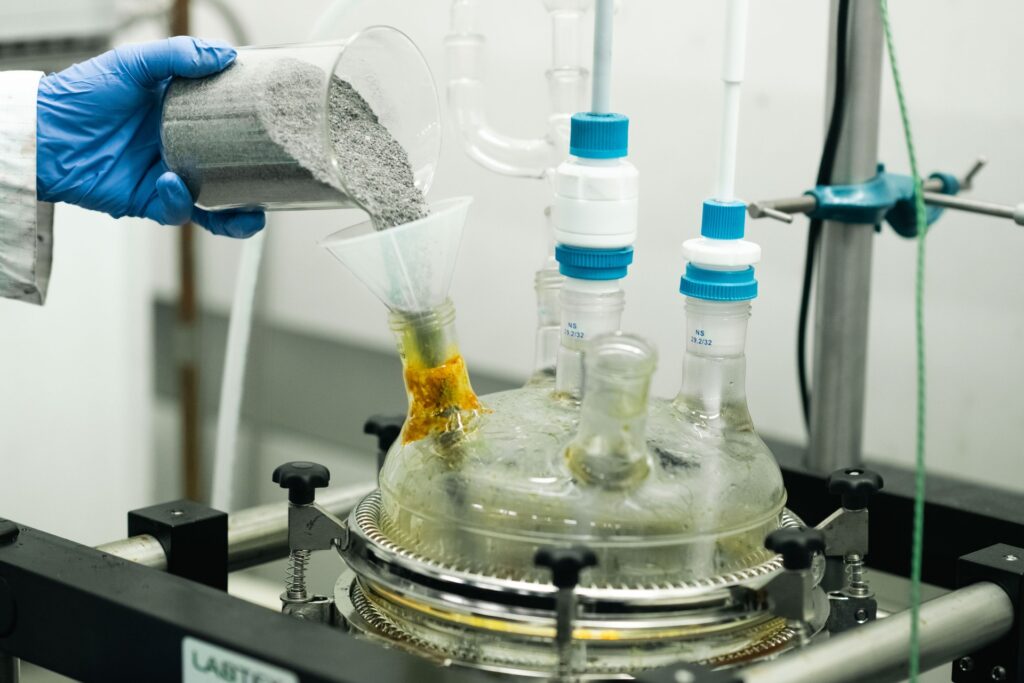
Initial operations will focus on processing printed circuit boards and other complex electronic waste supplied through DEScycle’s UK joint venture partner GAP Group.
The plant is expected to be capable of processing between 50 to 100 tonnes of material each year.
The first metals recovered will include gold, copper, silver and palladium, with the company also developing recovery capabilities for tin, iron and aluminium.
Funding for the company has come from investors including BGF, Vorwerk Ventures, Cisco Investments and Mitsubishi. DEScycle has a partnership with Cisco to provide materials to the facility, and with Mitsubishi to conduct an offtake study to evaluate commercial routes for domestically processed metals.
Leo Howden, CEO of DEScycle, commented: “This facility is the first operational blueprint for DEScycle’s distributed metals processing model.
“At a time when critical minerals are urgently needed for AI, electrification and advanced manufacturing, we believe the UK has an opportunity to lead in a new model of metals processing.”
DEScycle’s technology is based on a novel class of chemistry discovered at the University of Leicester before being scaled from laboratory to pilot through collaboration with the Centre for Process Innovation (CPI).
The facility, which was formally opened by MP for Redcar Anna Turley and Tees Valley Mayor Ben Houchen, represents the British start-up’s transition from research and pilot operations to industrial deployment.
Commissioning of the plant also marks DEScycle’s achievement of Technology Readiness Level 7 (TRL7), demonstrating that its technology was been proven in an operational environment ahead of wider commercial roll-out.
Critical minerals recycling in the UK
The opening of the facility comes amid growing political and industrial interest in developing domestical critical minerals processing capacity.
Much of the UK’s end-of-life electronic equipment is still exported for treatment, meaning valuable materials are recovered overseas rather than re-entering domestic supply chains.
The UK Government’s Critical Minerals Strategy has also set an ambition for recycling to meet 20% of annual UK critical mineral demand by 2035.
Circular Economy Minister Mary Creagh added: “Recovering these critical metals and materials here in the UK is vital for our supply chain resilience, resource security and climate goals.
“I am delighted to see a British start-up like DEScycle showing how innovation strengthens the circular economy and reduces our reliance on sometimes fragile overseas supply chains.”
The launch also follows last month’s announcement of a £50 million government investment to support domestic critical minerals production, made during a visit to DEScycle and the Wilton Centre by Industry Minister Chris McDonald.

Register for free to comment