


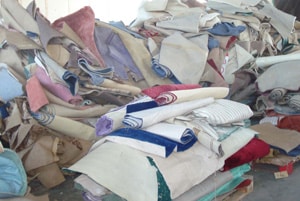
The carpet industry must develop an action plan for diverting carpet from landfill, according to Simon Macaulay, the recently elected chair of the Flooring Sustainability Partnership (FSP).
Mr Macaulay said that although Defra’s Waste Review mentions the idea of a restriction on textiles and carpets to landfill, he believes the department favours voluntary action by the carpet industry, rather than a legislative approach.

And, the FSP chair revealed that the carpet industry was making good progress with 66,000 tonnes of carpet diverted from landfill in 2011 (see letsrecycle.com story), a diversion rate of 16.5% according to Carpet Recycling UK.
The carpet industry body is a member of the FSP as are other groups, including LARAC, Defra and WRAP. The FSP aims to raise awareness and develop solutions to make flooring and carpet more sustainable and drive it out of landfill.
Speaking to letsrecycle,com, Mr Macaulay said: The government has said that they want to consult on this during the course of this parliament – and we are already two years in. The impression I am getting is that government would rather the industry came up with a voluntary producer responsibility position, taking responsibility for end of life disposal.
I don’t think they want legislation, as occurred with packaging, but rather something more like the end of life vehicle directive as happened in the automotive industry. There, sensible timescales were built in to allow manufacturers to adapt and change and invest in the processes and systems required.
He told letsrecycle.com: I am a great believer in producer responsibility and the industry has a lot to gain by being seen by its customers to be doing the right thing in terms of reducing the amount of waste going to landfill.
Landfill ban
He said that the big challenge during his time as chair of the FSP is to help raise awareness of the importance of diverting carpet from landfill. And, he is aiming to gain more information from others in the industry so it is on the front foot’ if Defra consults on a ban.
However Mr Macaulay warned that the industry would need between five and ten years to divert all carpet from landfill. This would allow time for carpet producers to design more sustainable carpet and for it to be used and then sent for disposal.
I think we need to be on the front foot with government – generally key players in the industry are saying to me that we should be working towards a timescale to a ban – but giving us time to ensure it is practically achievable. After all, we still have 80% of the waste to deal with. We do not want to get into the situation found by the plastics industry of setting up a timescale that it cannot then achieve.
Challenges
However he said the UK still faces challenges. We are progressing but I recognise that there is much work still to do as postconsumer carpet is expensive and bulky to move around the country and the infrastructure and markets for disposal and recycling is still developing. For example, in Europe there is an energy recovery infrastructure but in the UK, this is still in its infancy.

Register for free to comment