

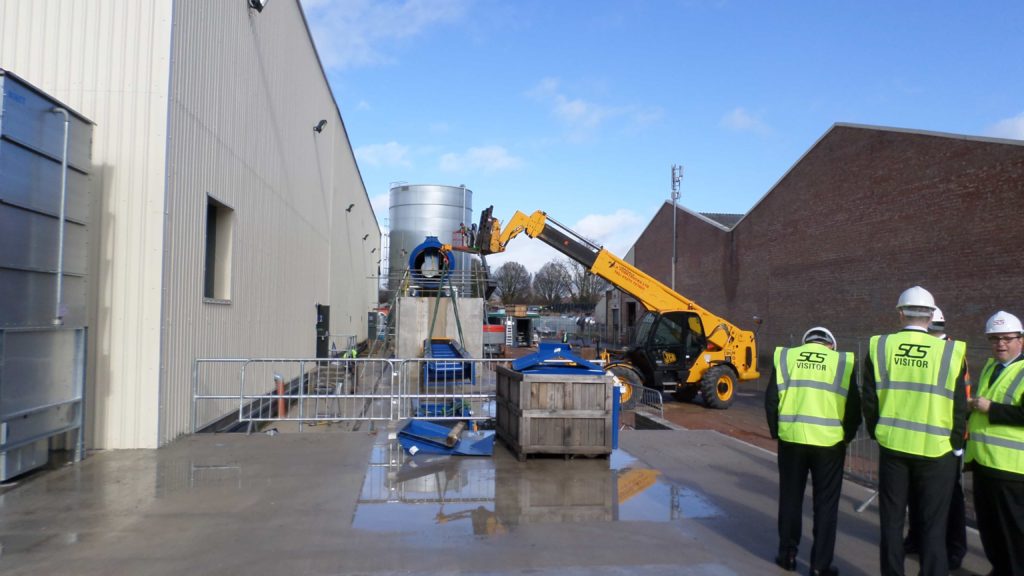
The facility, which will treat 48,000 tonnes of Swindon’s household, commercial and industrial waste per annum, will separate materials and produce refuse-derived fuel (RDF) and solid recovered fuel (SRF) at its site at Cheney Manor Industrial Estate.
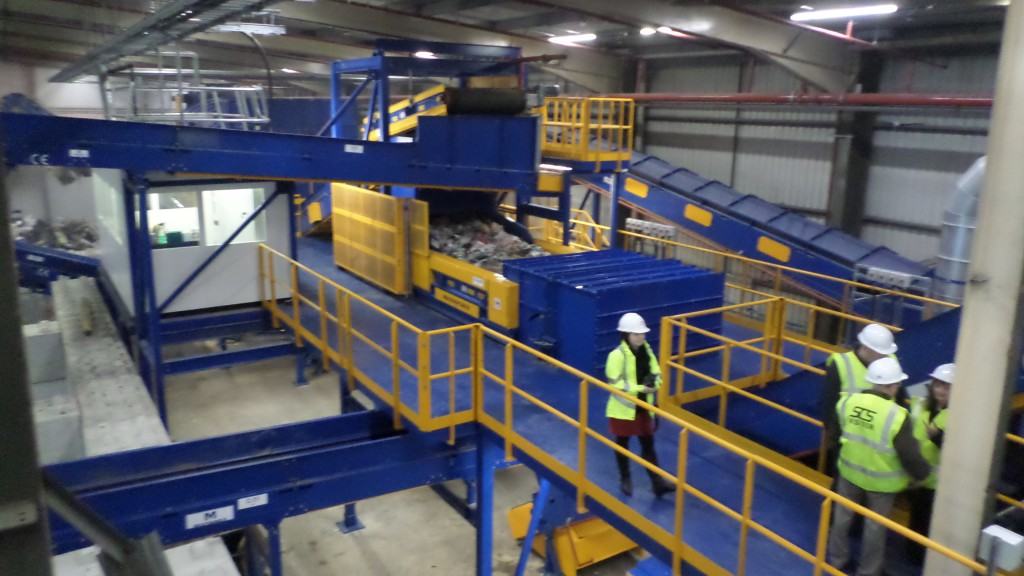
Machinex successfully tendered to supply the custom-made sorting technology in May last year, following planning permission in February and Swindon borough councils decision to offer an eight-year loan to SCS to develop the plant, which is a wholly-owned subsidiary of the council (see letsrecycle.com story).
The contract is estimated to allow savings of £16 million over its eight year lifespan, with the possibility of an extension.
To achieve RDF and SRF standards, a variety of municipal materials are first shredded and fine particles removed through a trommel, while ferrous and non-ferrous metals are sorted via magnets before being extracted with a heavy-light separator. Meanwhile, a secondary shredder is also in place to ensure the material complies with standards of 30mm or less.
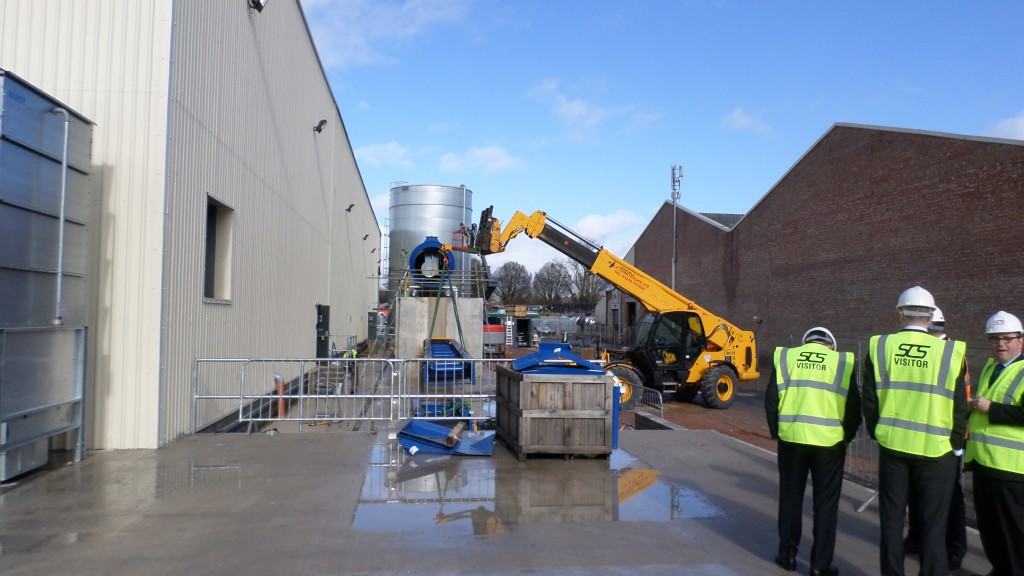
To meet SRF standards, which is a higher quality product than RDF, the plant requires between 15% and 20% moisture content. At the end of the process, material will be treated in a rotating drum dryer, which is due to be completed in March.
Procurement
Commenting on the deal with Machinex, Sean Magee, head of waste solutions at SCS, told letsrecycle.com: “We went through a procurement process and Machinex were successful. The solution that they put forward fitted our needs and was within our budget. They have also been a great partner to work with, and we are interested in working with them again in the near future.
He added: “There are a lot of councils out there that do not have the expertise to install one of these plants, and that is something we could do for them. What we have designed here is a direct lift model, so we can take it anywhere with us. Household, black bag waste is pretty much the same wherever you go.”
Meanwhile, speaking to visitors at the launch, MP for Camborne and Redruth George Eustice gave his support to energy-from-waste projects but was critical of exports to continental Europe, where demand for RDF and SRF is currently higher than the UK.
‘Delighted’
The minister said: “I was delighted to have the chance to come here. Defra is very keen to encourage energy-from-waste and projects of this sort, and I think energy-from-waste is definitely the way to go as we cannot keep chucking this stuff into landfill.
“We are not just going to have the RDF but also the finer quality SRF, which means we can save most of the energy. Its really exciting, and Swindon is leading the way.
“My only problem is we have to export this stuff to Germany, and on this front the UK needs to catch up. We should not have to deal with costs associated with the export.”
And, speaking to letsrecycle.com, Conservative council leader David Renard said the investment would be beneficial in boosting Swindons overall recycling rate, which currently stands at 44.33%, and urged Defra not to deprioritise waste in the wake of other environmental concerns, such as flooding.
Decision
He said: “We spent a lot of time in meetings debating whether this is a good investment, and it cost the council £8 million including the dryer. It was probably the biggest decision we have had to make in recent times, but we thought this was a risk worth taking for the people and future of Swindon.
“It’s always difficult when you ask a council to fund a project because its the taxpayers money. But at the end of the day we will be putting 5% of Swindon’s waste in landfill which will save us a lot in costs.”

Register for free to comment