


The positive note to export pricing in the textiles sector comes in the face of some concerns about weaker export prices in recent months.
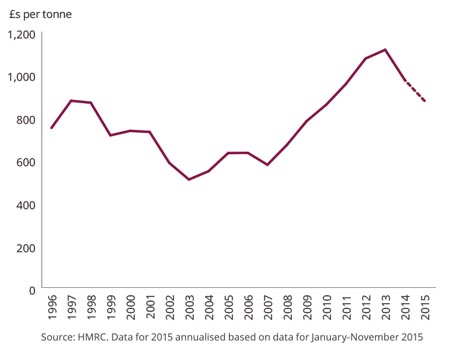
WRAP notes that the value per tonne of exports today, “whilst much lower than it was at its peak, remains higher than before the ‘boom’ period” – a reference to the surge in value seen from 2008 to 2013.
Up to 2007 the average export price, going back to 1996, was about £679 per tonne.
From 2008 to 2013 the export price soared, and reached £1,115 in 2013. And, now despite reductions, used clothing exports were still worth almost £1,000 per tonne in 2014.
‘Useful indicator’
WRAP emphasises that the export value is a “useful indicator” in terms of revenue to the textiles sector.
While export values have reduced from their peaks by about 10% more, WRAP reports that prices paid to local authorities and charities for textile bank material have fallen in value by 55% since 2013, from a high of more than £450 in 2013, to just £200 per tonne at the start of 2016.
The pricing detail and comments come in a WRAP market report on textiles, available at Market report (opens as pdf)
The document contains many references to the uncertainties in the textiles market and WRAP also appears uncertain itself as to the volumes of material exported.
At one point in the study it says that more than half of the textiles collected are exported (page 10) and claims that 32% of the textiles collected are “destined for re-use in the UK through charity shops”. However, in the pricing section of the report (page 16), it remarks that “nearly half of the textiles collected are exported”.
Closed loop
Looking ahead, WRAP says that changes in the textiles market “and the uncertainty around some key export markets have highlighted the need for a wide range of sustainable end markets, including greater re-use in domestic and overseas markets as well as market development for recycling grades, including closed loop fibre-to-fibre recycling”.

Register for free to comment