


The proposal, which is being championed by the Lighter Later’ campaign and the Royal Society for the Prevention of Accidents (RoSPA) is expected to be included in a strategy on tourism due to be published by the department of communities, media and sport “in the next couple of weeks”.
Under the plans, the UK would adopt a system known as a Single/Double Summer Time’. This would put the clocks one hour ahead of Greenwich Mean Time in the winter and two hours ahead in the summer.
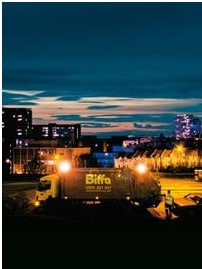
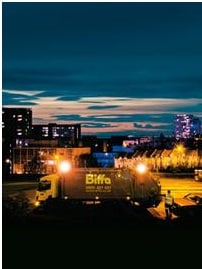
However, waste and recycling sector figureheads have warned it could potentially impact their working practises – which traditionally take place in the early hours of the morning.
Chris Jones, chairman of the advocacy group Waste Industry Safety and Health Forum, said: “Refuse collections are done in the morning and the thrust and intensity of the work is done before the rush hour, so that we don’t slow down the public. So if there is an effect then our work is going to be magnified. So that is something that we might need to look at.”
Mr Jones pointed to the potential for there to be a rise in incidents in the morning if workers were forced to work in darker conditions than they currently do.
Incidents
Elsewhere, William Furniss, health and safety manager for the logistics divisions of SITA UK, warned that the change could potentially lead to an increase of incidents, particularly in rural environments with little or no street lighting.
He said: “If I was to pick two tangible areas it would be slips, trips and falls, as there are quite a few rural areas with no street lights and no proper pavements, and there is also the potential for struck-by moving vehicle incidents, even though our guys wear high-visibility jackets it is still going to be an issue in poorly lit areas.”
Mr Furniss added that, if daylight hours were moved, the company would have to review its work in this area and would have to assess whether moving to a single-sided collection method – which takes longer to carry out – would help alleviate potential health risks.
A spokesman for the Health and Safety Executive (HSE) added that, while it had no firm comment at this stage, it would review its guidelines and advice to ensure it was compatible with any government announcement.
Accidents
Conversely, RoSPA is claiming that the campaign would actually lead to a reduction in accidents and it maintains that lighter evenings will lead to around 80 deaths and 200 injuries being avoided each year.
Responding to waste industry concerns, Tom Mullarkey, chief executive of RoSPA, told letserecycle.com that he hoped that the waste industry could support the measure and said there was no reason, as with schools, why working hours could not be moved to match the new periods of daylight.
He said: “We would expect and hope the waste industry would be absolutely supportive of this initiative and lead the charge in terms of being more creative and flexible in their working habits.”
Mr Mullarkey added that, while he did not have specific data on the waste sector, he could not see it posing any more danger than current practices. “[Collections] are very well lit, people wear protective clothing and there is not much traffic around,” he said.
“I am not saying that the concerns of the waste industry should be put to one side but they need to come up with some new ways of doing things.”
Mornings
However, Mr Mullarkey acknowledged a potential for increased incidents in the morning. He said: “If we move daylight hours we will have more casualties in the morning but we will have much fewer in the evening. That’s a net benefit. There are also options for making it safer in the morning – make people more reflective etc.”
Mr Mullarkey claimed that the shift would also lead to a reduction in carbon emissions – a move he feels that the waste sector should support.
He said: “For an industry focused on environmental management this is a no brainer as it is going to save more carbon. It could save 500,000 tonnes of CO2 a year which is equivalent to 85% of all the renewable energy produced in the UK.”
And, Mr Mullarkey added that the proposed change in daylight hours would cost around 5 million to introduce but would create an annual saving of 148 million – which made it a no-brainer in the current economic climate.
Bill
The issue is currently the subject of a Private Member’s Bill brought forward by Conservative MP Rebecca Harris. The Bill calls on the government to carry out a cost assessment of a change in timekeeping and, if approved, would require a trial to be carried out.
The Bill, known as the Daylight Saving Bill 2010-11, reached its Second Reading at the start of December and is now set to go to Committee Stage. However, a date has not been set for the Committee Stage and is understood that an inclusion of the proposal in the tourism strategy could supersede this Bill.
A spokeswoman for the department of culture, media and sport confirmed that the issue of daylight savings hours would be included in the tourism strategy. She told letsrecycle.com: “Yes, we expect to publish the Tourism Strategy in the next couple of weeks but not sure of the definite date yet.
Related Links
“Daylight savings will be one of a number of issues that we are looking at in the strategy but I cannot reveal what the strategy says about anything at this stage.”
Trial
A trial was previously carried out between October 1968 and October 1971, which saw Britain remain on GMT plus one hour over the course of the trial.
Over the three-year period, Britain saw a reduction in the number of accidents according to figures from the Road Research Laboratory. But, its formal introduction was voted against heavily by the House of Commons in December 1970.


Register for free to comment