

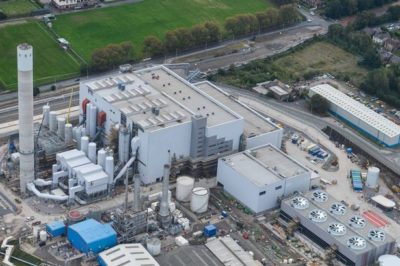
As the trade association promoting the commercial deployment of carbon capture technology, the CCSA hopes to ensure the process is recognised as an essential solution to deliver net zero emissions across the economy
Viridor’s director of environment, innovation and regulation Tim Rotheray said the company was committed to introducing the infrastructure and innovation which would allow it to meet its net zero commitments and contribute to wider UK goals on climate change.
Dr Rotheray, who has been appointed chair of the Environmental Services Association’s Climate Change Working Group, said: “Our sector has a key role to play to meet these commitments and Viridor is actively exploring technology options around carbon capture and the removal of fossil carbon through our ambitious polymers programme, to deliver further emission reductions and, potentially, negative emission operations.
“We also recognise the role that the CCSA will play in engaging government to ensure the UK has policy in place to enable ERFs to deliver net zero and beyond.”
CCSA
CCSA members are drawn from a wide range of sectors such as industry, equipment manufacturing, oil and gas, distribution, academia and regional bodies, as well as the associated supply chain and service sector.

The trade association work with members, governments and other organisations to ensure carbon capture, utilisation and storage is developed and deployed to meet net zero goals and deliver sustainable growth across regions and nations.
CCSA chief executive Luke Warren said: “We are delighted to welcome Viridor into the CCSA family. As the first member from the energy from waste sector, Viridor’s input will be invaluable as CCSA continues to work to ensure that carbon capture, utilisation and storage can help to support the decarbonisation of all sectors of the economy. We are really excited about the opportunities for applying CCUS to energy from waste facilities.”
Carbon capture
Carbon capture and storage involves the separation of carbon dioxide from other gases before it enters the atmosphere, converting the gas into a liquid form for transport by pipeline or tanker. It is then pumped underground with monitoring essential to ensure long-term storage.
According to the International Energy Agency, carbon capture, utilisation and storage could reduce global carbon dioxide emissions by almost a fifth and reduce the cost of tackling the climate crisis by 70%.
However, a study published on 11 January suggested carbon capture and storage could not be relied on to deliver global 2030 emissions reductions, while 81% of carbon captured to date has been used to extract more oil via the process of Enhanced Oil Recovery (EOR).
The study was commissioned by Global Witness and Friends of the Earth Scotland and carried out by Tyndall Manchester, a climate change research centre.

Register for free to comment