


Writing on behalf of the UK’s textile reuse and recycling sector, UKFT said while it supports stronger environmental standards and enforcement, parts of the guidance risk creating unintended consequences for legitimate reuse and circular textile supply chains.
The trade body has called on Defra to provide greater clarity on how the guidance should be applied in practice.
It has also urged the government to work more closely with industry to develop proportionate evidence requirements, accelerate the rollout of textile Extended Producer Responsibility (tEPR) and invest in UK sorting infrastructure.
Adam Mansell, Chief Executive of UKFT, said: “Our members support the Government’s ambition to improve standards, increase transparency and prevent the export of waste under the guise of reuse.
“Responsible operators have been calling for higher standards and better enforcement for many years.
The reuse and recycling sector is not the cause of the textile waste challenge. It is the sector managing the consequences of overproduction, declining product quality and unsustainable consumption patterns.
“We therefore believe that policy should strengthen this infrastructure rather than inadvertently undermine it.”
Classification of textile waste
At the centre of UKFT’s concerns is the Environment Agency’s interpretation of when textiles should be classified as waste.
Under the guidance, textiles are only considered non-waste products if they are suitable for direct reuse in their current form. This means items that require repair, processing or shredding before they can be reused are automatically classified as waste, even if their end destination is recycling.
The guidance also states that any mixed or unsorted textile loads must be treated as waste, alongside loads containing visible damage, contamination or non-textile materials.
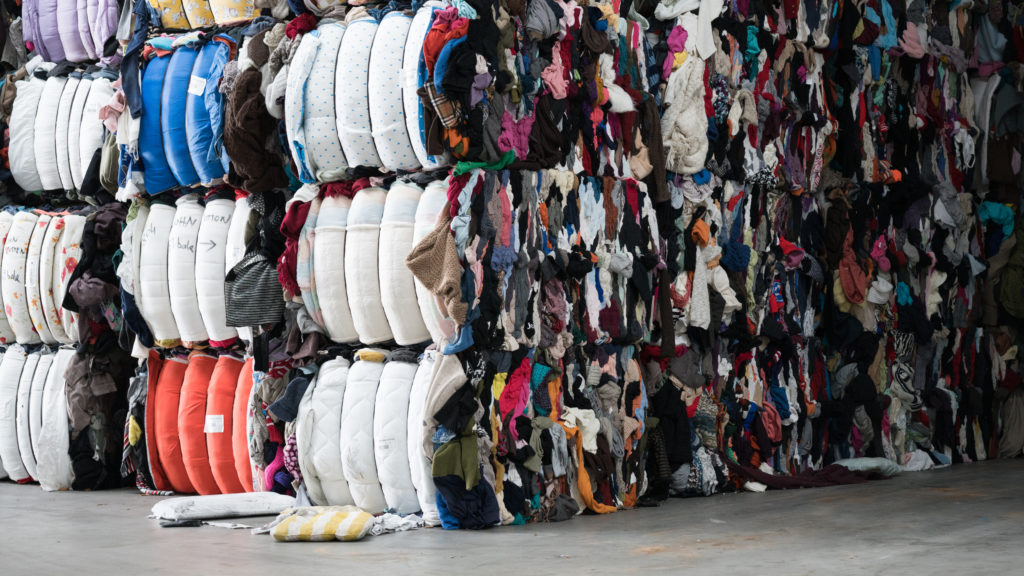
UKFT said this approach does not reflect the operational realities of the reuse and recycling sector, where mixed collections are often exported to specialist overseas facilities for sorting, grading and preparation for resale.
The association warned that classifying all mixed loads as waste could significantly disrupt established global reuse systems, particularly where overseas operators are equipped to process and sort textiles more efficiently.
This is especially relevant for footwear exports, where the guidance requires shoes to be matched in pairs before being exported as products. UKFT has asked Defra for greater clarity in this area, arguing that mixed footwear exports are a common and legitimate part of the international reuse market.
Textile export requirements tightened
The new rules mean exporters seeking to ship textiles as products, rather than waste, must now meet stricter conditions before goods leave the UK.
These include pre-sorting items by type and quality, removing all damaged items and contamination, and maintaining detailed evidence of standard operating procedures.
Exporters must also provide contractual evidence showing that receiving facilities overseas have specifically requested the grade or specification being sent.
If textiles do not meet these conditions, they fall under waste shipment controls. This means consignments must be sorted to a specification requested by the receiving facility, contamination must be kept to a minimum, and exporters must use international tracking codes such as the Basel Convention’s B3030 code for clean textile waste.
UKFT said the evidence requirements, while intended to improve transparency and tackle illegal waste exports, must be proportionate and workable for operators managing high volumes of used textiles.

Register for free to comment